
The comparison turns on one question: do both cars need to charge at the same time? If a NACS charger is already on the wall and the J1772 car can charge at other hours, a JT02 adapter is the whole purchase — one item, nothing installed. If both cars come home empty and leave early, only a second charger charges them simultaneously, at equipment-plus-installation cost. The adapter buys shared time; the second charger buys a parallel charge.
Key Takeaways
- The decision is simultaneity: the adapter shares one charger between cars; a second charger charges both at once.
- The adapter route has zero installation cost by construction; the second charger costs equipment plus a circuit, sized at 125%.
- Per car, the charging speed is the same — the car’s onboard charger is the limit either way.
- Run your own overnight numbers: moderate nightly needs fit sequentially; two heavy, tight-turnaround cars justify the second charger.
The Two Cost Shapes
| JT02 adapter route | Second charger route | |
|---|---|---|
| What you buy | One adapter | A charger, plus the work to feed it |
| Equipment cost shape | A single small accessory purchase | DOE-cited U.S. figures put home Level 2 equipment at roughly $380–$690, before installation |
| Installation | None — it fits the existing charger | An outlet or hardwired circuit; DOE-cited installation varies widely by home — our breakdown of what a NEMA 14-50 installation costs itemises it |
| Electrical checks | None — no new load | A continuous load, sized at 125% of the charger’s current under the NEC rule; panel capacity is an electrician’s check |
| What it cannot do | Charge both cars at once | Travel with the J1772 car |
Those are U.S. reference figures, not a quote — installation is the variable half of the second charger’s cost, and zero on the adapter route.
What Each Option Actually Buys
- Simultaneity. One charger plus an adapter is still one connector: the cars take turns. A second charger is a second connector — both cars charge all night, independently.
- The same speed, per car. The adapter neither slows the J1772 car nor speeds it up: a session runs at the lowest of the charger’s output, the car’s acceptance and the adapter’s 80 A ceiling — above any home charger’s output, a Tesla Wall Connector’s 48 A included. A native J1772 charger — a 40 A portable at 9.6 kW, say — reaches the same car-side limit for most cars.
- Travel. The adapter lives in the J1772 car and also works at NACS destination chargers away from home. A home charger serves only the driveway.
The Overnight Arithmetic
Worked example, labelled as such, with about 10% allowed for losses. Say each car needs about 20 kWh a night. On an 11.5 kW-class charger, that is under two hours per car — sequentially, both are done in under four hours inside a ten-hour night. The adapter route fits easily; this is the common case.
Now stretch it: two long-commute cars, each needing 40 kWh or more, both home at 9 p.m. and gone at 6 a.m. Sequential charging needs eight-plus hours the night does not quite have, and one car leaves short. That pattern is what the second charger is for. U.S. DOT figures put Level 2 at 10–20 miles of range per hour, so your nightly miles decide which side of the line you sit on.
The Two Options on the Shelf
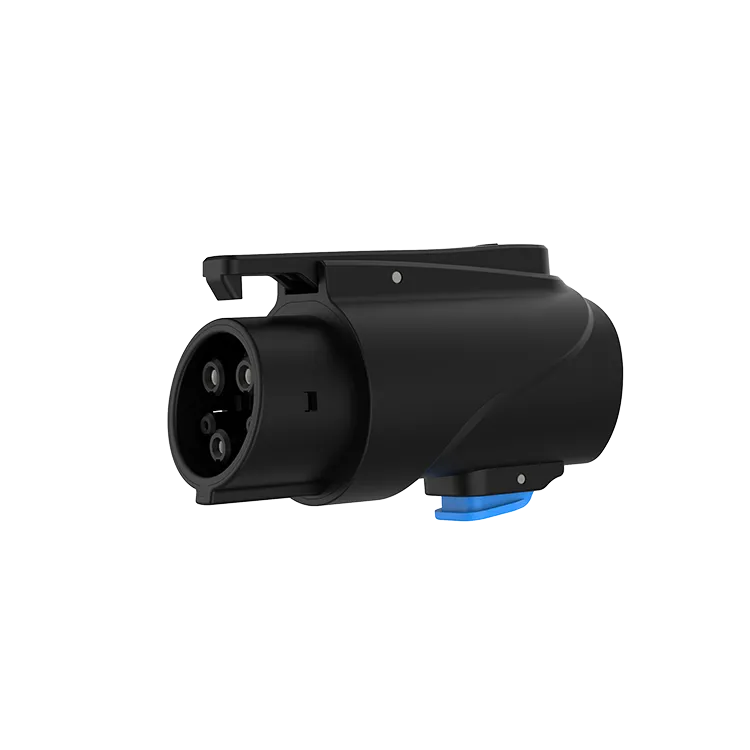
The EVDANCE JT02 is the adapter in this comparison: NACS-to-J1772, AC only, up to 80 A at AC 250 V, IP65 — it adapts the charger you have and travels with the car. The native second-charger example is the EV-AC04001U, a 40 A J1772 portable at 9.6 kW on a NEMA 14-50P plug with a 25 ft cable: no adapter in the loop, but it needs its own circuit. The full home range is on the residential charging page.

Frequently Asked Questions
Is the adapter always the cheaper answer?
In purchase structure, yes — one accessory against equipment plus installation. But it buys shared time, not simultaneity, so the adapter route’s real cost is the scheduling it imposes. If both cars need the same overnight hours, the second charger buys the thing the adapter cannot do at any price.
Can both cars charge at the same time through one adapter?
No. An adapter fits one charger plug to one car; while the J1772 car charges through it, the NACS car waits its turn. Simultaneous charging takes two chargers (or a dual-connector station), full stop.
Does a second charger always need panel work?
It always needs its own circuit, sized at 125% of its current as a continuous load. Whether the panel can carry that circuit alongside the first charger is an electrician’s load check — sometimes trivial, sometimes the real cost of the project.
Related Reading
- How Much Does It Cost to Install a NEMA 14-50 Outlet?
- Can I Have an Electric Car Charger at Home? Houses, Rentals and Condos
- Is the Tesla Wall Connector Level 2? How Many kW Does It Deliver?
- Where Should You Install a Home EV Charger?

