
The 500 A on a DC adapter is a ceiling: the most current the part is built to carry. The 250 kW is the same ceiling expressed as power — power is volts times amps, and 500 A at about 500 V is 250 kW. Neither number promises a session. Your station and your car decide what actually flows; the adapter’s ratings only have to sit above that agreement.
Key Takeaways
- 500 A is a carry ceiling; 250 kW is that ceiling at about 500 V — one current, several power figures.
- A session runs at the lowest of three ceilings: the station’s output, your car’s acceptance, and the adapter’s rating.
- A rating commands nothing — it keeps the adapter out of the way of a rate the station and car settle themselves.
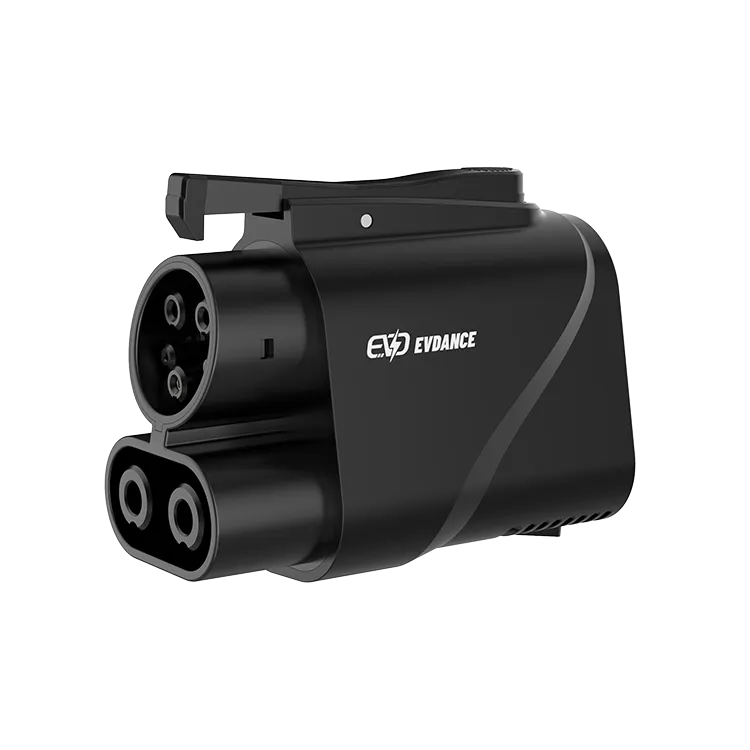
- The JT08 states 500 A / 1000 V; the JT09 states 500 A and no voltage figure. Both need maker approval and an open station.
One Current, Several Power Figures
A DC session runs at your car’s battery voltage, and packs come in different classes, so one current ceiling translates into different power at different cars — labelled arithmetic, not a session prediction:
| Session voltage (set by the car’s pack) | 500 A works out to | What it shows |
|---|---|---|
| About 400 V (the common pack class) | About 200 kW | The same adapter is a “200 kW” part on this car |
| About 500 V | About 250 kW | Where the family’s 250 kW class figure comes from |
| About 800 V (the high-voltage pack class) | About 400 kW, as arithmetic | Why current travels between cars better than a kW figure |
The family is described in the 250 kW class: its 500 A ceiling paired with the mid-band voltages most of today’s fleet runs at. The 800 V line shows the limit of the arithmetic, not a bigger promise — the stated class stays 250 kW.
Three Ceilings Decide Your Session
| Ceiling | Set by | In practice |
|---|---|---|
| The station’s output | The network and its hardware | U.S. DOT figures put DC fast charging at 50–350 kW as a class; a given post delivers what it is built to deliver |
| Your car’s DC acceptance | The car’s maker and its battery | Highest on a low battery, falling as it fills — the taper |
| The adapter’s rating | The adapter’s maker | Up to 500 A for both models here; the JT08 also states up to 1000 V |
The session runs at the lowest of the three. That is why two cars at the same post, through the same adapter, charge at different speeds — and why how fast a DC fast charger is never has a single number. The adapter’s job is to be the ceiling you never reach.
A Rating Is About Carrying, Not Commanding
A current rating states what a part is built to carry through a full session, continuously. It grants nothing: a 500 A adapter cannot pull 500 A from a station that offers less, or push it into a car that accepts less. Read it as a survival specification. Were the adapter’s ceiling the lowest of the three, it would cap the session; rated above the car’s acceptance, it stays out of the way. Power figures on any charging hardware behave the same way, as how DC fast chargers work sets out for the stations themselves.
The JT08 and JT09, by the Numbers
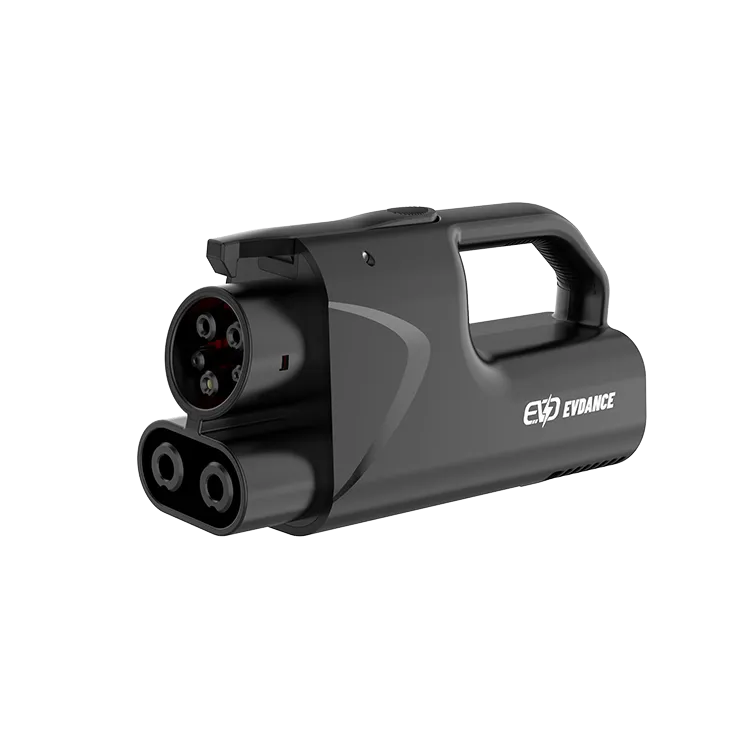
The EVDANCE JT08 is the handleless model: up to 500 A, up to 1000 V, IP66. The EVDANCE JT09 does the same job with a handle: up to 500 A, IP66; its listing states no voltage figure, so do not assume the pair is symmetrical. Both carry the same two conditions of use: your vehicle maker must approve third-party DC adapter use for your exact car, and the station or network must be open to your car under its current terms. Ratings never override either condition.
Frequently Asked Questions
Will my car charge at 250 kW through a JT08?
Only if the station delivers 250 kW and your car accepts it at that moment — near a low battery, on a car built for that rate. The adapter permits the session; it does not set it. Most sessions sit below the class figure and taper as the battery fills.
Does a 500 A adapter charge faster than a lower-rated one?
No. A higher ceiling adds no power; it only keeps the adapter from being the limit. If your car and station settle at 150 kW, both pass the same session.
Why is the family called 250 kW when the JT08 is also rated 1000 V?
The figures measure different things. The 1000 V is a voltage ceiling; 250 kW pairs the 500 A current ceiling with roughly 500 V. Power needs both numbers — which is why the current is the figure that stays true from car to car.
Related Reading
- How Fast Is a DC Fast Charger?
- How Do DC Fast Chargers Work?
- Are EV Charging Adapters Safe?
- Level 1 vs Level 2 vs DC Fast Charging: A Practical Comparison

