
During a DC session with a JT08 or JT09, the station’s thick cable and the adapter hang from your car’s inlet, which carries the load. You control most of the strain: park so the cable runs short and straight, hold the assembly square while it seats, and never start with the connector hanging at an angle. If it will not sit straight, move the car, not the connector.
Key Takeaways
- Strain is visible: a tilted connector or a taut, sideways cable means the setup needs fixing.
- Parking position is the main support; your hands — and, on the JT09, the handle — control the seating.
- Never prop, wedge or hang weight on the connector, and never straighten a tilted one mid-session.
- The JT08 and JT09 load the inlet the same way; both need maker approval and a station open to the car.
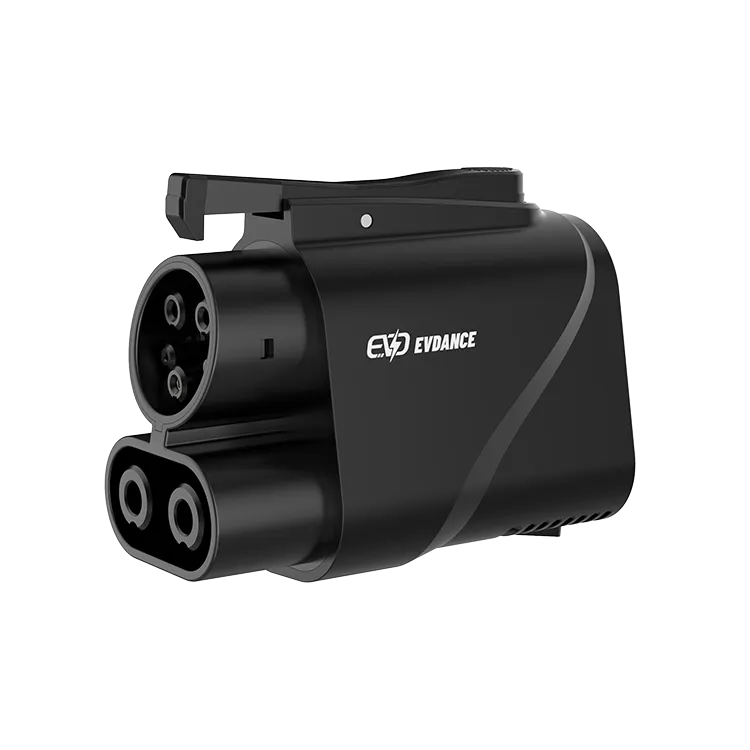
Where the Strain Comes From
DC fast-charging cables are thick because of the current they carry, and thick cables are stiff and heavy. An adapter lengthens the assembly — station connector, adapter, then the car’s inlet — and every joint in that chain is where the cable’s pull can act as a lever. The last joint, in your car, takes the load: gravity on cable and adapter, held for the session’s length. Seated square, the inlet and its latch carry it as designed. Seated at an angle, the weight concentrates on one side and contact pressure turns uneven.
| What you see | What is straining | Your move |
|---|---|---|
| The connector hangs tilted in the inlet | The cable is over-extended, or the car sits at an angle to the stall | End the attempt; reposition the car so the cable reaches with slack |
| The cable pulls sideways across the inlet | Port position and stall layout disagree | Approach from the other side, or use another stall |
| The connector will not stay seated held square | The joint is carrying more than the fit can hold | Support it while seating; if it still will not sit square, do not start |
The Supports You Control
- Parking position, first. Your car’s port position is fixed; your parking is not. The shortest, straightest run strains least — chosen before you touch the connector, as the step-by-step guide to DC fast charging assumes.
- Your hands, while seating. Hold the assembly square as you push it home, and support it until the session is established and the connector is held by the session’s own arrangement.
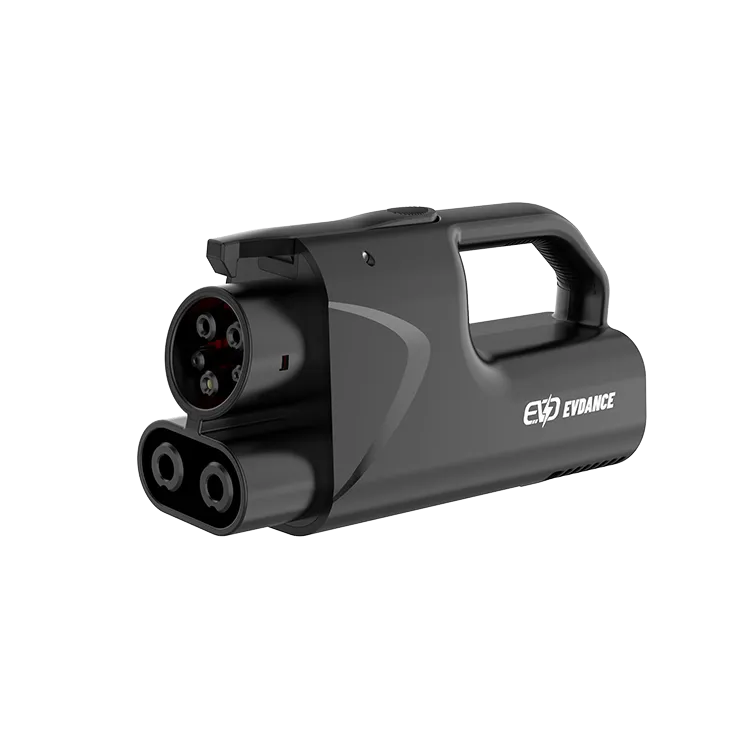
- The JT09’s handle. A handle is a grip point: one hand controls the assembly’s angle while the other guides it. It changes your control, not any rating.
- The stall’s own fittings. If the stall provides a cable hook or support, use it as intended — it takes weight off the inlet.
What Not to Do
- Never hang anything extra on the connector — no bags, no coiled cable. The joint already carries the session’s load.
- Never wedge, tape or prop the connector against the inlet with improvised objects. A prop hides the tilt instead of fixing it.
- Never force an angled connector straight mid-session. Notice a tilt while charging? End the session first, then unplug and reseat square.
- Never use an extension or a second adapter for a reach problem. None exists for a DC adapter session; strain is a parking problem.
The JT08 and JT09 in a Session
The EVDANCE JT08 and EVDANCE JT09 are NACS-to-CCS1 DC adapters in the 250 kW family: both rated up to 500 A with IP66 sealing, the JT08 also states 1000 V, and the JT09 adds a handle. They serve a CCS1-inlet car at a NACS DC station — including an open Supercharger — only where the vehicle maker approves third-party DC adapter use and the station is open to the car. On strain they differ in one way: the JT09’s handle makes squaring the assembly easier. The load on the inlet is the same, and the parking-first rule applies to both. Why the conditions exist is covered in our guide to whether EV charging adapters are safe.
Frequently Asked Questions
Will the hanging weight damage my car’s charge port?
A session with the connector seated square and the cable supported is what the inlet is built for. Avoid repeated angled strain — a connector habitually left tilted under a taut cable. A loose or damaged inlet is a car-side repair for the maker or dealer; do not keep charging on it.
Is the JT09 easier on the port than the JT08?
The handle changes your grip and control, not the ratings. Supported, a JT08 session and a JT09 session load the inlet the same way; the handle just makes squaring the connector easier.
The cable only reaches if it pulls tight. What should I do?
Move. Try the stall from the other direction, the next stall, or another site. A connection that only works under strain is the setup this article exists to prevent.
Related Reading
- How to Use a DC Fast Charger: Step by Step
- Are EV Charging Adapters Safe?
- How Do DC Fast Chargers Work?

