
For Australia, the EVDANCE sort starts from the supply, not the badge. The Type 2 models are the ones whose connector matches the Australian AC landscape: one single-phase portable, and three-phase portables, a wallbox and a dual-connector station where three-phase is available. Every model still needs its market version and documents confirmed in writing — no EVDANCE listing states an Australian approval, and a European CE mark is not one.
Key Takeaways
- The Australian sort is by supply: one single-phase Type 2 portable, and three-phase portables, a wallbox and a station.
- Supply first, car second, charger third — a three-phase unit needs three-phase at the property and a car that accepts it.
- The CEE plug on the three-phase portables is a check, not an assumption: an Australian socket is not a CEE socket.
- No listing states an Australian approval, and CE is not one — market version and documents are confirmed in writing.
One Car Side: Type 2
Every model in this article shares the Type 2 car-side connector of the Australian AC landscape — the regional split is explained in our comparison of Type 2, J1772 and NACS connectors. What separates the models below is the supply side: single-phase or three-phase, plug-in or fixed — and the choice starts with the property, not the car.

| Model | Supply it is built for | Stated facts | The Australian check |
|---|---|---|---|
| EV-ACS3210E | Single-phase | 32 A Type 2 portable, about 7 kW, steps 10–32 A, app monitoring, OCPP-ready, 7.5 m, IP66 | Market version and plug variant, in writing |
| ACS1605PE | Three-phase | 11 kW, 16 A per phase, CEE 5-pin plug, Type 2, 7.6 m cable, IP66 | What local supply point the CEE plug mates with is a confirmation, not an assumption |
| EV-ACS3205PE | Three-phase | 22 kW, 32 A per phase, CEE 32 A plug, Type 2, IP66 | Same plug check as above |
| EV-ACT3204PE | Three-phase, fixed | 22 kW wallbox, tethered Type 2 cable, RFID and app, CE stated | Installer plus the documents for the version supplied |
| EV-AC03201T | Three-phase, fixed station | Two Type 2 connectors, up to 43 kW shared, OCPP 1.6J, RFID, IP54 | The commercial confirmation set: version, documents, service route |
| EV-RHDC30K-L | DC fast charging | About 22 kW DC, OCPP 1.6J, IP54 | DC connector variant not named in its listing — written confirmation first |
Single-Phase or Three-Phase: Read the Property First
Many homes have single-phase supply; three-phase is a property feature, not a charger feature. Have an electrician confirm which your switchboard provides before choosing — a three-phase charger on a single-phase property has nothing to draw from. The car is the second check: a single-phase onboard charger caps the session at its own rate whatever the supply offers. Supply first, car second, charger third avoids buying capacity neither can use.
The Plug Question Nobody Should Skip
The three-phase portables are plug-in units with a stated CEE industrial plug. An Australian socket is not a CEE socket, so the question is what supply point exists at the property: an industrial point the plug matches, or one an electrician fits for it. Which plug variant ships for the market is part of the written confirmation — never assume the European plug arrangement transfers unchanged.
Documents Before Dollars
No EVDANCE listing states an Australian certification or approval. The CE mark stated for the wallbox is a European conformity mark — not an Australian approval. How Australian certification for chargers is structured is covered in our explainer on EV charger certification for Australia. The buyer’s list is short: market version, the documents covering it for sale and use in Australia, plug variant, warranty service route — all in writing, before payment.
The EVDANCE Type 2 Range, by Supply
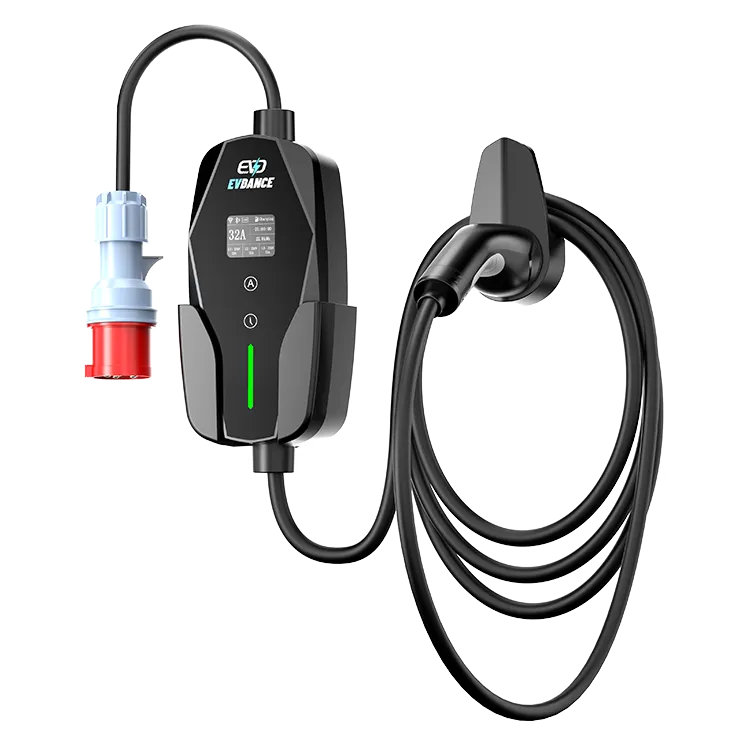
Single-phase homes start with the EV-ACS3210E. Three-phase properties choose between the ACS1605PE at 11 kW and the EV-ACS3205PE at 22 kW, or the fixed EV-ACT3204PE wallbox. Sites step up to the EV-AC03201T dual-connector station, with the EV-RHDC30K-L as the DC option once its connector variant is confirmed. The full range is on the products page.
Frequently Asked Questions
Can I just order the European version?
The listings describe the versions EVDANCE publishes; whether a version is supplied for Australia, and which documents cover it there, is a written confirmation. A CE mark is a European conformity statement, not an Australian approval — don’t let a listing’s CE line answer an Australian question.
Which model suits a single-phase home?
The EV-ACS3210E is the range’s stated single-phase option: a 32 A Type 2 portable at about 7 kW with adjustable steps. It goes through the same market-version and plug confirmations as every model here.
Will a three-phase charger charge my car faster?
Only if the car’s onboard charger accepts three-phase power. A single-phase onboard charger caps the session at its own rate on any supply. Check the car’s specification first.
Related Reading
- EV Charger Certification for Australia: SAA, RCM and EESS Explained
- Choosing Plug, Cable and Connector for an OEM Charger by Market
- Type 2 vs J1772 vs NACS: Which EV Charger Connector Does Your Market Need?
- Is Bidirectional Charging Available in Australia?

