
A cable listing earns its sale on completeness: the connector at the car end, the plug at the supply end, the current rating, the cable length exactly as the model states it, and the enclosure rating — all visible before checkout. Most cable returns are fitment failures the listing could have prevented: the buyer discovers a wrong connector or a short cable at the car, not on the page.
Key Takeaways
- A cable listing is complete when both ends, the rating, the stated length and the IP rating show before checkout.
- Never estimate a cable length the documents do not state — get it from the manufacturer in writing.
- Cables, adapters and extensions are different products; the JT02 adapter adds no length and is AC only.
- Extensions are listed only as manufacturer-approved products rated for EV charging — never as household cords.

The Cable Spec Set, Complete
| Spec line | What the buyer is checking | Stated examples |
|---|---|---|
| Connector, car end | Does it fit my car’s inlet? | J1772 on the EV-AC04001U; NACS on the EV-ACS3210T; Type 2 on the EV-ACS3210E |
| Plug, supply end | Does it fit my outlet? | NEMA 14-50P on the North American portables; CEE five-pin on the EV-ACS3205PE and ACS1605PE |
| Current rating and settings | Will it run on my circuit? | Fixed 40 A, or the stated steps — 16/24/32/40 A on the EV-ACS4005T; breaker at 125% of charging current under the NEC rule |
| Cable length, as stated | Will it reach from outlet to charge port? | 25 ft on the EV-AC04001U; 25 or 28 ft on the EV-ACS4005T; 7.5 m on the EV-ACS3210E; 7.6 m on the ACS1605PE |
| Enclosure rating | Can it live outdoors? | IP66 across the portable range, stated per model — never upgraded in the copy |
| What is in the box | Charger, cable, or adapter? | Say the product form in the title and first bullet — charger with tethered cable, detachable lead, or adapter |
One line deserves its own rule. Where a model’s documents state no cable length — the EV-ACS3210T’s name none — the listing does not estimate one. Ask the manufacturer for the figure in writing; a guessed length is the most avoidable return in this category.
Cables, Adapters and Extensions Are Different Products
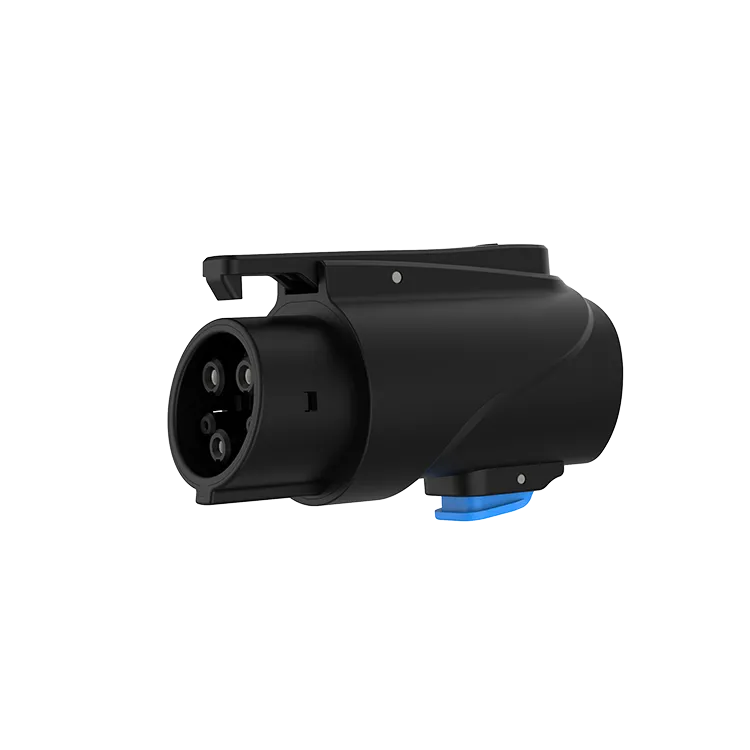
Confusing the three forms creates returns and risk. A tethered cable is part of a charger and carries its rating. A detachable lead must match the stated connector and rating at both ends. An adapter changes connector shape only: the JT02 is a NACS-to-J1772 adapter for AC charging, up to 80 A and IP65 — not a cable, adding no length, never for Superchargers. The JT08 and JT09 are DC adapters for CCS1-inlet cars at NACS DC stations; their listings must carry both conditions: the car maker approves third-party DC adapters for the exact car, and the station is open to that car.
Extensions need the same discipline. List an extension lead only as a finished, manufacturer-approved product rated for EV charging. Never present a household extension cord as a charging accessory, never suggest joining cables the makers did not design to join, and leave fixed wiring to a licensed electrician.
The Fitment Questions That Prevent Returns
- Which outlet do you have? Name the plug in the title; a 14-50 buyer and a CEE buyer are different customers.
- Where does the car park relative to the outlet? Give the stated length and a measure-before-you-order instruction.
- Which end are you replacing? A damaged tethered cable is a manufacturer part for that model, not a generic lead — say so, and route the buyer to the maker.
- Is an adapter being bought to fix a cable problem? It will not. The listing that says so loses a sale and saves a return.
Our checklist for selling portable EV chargers online covers the wider listing routine. Sellers stocking cables alongside chargers can source the range through the reseller and distributor program — EVDANCE is a Shenzhen manufacturer founded in 2011, exporting to more than 30 countries, with a 3-year standard warranty — or ask about documents via contact us.
Frequently Asked Questions
Can a buyer charge through an ordinary household extension cord?
No. Only a finished extension product the manufacturer rates and approves for EV charging belongs in that role. A listing should never suggest otherwise; fixed wiring goes to a licensed electrician.
The spec sheet gives no cable length. What should the listing say?
Ask the manufacturer for the figure in writing before the listing goes live. Until then, publish no length — an estimate reads as a promise and returns as a return.
Is a longer cable always the safer buy?
No. Length is a fit question: the buyer measures outlet to charge port and orders the stated length that covers it. Excess cable is weight to coil after every session.
Related Reading
- Selling Portable EV Chargers Online: Listing and Compliance Checklist
- EV Charger Certifications Explained: CE, UKCA, UL, ETL, CB and What Buyers Should Ask For
- Amazon Brand Registry for Private-Label EV Charger Sellers
- Which EV Charger Has the Best Warranty?

