
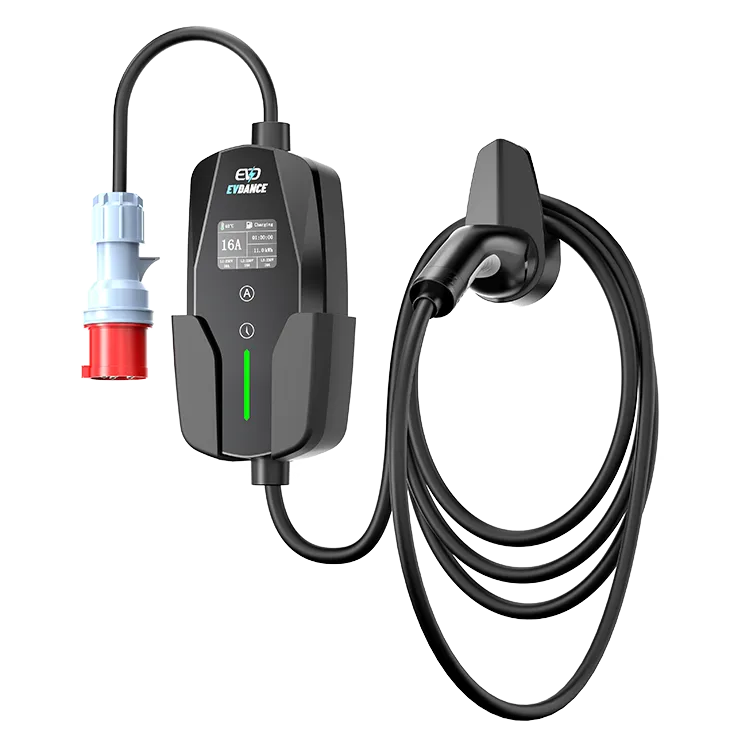
Do not convert the CEE plug on a three-phase charger like the ACS1605PE to a household Schuko socket. A Schuko socket supplies only single phase and is not designed for many hours at high current, while the charger expects a 16 A three-phase supply with correct protection. An adapter can cause overheating, unpredictable behaviour and loss of safety functions. If you only have a household socket, use a charger designed for it, or have an electrician install a proper CEE outlet.
Key Takeaways
- Never adapt a three-phase CEE charger plug to a household socket.
- Supply-side adapters bypass the design of the circuit and charger.
- Install a CEE outlet or use a charger designed for the socket.
- Inspect used chargers for adapters or replaced plugs.
Why the Adapter Is a Bad Idea
| Issue | What happens |
|---|---|
| Socket rating | Household sockets and their contacts are not built for hours of continuous high current |
| Missing phases | A single-phase socket cannot supply three-phase power; wiring adapters to bridge phases is dangerous |
| Overheating | Contacts and wiring can heat up, risking melting and fire |
| Protection mismatch | The circuit’s protective devices were not designed for this load |
| Insurance and warranty | Damage caused by adapters may not be covered |
Electrical safety advisories regularly warn against improvised adapters and extension leads for EV charging. Read why extension cords are unsafe and whether charging adapters are safe.
Input Adapters vs Vehicle Adapters
Adapters on the car side, such as approved connector adapters, are a different topic. They must be approved for the vehicle and charger. Adapters on the supply side, between a charger’s plug and a different socket type, change the electrical conditions the charger was designed for. They should not be used.
Safe Alternatives
- Install a CEE outlet: an electrician can add a 16 A three-phase CEE outlet near your parking space.
- Use a single-phase portable charger: a unit designed for household sockets, used at the current the manufacturer specifies.
- Use a single-phase charger on a dedicated circuit: for faster charging without three-phase supply.
- Install a fixed wallbox: for permanent home charging.
Our guides on CEE plugs explained and charging from a normal socket help you choose.
Signs Someone Has Used an Adapter
If you buy a used charger or inherit one, check for an adapter or a replaced plug. Heat marks, discoloured pins or a non-original plug are warning signs. Do not use the charger until it has been inspected. Ask the seller directly whether the plug has ever been changed or adapted.
The ACS1605PE is an 11 kW three-phase portable charger at 16 A, 230/400 V, with a Type 2 connector, CEE five-pin plug, 1.77-inch display, IP66 protection and a 7.6 m cable. For single-phase homes, the EV-ACS3210E offers adjustable current from 10 A to 32 A.
Frequently Asked Questions
Can I use a CEE to Schuko adapter for EV charging?
No. It creates an unsafe mismatch between the charger, the socket and the circuit protection.
Will the charger work at lower power on a Schuko socket?
Not safely through an adapter. Use a charger designed for household sockets instead.
What should I do if I only have household sockets?
Use a suitable single-phase charger, or ask an electrician to install a CEE outlet or a wallbox.
Related Reading
- Can You Use an Extension Cord With an EV Charger?
- Are EV Charging Adapters Safe?
- CEE Plugs Explained: Choosing 16A or 32A for a Three-Phase Portable EV Charger
- Can I Charge an Electric Car From a Normal Socket?

