
You do not need a smart charger to benefit from time-of-use electricity rates. Plug the EV-ACS3210T in when you get home, then use your car’s built-in charging schedule to start after the peak period ends or to finish by your departure time. The charger supplies power only when the car asks for it, so the car’s schedule controls the timing and you pay the lower off-peak rate.
Key Takeaways
- The car’s schedule can time charging for off-peak hours.
- A standalone charger simply supplies power when the car asks.
- At 32 A, a five-hour window replaces about 128 miles.
- Check your own utility’s off-peak hours and prices.
How Time-of-Use Rates Work
Many utilities price electricity by time of day. Late-evening and overnight hours are usually cheaper, while late afternoon and early evening cost more. The exact hours and prices depend on your utility and plan, and they can change, so check your current tariff. As a reference, the U.S. average residential price was 18.31 cents per kWh in July 2026, according to the EIA. Off-peak EV rates in some areas are well below that average; peak rates can be well above it.
Setting the Schedule in the Car
Most EVs offer two ways to schedule charging in the vehicle menu or app:
- Scheduled start: charging begins at a set time, such as when off-peak starts.
- Scheduled departure: you set when you leave, and the car works out when to start so it finishes just in time, often within the off-peak window.
Set your daily charge limit at the same time. With the car plugged in, the charger waits in standby until the car begins drawing current. Our article on whether home chargers have timers explains the difference between charger-based and car-based scheduling.
How Long Does the Off-Peak Window Need to Be?
At 32 A, the EV-ACS3210T delivers about 7.7 kW. The table shows how much driving fits into common off-peak windows, assuming about 0.3 kWh per mile.
| Off-peak window | Energy at 7.7 kW | Approx. miles replaced |
|---|---|---|
| 3 hours | about 23 kWh | about 77 |
| 5 hours | about 38 kWh | about 128 |
| 7 hours | about 54 kWh | about 179 |
| 9 hours | about 69 kWh | about 230 |
Most drivers fit comfortably within even a short window. If your window is very short and your drive is long, a higher-current charger helps.
Estimating Your Savings
Multiply your monthly charging energy by the difference between your standard rate and your off-peak rate. For example, if you charge 300 kWh a month and off-peak is 10 cents per kWh cheaper than your standard rate, the saving is about $30 a month. Use the real figures from your own bill. Read smart charging and time-of-use tariffs and the cost to charge at home for more.
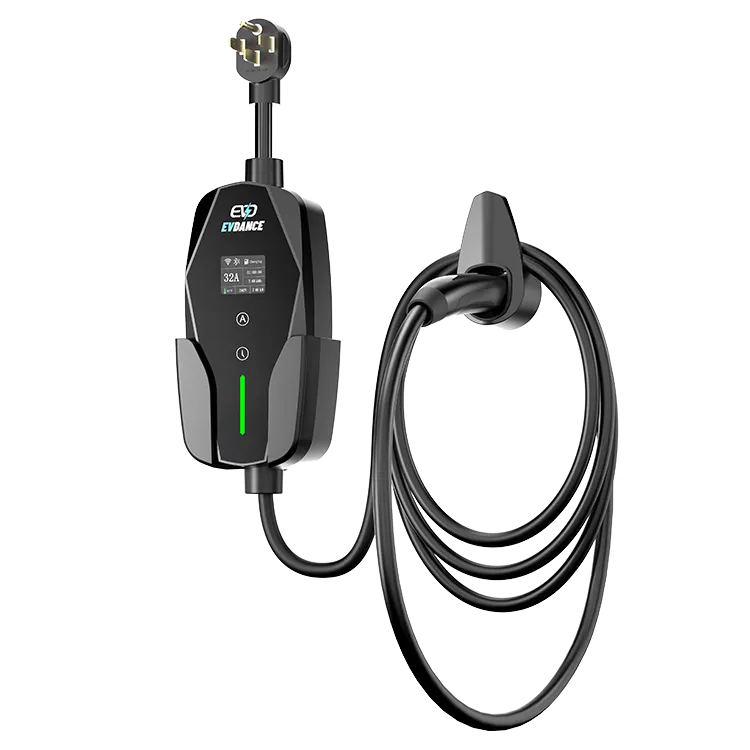
The EV-ACS3210T is a 32 A NACS portable charger with a NEMA 14-50P plug, six current steps from 10 A to 32 A, a 1.77-inch display and IP66 protection. It works with any car-based schedule.
Frequently Asked Questions
Can a non-smart charger use off-peak rates?
Yes. The car’s schedule controls when charging starts, and the charger supplies power when asked.
What if the car does not start charging at the scheduled time?
Check that the cable is connected, the car’s schedule is enabled, and the charge limit has not already been reached.
Do I need a special meter for time-of-use rates?
That depends on your utility. Many use existing smart meters; some EV plans need a separate meter. Ask your utility.
Related Reading
- Do Home EV Chargers Have Timers?
- Smart Charging and Time-of-Use Tariffs: How Scheduling Cuts EV Charging Costs
- How Much Does It Cost to Charge an Electric Car at Home?
- Can You Leave an EV Charging Overnight?

