
A site host agreement is the written contract between a property owner — the host — and a charging operator who wants to put chargers on that property. The host provides parking bays, site access and usually the electrical connection point; the operator installs, owns and runs the chargers and bills the drivers. The agreement fixes the term, what the host is paid, and who does what, for as long as the chargers stay.
Key Takeaways
- A site host agreement is the contract between a property owner and a charging operator for chargers on the owner’s land.
- Its defining feature is the split: the operator owns and runs the chargers; the host provides the site.
- It settles term, site rights, installation costs, money flows, maintenance and exit — as negotiated fields, not a standard form.
- Owning the chargers yourself removes the need for one — and moves every decision onto you.

Two Parties, Two Contributions
| The host (site owner) | The operator | |
|---|---|---|
| Brings | The land, parking bays, access for drivers and installers, and the site’s electrical capacity | The chargers, the installation, the platform, pricing and driver billing |
| Gets | Rent, a share of charging revenue, or a mix — plus chargers on site without buying them | The right to occupy the bays and trade there for the term |
| Carries | Keeping the bays and access available, as the document sets out | Maintenance, repairs, insurance on its equipment, and the driver relationship |
The defining feature is the split: the chargers and the land have different owners. Almost every question the document answers follows from that split. Without a written agreement, none of those answers exists when something breaks or the deal ends.
How Hosting Differs From the Other Models
| Model | Who owns the chargers | Who bills the drivers | The property owner’s role |
|---|---|---|---|
| Hosted (this agreement) | The operator | The operator | Provides the site; receives rent or a revenue share |
| Owner-operated | The site owner | The site owner | Buys, runs and maintains everything |
| Franchise | Usually the franchisee | The franchisee, under the brand’s system | Runs a branded operation under a franchise contract |
The hosted model suits sites that want charging without becoming operators — how to open an EV charging station shows what running your own involves by contrast, and the franchise route is the third shape. Whether any of them pays is worked through in whether a charging station business is profitable.
What the Document Settles
There is no standard form — but the field set is consistent, and each field exists because the ownership split raises the question:
- Parties and term: who signs, how long the chargers stay, and what renewal looks like.
- Site rights: which bays, what access, signage, and any exclusivity over charging on the site.
- Installation and ownership: who pays for chargers, groundworks and any supply upgrade, and who owns each part when the term ends.
- Money flows: rent or revenue share and how it is calculated, who sets driver prices, and who holds the electricity contract and pays for the energy.
- Operation: who maintains and repairs the chargers, who drivers contact, and any uptime committed to.
- Exit: break rights, notice, who removes the equipment and makes the ground good, and what happens to the grid connection.
These are fields to negotiate and have reviewed by a lawyer — not a template to copy. Installation permits are a separate track, covered in how to get an EV charging station license.
If You Would Rather Own the Chargers
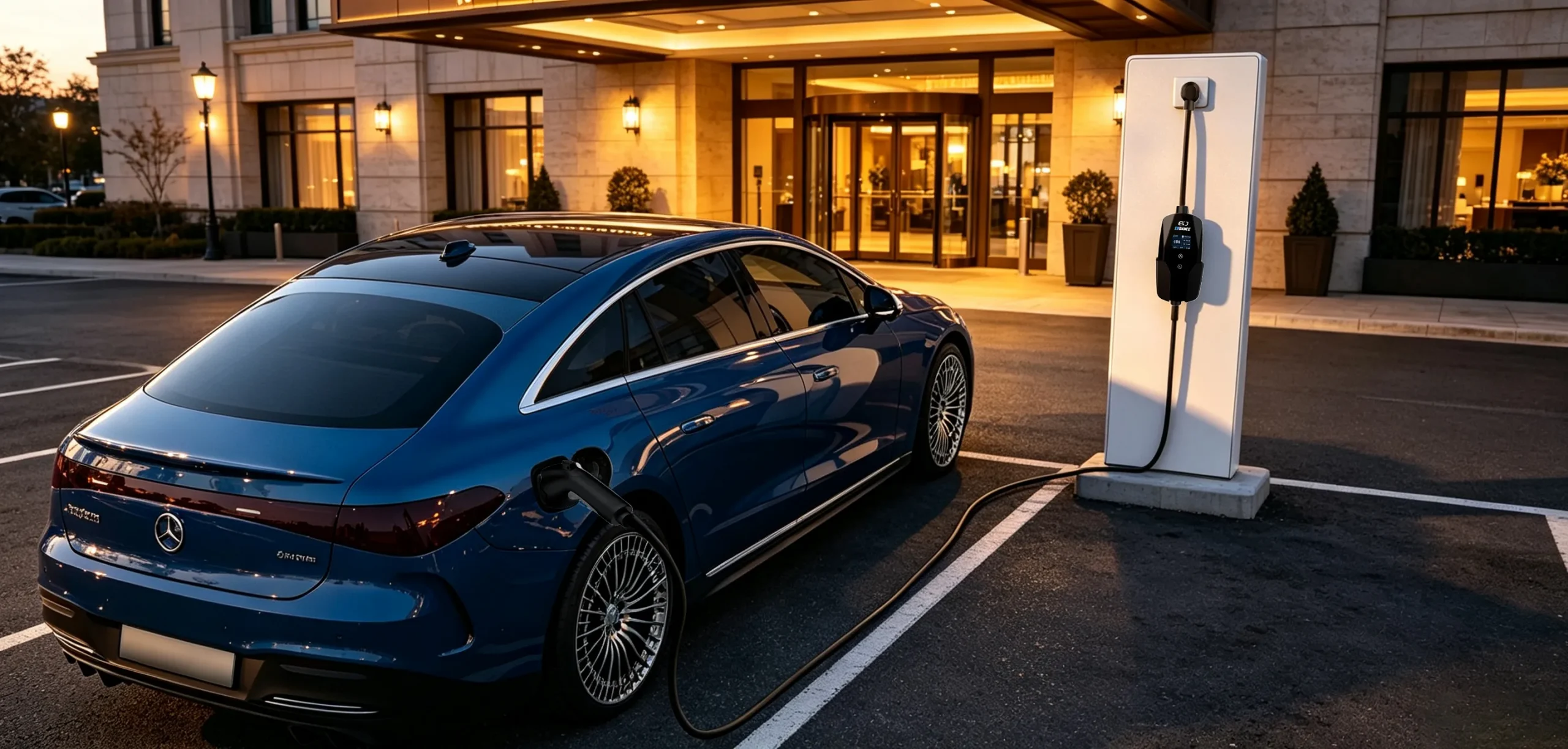
No host agreement is needed when the chargers are yours: those decisions become yours instead. Sites taking that route choose networked hardware such as the EVDANCE EV-AC03201T dual-connector AC station (two Type 2 connectors, up to 43 kW shared, OCPP 1.6J, RFID), reporting to the owner’s own platform. Our commercial charging page outlines the range.
Frequently Asked Questions
Is a site host agreement the same as a lease?
Not exactly. It grants the operator the right to install and run chargers on the site and settles the charging-specific questions — money, maintenance, removal — that a plain lease does not. Whether it is structured as a lease, a licence or another form is a legal question for your market; have it reviewed by a lawyer.
Do I need a host agreement if the chargers are mine?
No. The agreement exists because two parties share one site. If you own the land and the chargers, there is no second party — your equivalent documents are the installation contract and your platform terms instead.
Who pays for the electricity under a host agreement?
Whoever the agreement assigns. The supply contract and the energy charges are one of the money flows the document must name explicitly — a common dispute when it does not — because the chargers draw from the site’s supply whoever owns them.
Related Reading
- How to Open an EV Charging Station: Step by Step
- How to Get an EV Charging Station Franchise (and What to Check)
- Is an EV Charging Station Business Profitable?
- How to Get an EV Charging Station License: Permits and Approvals

