
Yes. Many sites run exactly this split: customers charge free, everyone else pays the posted price. It works because the charger identifies the driver before the session starts and applies the group that driver belongs to. The free group is not trusted — it is validated — and the energy those sessions use is a cost the host has chosen to carry.
Key Takeaways
- Yes: one station can run a free customer group and a paid public group, decided per session at authorisation.
- The free group stands on validation — issued cards, codes or approved accounts — not on trust.
- Free sessions still cost the host energy, demand and upkeep; metering is what keeps that cost visible.
- Groups and prices are platform settings; the charger’s stated job is identification and metering.
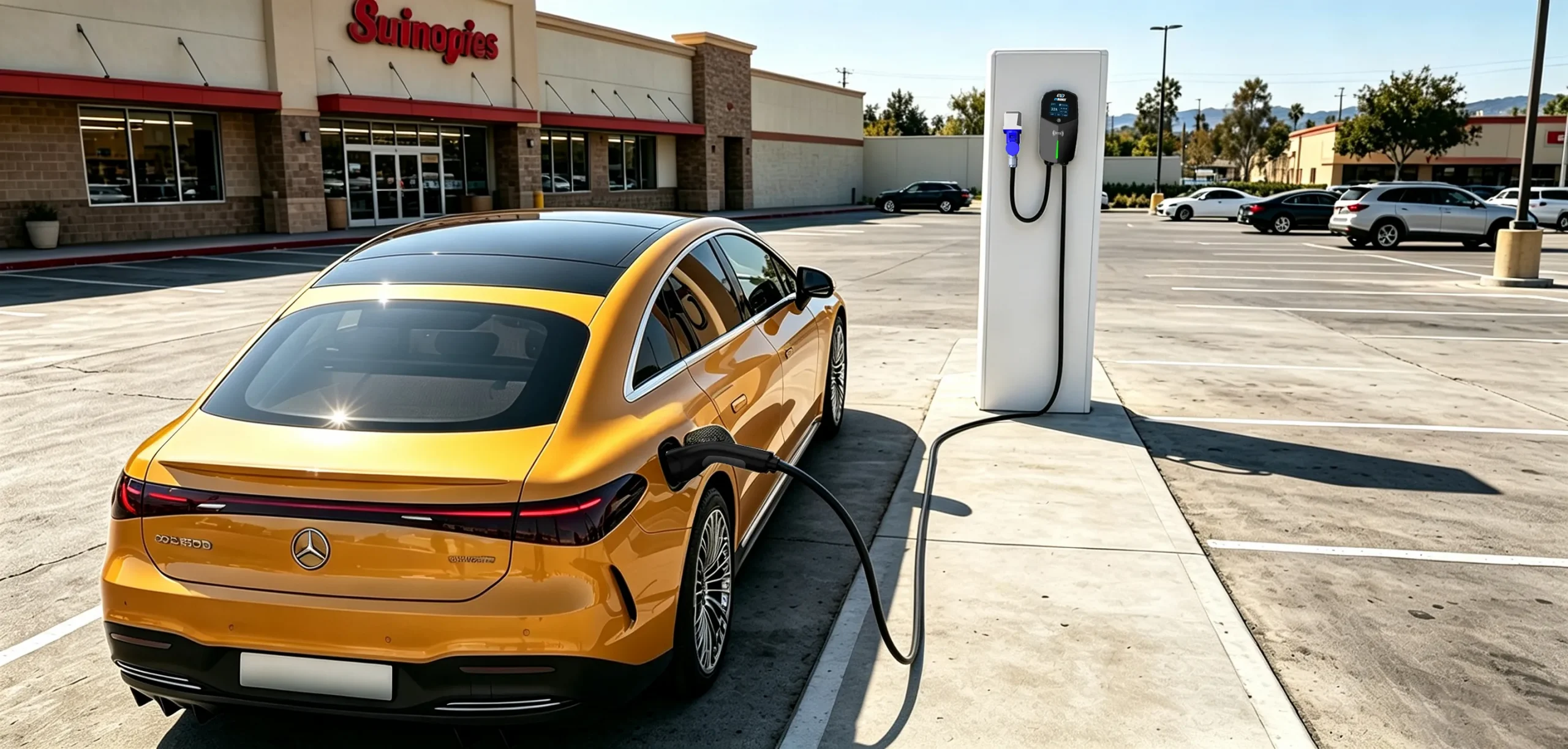
The Two Groups, Side by Side
| Element | Free group — your customers | Paying group — everyone else |
|---|---|---|
| How the driver is recognised | An issued RFID card or fob, an app account flagged to the group, or a one-time code given at the till or desk | Open access: contactless card, app account or RFID — whoever arrives |
| Price applied | Zero price recorded against the session | The site’s published tariff, shown before the session starts |
| Limits that can apply | Session length or energy caps, set hours, one live session per credential | Tariff terms, including any overstay element after charging ends |
| What the record shows | A metered session at zero price, attributed to a named credential | A metered, billed session |
Both groups use the same charger and metering. The difference is settled at authorisation, not at the plug.
Validation Is the Part That Makes It Work
An open free charger near a public car park will be found and used by non-customers. The sites that keep a free group honest tie it to a proof of custom, chosen to fit how the business already runs:
- Issued credentials. RFID cards or fobs handed to known customers, members or guests, and cancelled individually when they should stop working.
- Point-of-sale codes. A short-lived code printed on a receipt or given at reception, valid for one session or one day.
- Account flags. App accounts the business approves — a guest list, a membership list — carry the free group in the platform.
- Time windows. Free access only during opening hours; the public tariff applies outside them.
Which method fits depends on how your customers already identify themselves. The driver-side picture of free and paid sites is in our guide to free vs paid charging.
What “Free” Costs the Host
Free sessions are not free to run. The host carries the energy the free group draws, the demand that energy can add to the site’s bill, and the same wear, upkeep and platform costs as any paid session. That is a deliberate amenity cost, recovered in the till, the room rate or the membership — not at the charger. It is also why the zero-price group still needs metering: a free session with no record is a cost nobody can manage. Setting what the paying group is charged is a separate decision, covered in our guide to how much charging stations charge.

Hardware That Runs Two Groups
The hardware’s job is identification and metering; the groups, prices and limits are platform settings the operator arranges. The EV-AC03201T dual-connector AC station — two Type 2 connectors sharing up to 43 kW (22 kW per connector), OCPP 1.6J, RFID, IP54 — identifies drivers by RFID and reports each metered session to the operator’s platform, which is what a free group and a paid group are built on. Its touchscreen is a display, not a payment terminal, and no EVDANCE listing states a billing platform. The EV-ACT3204PE 22 kW wallbox states RFID and app access on the same basis. Sites planning a mixed free-and-paid offer can start from our commercial EV charging range.
Frequently Asked Questions
Can one charger really run a free group and a paid group at the same time?
Yes. The group is attached to the driver’s credential or account, not to the charger. Two drivers at the same station can be on different terms because each session is authorised and priced separately.
What stops a non-customer from using the free offer?
Validation. Free access should require something only a customer holds — an issued card, a current code, an approved account — and credentials that stop being valid get cancelled. An unguarded free charger is effectively a public free charger.
Do free sessions still need metering and records?
Yes. The record is how the host measures what the amenity costs and spots misuse. Metering also matters where local rules attach conditions to how charging is offered — confirm your market’s position before launch.
Related Reading
- Do EV Charging Stations Cost Money? Free vs Paid Charging Explained
- How Much Do EV Charging Stations Charge? Pricing Models Explained
- How to Open an EV Charging Station: Step by Step
- Is an EV Charging Station Business Profitable?

