
You cannot tell from the outlet. A circuit is dedicated because of its run — one breaker, one cable, one load — and none of that shows in the socket. For an inherited 240 V outlet, three checks can be made without opening anything: the panel directory, a switch-off check, and the visible path of the run. Beyond them, only an electrician opening the panel can answer for certain.
Key Takeaways
- An outlet cannot tell you if its circuit is dedicated — the answer lives in the directory, the switch-off check and the run.
- If the switch-off check kills anything besides the outlet, the circuit is shared; if it kills nothing else, you have evidence, not proof.
- Buried junctions and altered runs are invisible from outside; certainty is an electrician’s job.
- Turning a charger down does not make a shared circuit dedicated — it only makes the load smaller.

Why the Question Is Worth Asking First
A Level 2 charger needs a circuit of its own: charging is a continuous load, sized at 125% of the charger’s current, using the design allowance on the charger alone — see our guide to breaker sizes for EV chargers. An existing outlet looks identical whether it was installed as that dedicated circuit or tapped off a dryer or workshop run. The first is a finished installation; the second is a shared circuit wearing a charger’s clothes. Checking, not plugging in and hoping, tells you which.
Three Checks From Outside the Panel
| Check | How you do it | What it can and cannot prove |
|---|---|---|
| Read the panel directory | Find the outlet’s breaker on the panel schedule; one labelled for that outlet alone is a good sign. | Labels are claims, not proof — directories are often vague or outdated, and “garage” settles nothing. |
| The switch-off check | Turn that breaker off. Test the outlet, then walk the garage and nearby rooms — lights, sockets, appliances — noting everything that lost power. | If anything else is dead, the circuit is shared — you have your answer. If only the outlet is dead, that is evidence, not proof: a second load may have been unplugged that day. |
| Follow the visible run | Where cable runs on the surface — a garage wall, an accessible basement — look for junctions or extra outlets along the path. | A visible junction feeding something else settles it: shared. A clean run proves nothing about what is inside the walls. |
Together, the three usually settle whether to proceed — directory entry naming the charger, switch-off check killing nothing else, no visible taps: the strongest position reachable without opening the panel.
Where Homeowner Checks Run Out
Some arrangements are invisible from outside: junctions buried in walls, a run passing through another room’s outlet, alterations since the directory was written. None show up in the three checks — and a breaker that has never tripped is not evidence either; it describes past loads, not the design.
That is the handover point: an electrician confirms it from inside the panel and along the run. If the answer is no, the options are standard — a new dedicated circuit, or a smaller charger setting on a circuit genuinely its own. Turning the charger down does not fix a shared circuit: it changes the load, not the fact that the run serves other things.
The Chargers This Question Belongs To
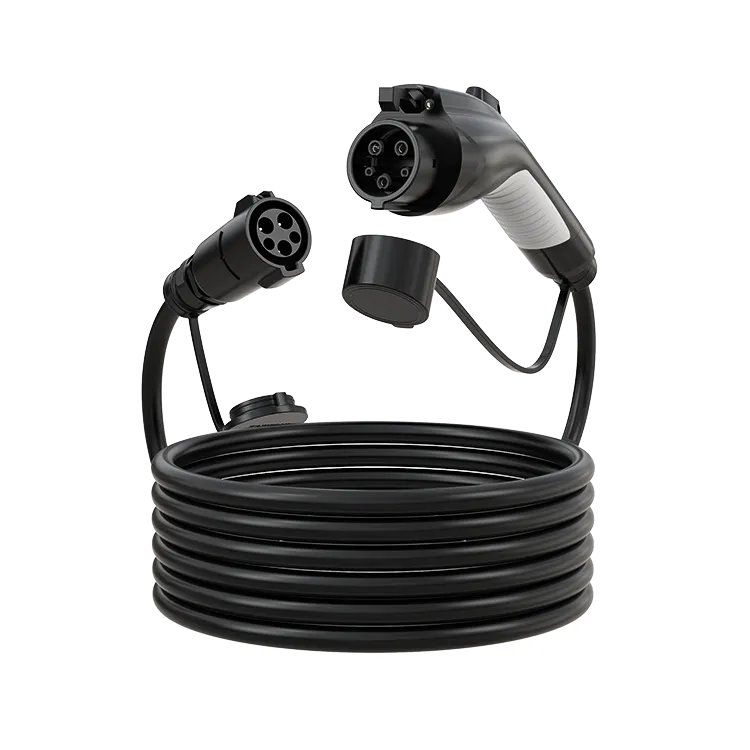
Plug-in portables meet these outlets. The EVDANCE EV-AC04001U 40A J1772 portable charger (9.6 kW, NEMA 14-50P, IP66, 25 ft cable) draws up to 40 A — a 50 A circuit of its own. The EVDANCE EV-ACS3210T 32A NACS portable charger (about 7.7 kW, 10–32 A in six steps, IP66) can be set to match a smaller verified circuit. The order is fixed: establish the circuit, then set the charger. Our hardwired vs plug-in comparison covers the fixed alternative.
Frequently Asked Questions
The breaker is labelled “EV charger”. Can I trust it?
Treat it as a strong hint, not confirmation: labels survive renovations and charger swaps, and say nothing about later additions to the run. Run the switch-off check too — if the two agree, you are in good shape, and an electrician can make it certain.
The previous owner charged their EV from this outlet. Is that enough?
Not quite: their charger may have drawn less than yours, or charged happily on a circuit never designed for it. Check the circuit, then compare its breaker with your charger’s setting under the 125% rule — 32 A takes a 40 A breaker, 40 A takes 50 A.
What if my charger is only Level 1?
The same thinking applies in milder form: a small current drawn for many hours deserves a circuit not shared with heavy loads — see our explainer on whether a Level 1 charger needs a dedicated circuit.
Related Reading
- Does a Level 1 Charger Need a Dedicated Circuit?
- What Size Breaker Do I Need for an EV Charger?
- EV Charger Hardwired vs Plug-In: Which Should You Choose?
- Can I Install a Level 2 Charger Myself?

