
“Circuit splitter” is a loose shopping term, not one product. Used properly, it means a listed sharing switch: a device that lets one existing circuit feed two loads — classically a dryer and an EV charger — strictly one at a time, so they can never draw together. It is also printed, loosely, on plain splitter cords that can power both loads at once — a different and unsafe thing. What matters is whether the device enforces one load at a time.
Key Takeaways
- “Circuit splitter” covers several products; only a listed, interlocked sharing switch splits a circuit safely.
- The rule that defines the category: two loads, one circuit, never both at once.
- A sharing switch adds convenience, not capacity — the rating is unchanged.
- Check the listing, interlock, plug match on both sides, and the circuit itself.

Four Things Sold Under Similar Names
| Device | What it actually does | Standing |
|---|---|---|
| Listed automatic sharing switch | Sits between the outlet and the two loads and powers one at a time. | The legitimate category: the interlock is the product. |
| Manual selector switch | A fixed switch, installed as part of the wiring, connecting the circuit to one load or the other. | One load at a time by construction — an electrician’s installation, not a plug-in accessory. |
| Passive splitter or Y-cord | Turns one outlet into two live outlets. Nothing switches, nothing limits. | Not a sharing device: both loads can draw together and overload the circuit. |
| Dual-charger sharing unit | Feeds two EV chargers from one circuit feed, alternating between them. | The same principle aimed at two cars; still a listed-device question. |
The distinction that decides safety is the interlock. EV charging is a continuous load, sized at 125% of the charger’s current under NFPA 70 — a 32 A charger belongs on a 40 A breaker, a 40 A charger on a 50 A breaker. Such a circuit has no room for a second full load beside the first. Our dryer-outlet charging guide works through the case these switches are bought for.
What a Real Sharing Switch Does — and Does Not Do
- It time-shares the circuit. Dryer now, car later, or the reverse, by its priority logic. The rating never changes.
- It does not add capacity. The car charges within the circuit’s allowance, at a setting sized to it — lower than a dedicated installation.
- It does not supervise the wiring. A worn outlet stays worn; the switch only decides which load is connected.
- It is not whole-home load management. It arbitrates two loads on one circuit; managing several chargers or a panel is a designed installation — covered in our explainer on whether load balancing increases charging speed.
The Checks Before You Buy
- Listing. Look for certification by a nationally recognised testing laboratory — the OSHA NRTL programme explains the mark. An unlisted device at this current level is a reason to walk away.
- True interlock. The specification should state both loads can never be energised together. A device that merely duplicates the outlet is a Y-cord with better marketing.
- Plug and outlet match, both sides. The inlet must match your wall outlet; the outlets must match the dryer plug and the charger plug. Shapes differ between outlet generations, and an adapter changes nothing behind them.
- Priority and power-loss behaviour. Which load wins, and what happens when power returns, vary by design — check the maker’s manual before buying.
- The circuit itself. Have an electrician confirm the circuit, outlet and local code fit. Ground-fault rules can also apply — see whether an EV charger needs GFCI protection.
The Charger Side of a Shared Circuit
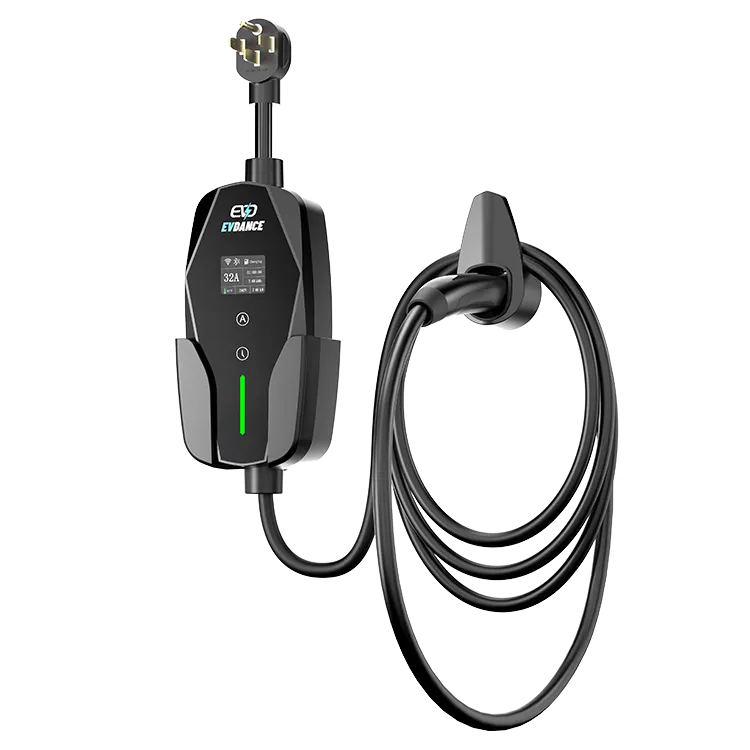
EVDANCE sells chargers, not splitters — and the charger’s settable current is what makes sharing workable. The EVDANCE EV-ACS3210T adjusts from 10 to 32 A in six steps, so a fitting step can be chosen and left. The EVDANCE EV-ACS4005T offers 16/24/32/40 A settings at 9.6 kW for larger circuits. Both are in our residential charging range; any sharing device must pass the checks above on its own merits.
Frequently Asked Questions
Is a circuit splitter the same as load management?
Cousins, not twins: the switch arbitrates one circuit between two loads; designed load management watches a panel or charger group and divides a larger total.
Can I use a splitter so the dryer and the car run together?
No — that is the one thing sharing must never do: together, the two loads can exceed what the circuit was built to carry. A product that allows both is not a sharing switch, whatever its packaging says.
Does a splitter remove the need for a dedicated circuit later?
It can postpone it, sometimes for years. If mileage grows or the juggling wears thin, a dedicated circuit remains the end state — our comparison of hardwired vs plug-in chargers covers that decision.
Related Reading
- Can I Plug a Level 2 Charger Into a Dryer Outlet?
- Does Load Balancing Increase EV Charging Speed?
- EV Charger Hardwired vs Plug-In: Which Should You Choose?
- Does an EV Charger Need GFCI Protection?

