
Most of the time, a protection is doing its job. A granny charger draws through an ordinary domestic plug and socket for hours at a stretch, heat builds at the plug, the socket or the control box on the cable, and the lead stops the session before that heat becomes damage — or the house breaker or RCD trips upstream. A lead sold for occasional use, run every night, lives at the edge of what a household socket was designed to do.
Key Takeaways
- A granny charger that keeps stopping is usually protecting the plug, socket or itself from hours of heat.
- The pattern assigns the layer: timed stops mean heat, house trips mean the circuit, a hot plug means that socket.
- Safe checks: seating, uncoiling, a direct wall connection, one test on a known-good socket.
- Nightly charging on a socket lead is a household that needs a dedicated charge point.
An Occasional-Use Lead on a Nightly Job
The duty mismatch is the whole story. A domestic socket is built for varied loads that come and go; granny charging is one steady load held all night, and heat at any weak point — a worn socket contact, a loose plug fit — grows with every hour it runs. The control box adds its own warmth: its electronics are sealed against water, so it sheds heat through its casing, and leads of this class commonly watch temperatures at the plug or in the box and cut the session at a limit. Stopping is the lead reporting that the arrangement has reached its edge.

The Stopping Pattern Points to a Layer
| Pattern | Layer it points to | First move |
|---|---|---|
| Stops after a similar length of time, most sessions | Heat building to a cut-out — plug, socket or control box | After it stops, check for warmth, smell or discolouration at the plug and socket |
| Stops sooner on hot days, or when the control box sits in sun | Ambient heat adding to session heat | Shade and airflow for the box; if it still stops in cool conditions, escalate |
| The house breaker or RCD trips instead | The circuit, upstream of the lead | Repeated trips are an electrician call — do not keep resetting and retrying |
| Plug or socket comes out hot, marked or smelling | Contact wear at that socket | Stop using that socket; an electrician replaces it |
Our guide to charging an electric car from a normal socket covers the condition checks a socket should pass before it is asked to do this work at all.
Checks That Are Safe to Make
- The plug is pushed fully home and its pins are straight; a half-seated plug is a heat source.
- The cable is fully uncoiled. A coiled lead traps its own warmth in the loop.
- The lead plugs directly into the wall socket — never through an extension lead or a multi-way adapter.
- One test session on a different, known-good socket. If the lead runs clean there, the first socket is the suspect.
- The control box sits out of standing water and direct heat, with air around it.
None of these involves opening anything or defeating a cut-out. If the lead stops on a sound socket, in cool conditions, fully uncoiled, the lead itself is the remaining suspect — a maker conversation, not another night of retries.
The Honest Endpoint: A Proper Charge Point
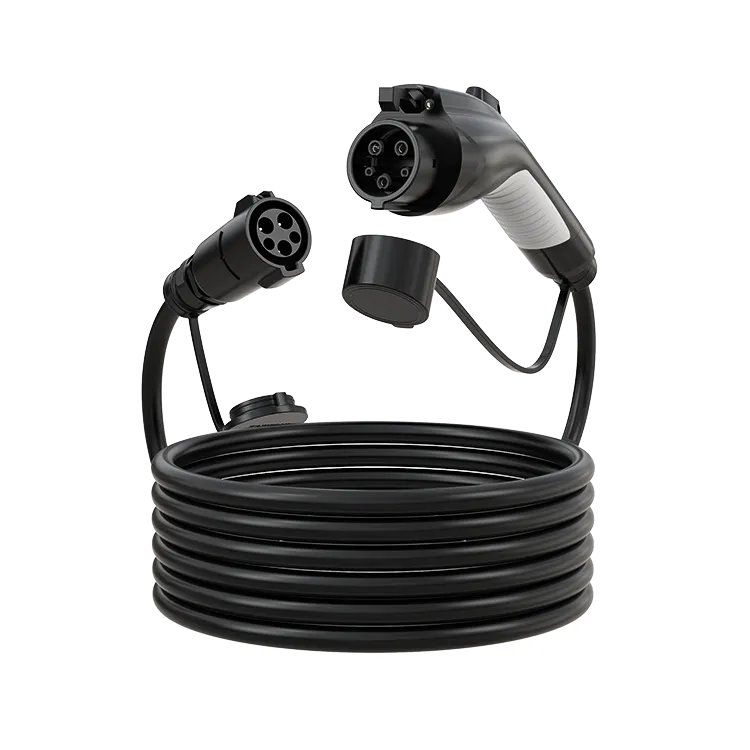
A household charging daily on a granny lead has outgrown the arrangement. The long-term answer is a dedicated charge point on its own circuit, installed by an electrician — the subject of our guide to whether a Level 1 charger needs a dedicated circuit. That step is what a hard-wired wall charger such as the EV-ACT5006T is built for; a portable on a dedicated 240 V outlet, such as the EV-AC04001U on its NEMA 14-50P plug, is the middle step. Either way, the socket stops being the weakest part of the system.
Frequently Asked Questions
Is it dangerous when a granny charger stops mid-charge?
The stopping itself is the protection working. The trigger deserves the attention — heat at the plug or socket warns about condition, so investigate it rather than charging through it.
Can I stop the cut-outs by turning the charging current down?
Only where the maker provides a lower setting, and only as the maker describes — a lower draw does ease heat. It does not repair a worn socket, and no setting should defeat a protection that keeps firing.
How long should a granny charger be able to run?
As long as the car needs, on a sound socket, in reasonable conditions. A lead that cannot finish in cool weather on a good socket is telling you something — believe it and escalate.
Related Reading
- Can I Charge an Electric Car From a Normal Socket?
- Does a Level 1 Charger Need a Dedicated Circuit?
- Can I Leave a Level 1 Charger Plugged In All the Time?
- Portable EV Charger Safety Guide 2026: NEC Rules, Extension Cords, and What to Avoid

