
Set the charger’s dial at or below what its circuit can carry continuously — never above it. EV charging is a continuous load: the NEC sizes the breaker at 125% of the charging current, so 32 A pairs with a 40 A breaker and 40 A with a 50 A breaker. But the charger’s dial is one of two settings in the session — many cars cap their own draw too, and the session runs at the lower of the two.
Key Takeaways
- Set the charger’s dial for the circuit: at or below its continuous design, paired at 125% (32 A on a 40 A breaker, 40 A on a 50 A breaker).
- Many cars add a second cap; the session runs at the lower of the two settings.
- The car’s cap is a preference in software — never the layer that makes an over-set charger safe.
- If you cannot name the circuit’s design, that is the first job; the lowest step is the setting until you can.

Dial One: The Charger’s Setting Belongs to the Circuit
The charger’s setting is the ceiling it offers the car, and it must be right for the circuit on its own. The first question is not what you feel like setting — it is what this circuit was built to carry. The install paperwork holds that answer; the breaker panel is a starting point, not proof of what the run behind the outlet supports. When the paperwork is missing, a licensed electrician is the authority: if you cannot name the circuit’s design, finding out is the first job, and until then the lowest step is the setting. Our breaker size guide works through the pairings. A travelling portable repeats the check at every new outlet.
Dial Two: The Car’s Own Cap
Many EVs let the driver limit AC charging current in the car’s menus. That cap trims the draw below whatever the charger is offering. It is useful — for a gentler session, or at a charger that is not yours. But it lives in the car’s software, as a preference. That is its limit — the two dials are not interchangeable.
| Situation | Use which dial | Why |
|---|---|---|
| Your portable, on a circuit new to you | The charger’s dial, matched to that circuit | The advertised ceiling is what the circuit must be able to carry |
| A fixed-output portable with no dial | The car’s cap — on the right circuit class | No charger setting exists to change; a fixed 40 A unit belongs on a 50 A-class circuit |
| Someone else’s wallbox, or a public AC post | The car’s cap | Their equipment’s setting is not yours to change |
The Rule That Outranks Both Dials
Never use the car’s cap to make an over-set charger acceptable. If the charger’s setting exceeds the circuit’s design, the only thing holding the session down is a menu entry in the car — one that anyone can change, and that another driver may never know exists. The circuit’s safety layer is the charger’s setting, matched under the 125% rule; the car’s cap is convenience and fit, not the protection’s substitute. The logic runs in reverse too: “the car will limit it anyway” is not a reason to raise the charger’s dial. Set the charger for the circuit; use the car for everything else.
The Dials in the EVDANCE Range
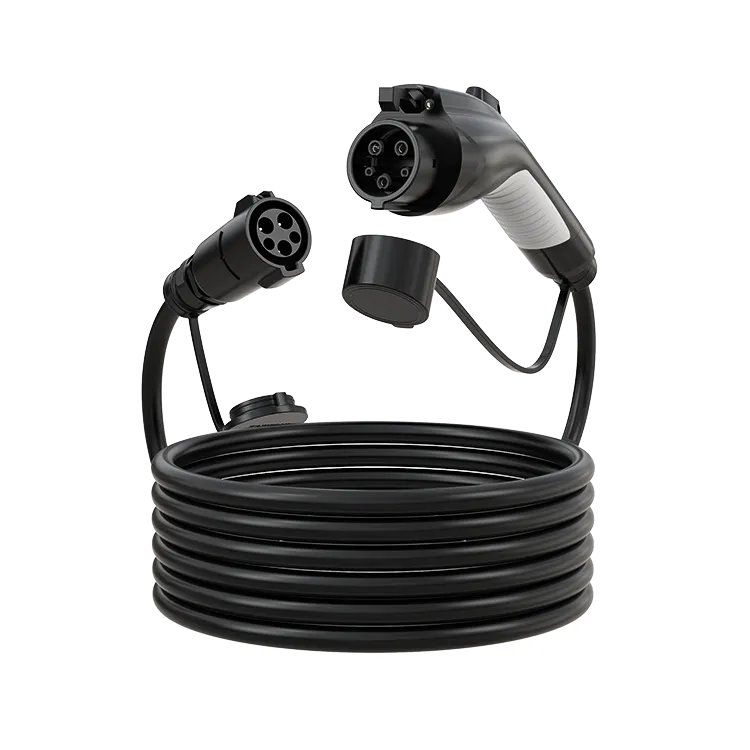
The EV-ACS3210T carries the widest dial: 10 to 32 A in six steps, about 7.7 kW at the top. The EV-ACS4005T steps through 16, 24, 32 and 40 A to 9.6 kW — the dial that reaches the 14-50 ceiling. The EV-AC04001U is the counter-case: fixed at 40 A, no settings and no app. On a smaller circuit it is not a setting problem the car’s cap can solve — it is the wrong tool, and an adjustable unit is the right one. How a portable’s speed depends on the outlet is covered in how portable chargers work.
Frequently Asked Questions
The charger is set to 32 A but my car is capped at 16 A. Which one wins?
The lower one: the session runs at 16 A. The cap trims the draw below the charger’s ceiling. Nothing is faulty — the two settings are doing what they were set to do.
Can I leave the car’s cap low and the charger’s dial high at home?
Only if the charger’s setting is already right for the home circuit on its own — paired under the 125% rule. The car’s cap may add gentleness on top; it must never be the layer that makes the pairing safe.
Who should change the setting on a hardwired wallbox?
The installer: a wallbox’s maximum is set at commissioning for its one circuit — part of the installation, not a user control.
Related Reading
- What Size Breaker Do I Need for an EV Charger?
- Do Portable EV Chargers Work? How Speed Depends on the Outlet
- Portable EV Charger Types Explained: 10A, 16A, 32A and Three-Phase Models

