
A roadside EV charging service sends help to an electric car that cannot reach a charger: a service vehicle carrying its own energy — usually a large battery pack — plugs into the stranded car and delivers a top-up where it stopped. The product is not a full battery. It is enough charge to drive to a real charger, arranged through an assistance programme, not bought at a charging post.
Key Takeaways
- A roadside EV charging service delivers a top-up from a battery on wheels — enough to reach a real charger.
- Drivers hold it three ways: club membership, insurance add-on, or automaker programme — and the terms live in those documents.
- It is not a full charge, not a repair and not everywhere; many calls still end in a tow.
- Read your own programme’s wording before the day you need it.
What Arrives, and What It Delivers
Think of it as a battery on wheels. The energy travels to the car instead of the car travelling to the energy: the car asking for help is the one vehicle that cannot move. The session happens at the roadside, sized to the gap between the car and the nearest working charger — then the car drives itself the rest of the way. It does not fill the battery, and it does not fix the car. Our examination of roadside options when an EV runs low shows how one major club’s version works in practice — and how often the same call ends in a tow, because so few service vehicles carry charging equipment.

The Three Ways Drivers Hold the Cover
| Coverage shape | Where its terms live | What to check in yours |
|---|---|---|
| Motoring-club membership | The membership documents | Is mobile charging named at all — or is a flat battery answered with a tow? |
| Insurance add-on | The policy wording | EV-specific assistance, and how far it will tow to a charger |
| Automaker assistance programme | The car’s assistance or warranty booklet | The years covered, and whether a tow to a charger is included |
Whichever shape you hold, the answer is a document question, not a marketing one. Whether a charging-equipped vehicle can reach you depends on the provider’s fleet and map — a programme offering the service in one region may offer only towing in yours. AAA’s published research, listed below, examines why towing so often remains the practical answer.
What the Service Is Not
- Not a full charge. The energy on the truck is finite; the design delivers a top-up to the next charger, not a refill.
- Not a repair. A car that will not accept a charge — a fault, not an empty battery — is a tow and a workshop, and no roadside unit changes that.
- Not everywhere. Availability is the provider’s map and fleet, checked in your programme’s documents, never assumed from the category’s existence.
- Not your own equipment. A portable charger you carry uses energy at a site you can reach; the service brings its own energy to a site you cannot leave — the distinction drawn in our explainer on what an EV mobile charger is.
Check Your Own Documents Before You Need It
- Does my programme name mobile EV charging, or only towing?
- If it tows, how far — and to a charger, or to a depot?
- Is the assistance number I would call the one that can dispatch EV help?
- Does the cover follow the car, the driver, or the household?
The Driver’s Own Version Is Equipment, Not a Service
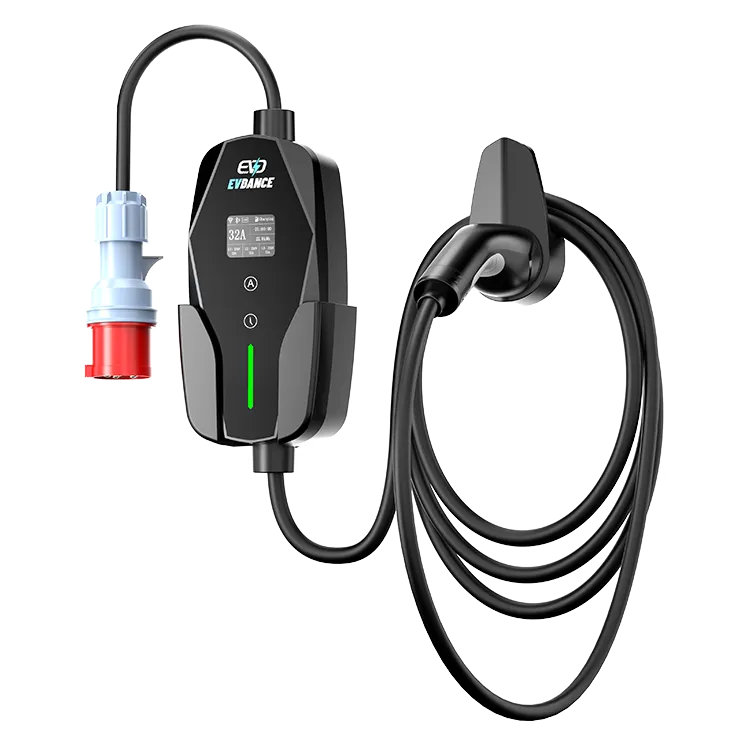
EVDANCE offers no roadside service — it manufactures chargers. The nearest thing in its range is the self-help version: a portable AC charger such as the EV-ACS4005T (40 A NACS portable, 9.6 kW, NEMA 14-50P, IP66) turns any suitable outlet you can reach — a depot, a farm, a friend’s garage — into your rescue charge. It cannot help a car already empty at the roadside; that gap is exactly what the service exists for. The range is on our products page.
Frequently Asked Questions
How much charge does a roadside call-out give?
Enough to reach a charger — set by the provider’s unit and your distance from the next working post. A top-up measured against that gap, not a full battery.
Can any tow truck charge my EV?
No. Only service vehicles fitted with a mobile charging unit can, and most carry none. Where no equipped vehicle is available, the same call normally ends in a tow to a charger — which is why your documents’ tow terms matter as much as the charging promise.
Is a roadside charging service the same as a mobile charging van?
No. The roadside service is an emergency response reached through an assistance programme. Mobile charging vans also exist as scheduled, commercial operations booked by sites and fleets — a different product using similar hardware.
Related Reading
- Does AAA Have Portable EV Chargers? Roadside Options When Your EV Runs Low
- What Is an EV Mobile Charger?
- Can You Charge an EV With a Portable Battery or Power Bank?

