
For most homes, no. A 22 kW charger only delivers 22 kW when three gates all stand open: your house has a three-phase supply, your car can accept 22 kW of AC power, and your driving pattern actually needs the hours the extra power saves. Fail any one gate and a 7 kW or 11 kW class charger refills the same car in the same night.
Key Takeaways
- 22 kW at home needs three gates open: three-phase supply, a car that accepts 22 kW AC, and a pattern that needs the saved hours.
- The supply is a survey fact and the car’s AC ceiling is in its own specification.
- Overnight, 7–11 kW classes refill most cars with hours to spare.
- The honest 22 kW cases: short windows, high miles, shared points.
Gate One: Is Three-Phase Power Really at Your House?
This is a survey fact, not an assumption. A 22 kW AC charger draws about 32 A on each of three phases, so the supply itself has to be three-phase. Many homes are single-phase, and no wallbox setting changes that. The signs are covered in our guide to single-phase vs three-phase EV charging: a three-phase meter, linked main switches, three service fuses. Your network operator can confirm from your address, and a licensed electrician can confirm on site. If the supply is single-phase, adding three-phase is the network operator’s project, with their price and timescale.

Gate Two: Can Your Car Accept 22 kW of AC?
The wallbox offers AC power; the car’s onboard charger converts it and sets the ceiling. Car makers cap that ceiling by design, and many cars accept 11 kW or less on AC. A 22 kW wallbox connected to an 11 kW car delivers 11 kW, every night, at 22 kW money. The deciding figure is in your car’s own specification, under AC charging or onboard charger rating: a per-car document, not a class average. If the car fails this gate, the question is closed: buy for the car’s ceiling, not above it.
Gate Three: Does Your Driving Need the Hours Back?
This is the gate most households fail, and the one buyers check last. Level 2 charging adds roughly 10 to 20 miles of range per hour. Work through your own pattern:
| Your pattern | What happens overnight at 7–11 kW | Does 22 kW change anything? |
|---|---|---|
| Typical daily miles, car parked 10+ hours | The day’s driving is replaced in a few hours | No. The car sits full either way |
| Very high daily miles, short nights | The window can run out before the battery refills | Possibly, if gates one and two also pass |
| Two EVs sharing one charge point | Each car gets part of the night | Possibly. Halved windows are where power helps |
| Short daytime top-ups between trips | An hour plugged in adds a modest amount | Yes. This is the honest 22 kW use case |
Our comparison of charging time at 7 kW, 11 kW and 22 kW shows the same pattern in hours: the gap matters in short sessions and mostly disappears overnight.
The Overnight Maths That Settles Most Homes
Set your daily miles against the hours your car actually sits at home. For most drivers the window is generous: even the lower Level 2 classes return the day’s range long before morning. The 22 kW class earns its cost only when the window is short, the daily distance is large, or two cars time-share one point. Everything else buys capacity a sleeping car cannot use.
22 kW Options From EVDANCE
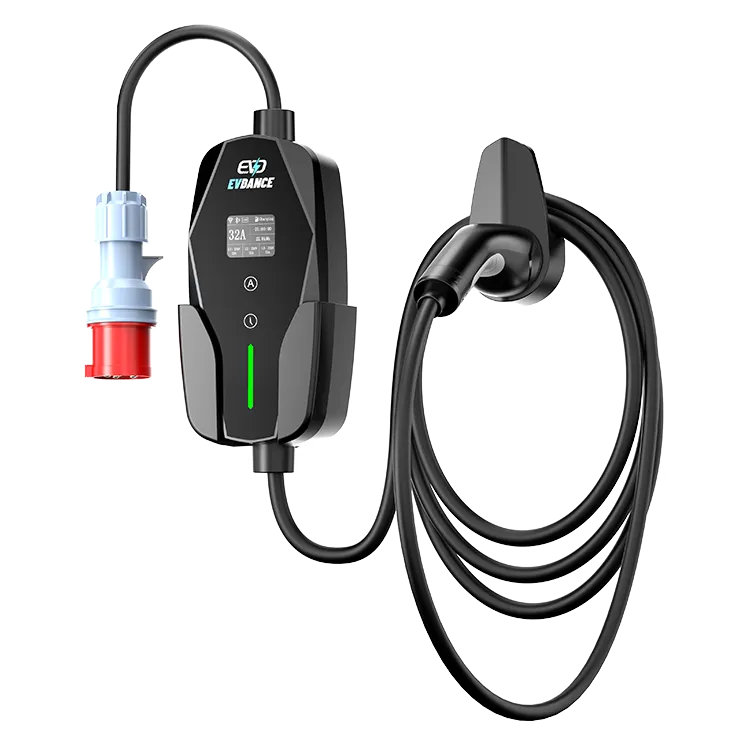
The EV-ACT3204PE is a 22 kW three-phase wallbox with a tethered Type 2 cable, RFID and app control, and an IP66 rating. Where a three-phase industrial socket is already installed, the EV-ACS3205PE is a 22 kW three-phase portable charger with a CEE 32 A plug; our guide to choosing 16 A or 32 A CEE plugs explains the socket side. Either unit delivers its full rating only when all three gates pass.
Frequently Asked Questions
Can I buy 22 kW now as future-proofing?
Only if the gates are likely to open: a three-phase supply already present, and a next car whose specification accepts 22 kW AC. Capacity above both your supply and your car is capacity you cannot use.
Will a 22 kW charger cost more to install?
It needs a dedicated three-phase circuit, a bigger job than a single-phase one. The price belongs to your installer’s quote after a survey, not to a general figure.
What if one of our two cars accepts 22 kW and the other does not?
The charger serves each car at its own ceiling: the 22 kW car charges faster, the other exactly as on an 11 kW unit. Gate three then asks whether the faster car’s pattern justifies the class.
Related Reading
- Single-Phase vs Three-Phase EV Charging: 7 kW, 11 kW and 22 kW Explained
- How Long Does It Take to Charge an EV at 7 kW, 11 kW and 22 kW?
- CEE Plugs Explained: Choosing 16 A or 32 A for a Three-Phase Portable EV Charger

