Before you send a Chinese factory your housing drawings, app screens or brand guidelines, it helps to know what actually protects them. For most private-label EV charger projects the answer is a mix of three things: a confidentiality agreement signed early, a supply contract that says who owns what, and a clear clause on the molds (tooling) your money pays for. This article explains each one in plain terms. It sits within our complete guide to OEM and private-label EV chargers, which covers the full project from brief to delivery.
Nothing here is legal advice. Contract law differs between countries, and an agreement you may need to enforce in China should be reviewed by a lawyer who practises PRC law.
NDA vs NNN: what each one covers
A standard non-disclosure agreement (NDA) stops the other party from passing your confidential information to others. That is useful, but it does not stop a factory from using what it learned to make a similar charger for someone else, or from approaching your customers directly. An NNN agreement adds those two protections. The China IP SME Helpdesk describes NNN as non-disclosure, non-use and non-circumvention, under which the manufacturer cannot produce your product, or similar products, for anyone other than you.
| Clause | What it stops | EV charger example |
|---|---|---|
| Non-disclosure | Sharing your information with third parties | Housing drawings, PCB changes or app screens passed to another buyer |
| Non-use | Using your information outside your project | Your custom control-box design offered to others as a catalogue model |
| Non-circumvention | Going around you to reach your customers or partners | The factory quoting the retailers or installers you introduced |
For a brand that only adds a logo to a standard model, a well-drafted NDA may be enough. Once you invest in a unique housing, a firmware feature or a white-label app, an NNN is usually the better fit.
What official guidance recommends
Two public resources are worth reading before you draft anything. The USPTO’s China Intellectual Property Rights Toolkit advises requiring an NDA before entering negotiations with potential partners, and suggests it be governed by PRC law, written in Chinese, and include secrecy and non-use obligations and audit rights. It also recommends selecting PRC manufacturers carefully and monitoring them closely.
The EU’s China IP SME Helpdesk gives similar advice. Its Managing IP in China guide warns against starting a partnership without a signed contract, notes that a contract in China may be read as a ‘guideline for cooperation’, and recommends stating which IP rights the buyer owns and that developments made by the supplier for the buyer belong to the buyer.
In practice, buyers and their lawyers often apply that advice like this:
- Sign before you share: send detailed drawings, firmware requirements or app specifications only after the agreement is signed.
- Use a Chinese-language version, ideally as the controlling text, so there is no dispute over translation.
- Choose a court or arbitration body in China that can enforce the agreement against the factory’s assets.
- Set a fixed sum for breach (liquidated damages) so you do not have to prove the exact loss.
- Make sure the agreement is signed and stamped with the company seal (chop) of the legal entity you actually contract with.
Protect your brand name first
An NNN does not replace a trademark. China uses a first-to-file system, and the International Trade Administration points out that registering IP in the US does not automatically give you rights in China. If someone else files your brand name in China first, you may find yourself arguing about the name printed on your own chargers and cartons. Our guide to registering your trademark before ordering covers the USPTO, EUIPO, Madrid and CNIPA routes.
Tooling ownership: put it in the contract
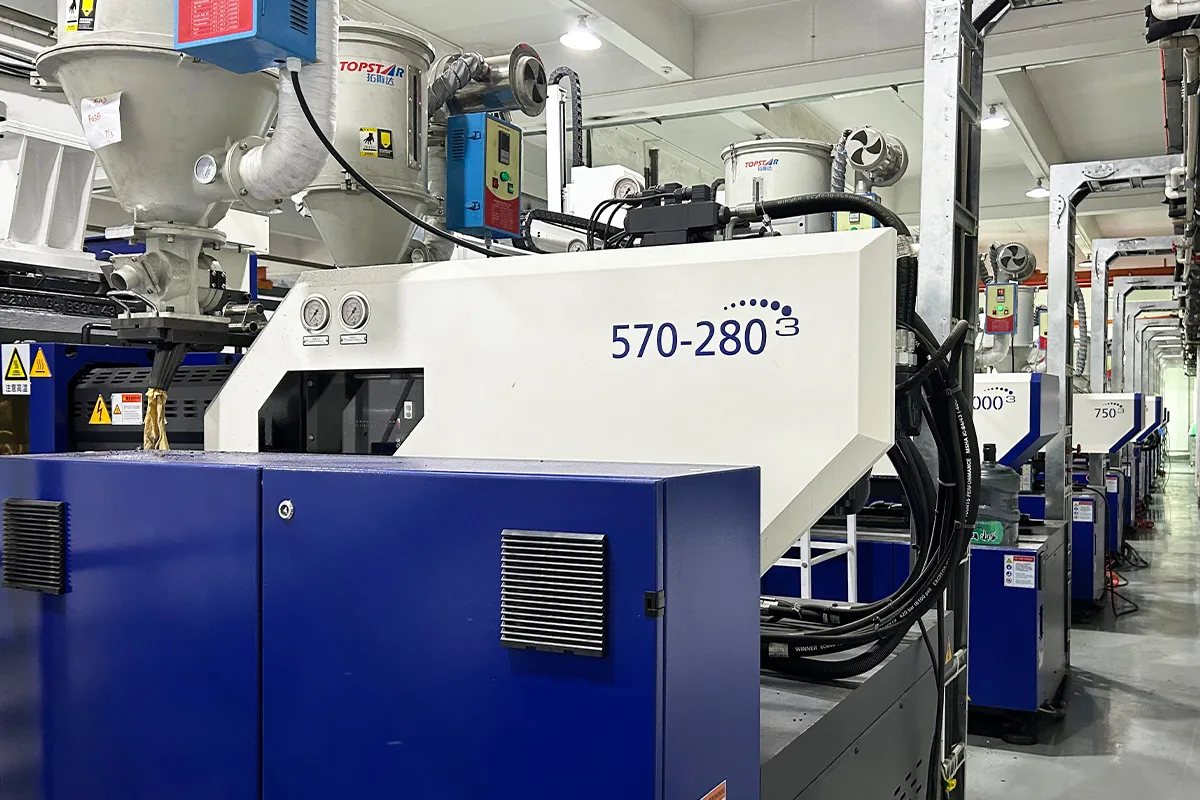
Tooling means the steel molds used to inject the plastic housing, control-box shell, connector handle or holster. If you pay for a custom mold, you want to know who owns it, where it is kept and what happens if you change supplier. Factories with in-house injection molding keep molds on site next to the presses, which makes clear paperwork more important, not less.
Clauses to include
- Ownership: the buyer owns molds it has paid for in full, and the factory holds them as custodian.
- Identification: each mold is listed by part, number of cavities and a mold number, and ideally marked with your project reference.
- Exclusive use: the mold is used only for your orders, which links the tooling clause to the non-use promise in your NNN.
- Maintenance and life: who pays for routine maintenance, repair and replacement when the mold wears out.
- Transfer: how and when the mold is released if you move production, including any balance that must be paid first.
- Storage: how long an idle mold is kept before the factory may ask you what to do with it.
Note the difference between a custom mold and a catalogue housing. If you choose a standard model and change only the logo, colours, cable and packaging, the housing tooling normally stays with the factory, because other customers use the same shell. That is one reason the OEM vs ODM decision matters for IP as well as cost.
Where these documents fit in the project
A common sequence is an NDA or NNN at first contact, once you start sharing details; a framework supply agreement before the sample order; and a purchase order for each batch that refers back to that agreement. The step-by-step OEM project guide shows where samples, tooling and certification fit into the same timeline.
Keep the paperwork consistent. The brand and company name on the agreements should match your trademark filing, your product documents and your packaging, so that every document points to the same owner. Keep signed originals and the Chinese version together, with a record of which drawings and files were shared and when.
Working with EVDANCE
EVDANCE has run OEM and ODM programs from Shenzhen since 2011, with in-house engineering, injection molding, assembly and testing, and private label from 50 units. Raise confidentiality and tooling questions at the start of the conversation: your dedicated account engineer stays with the project from sampling to mass production, so the person who agreed the tooling list is the one who follows it through. See how our OEM and ODM program works, or contact our team to start.
Key Takeaways
- An NDA protects information, while an NNN also stops the factory from using your design or going around you to your customers.
- US and EU guidance recommends signing before sharing, with agreements written in Chinese and governed by PRC law.
- Register your trademark in China early, because a US or EU registration does not protect you under China’s first-to-file system.
- If you pay for custom molds, the contract should state ownership, exclusive use, maintenance and transfer terms.
Sources & Standards
- U.S. Patent and Trademark Office (STOPfakes.gov) — China Intellectual Property Rights Toolkit (2023 Edition)
- China IP SME Helpdesk, European Commission — China: Frequently Asked Questions
- China IP SME Helpdesk, European Commission — Managing IP in China
- International Trade Administration — China Country Commercial Guide: Protecting Intellectual Property