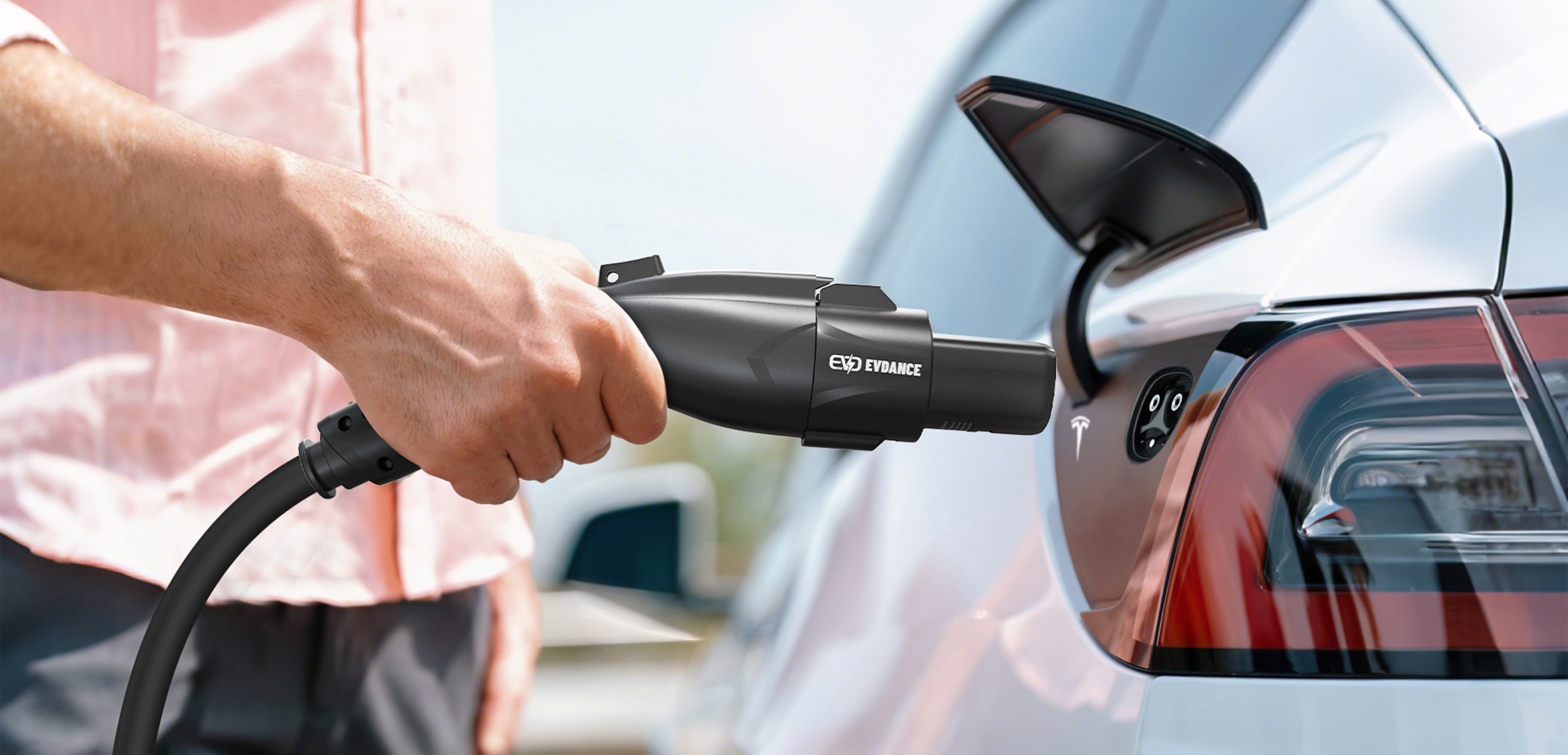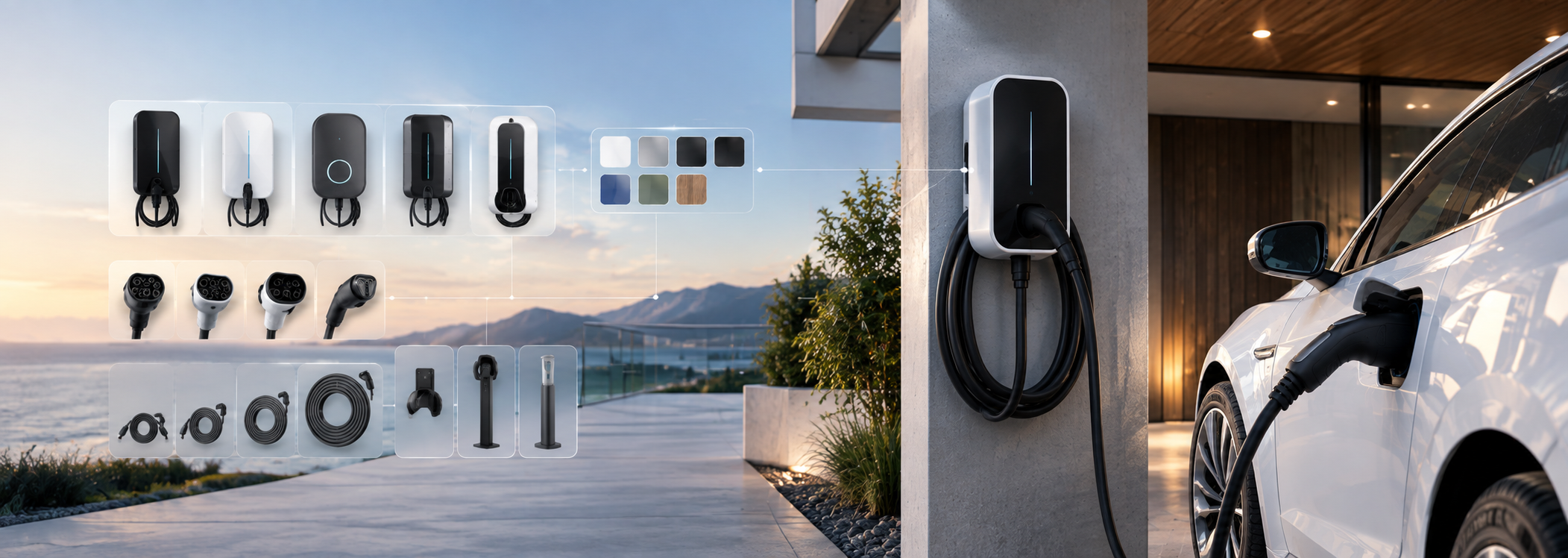
Distributors and online sellers entering EV charging face an early choice. You can resell chargers carrying another company’s brand, or put your own name on a product made for you. Both models work. They differ in margin, control and, most of all, in the legal responsibilities you accept.
This article sets out the trade-offs in plain terms. For the full picture of how private label works, from sampling to shipping, see our complete guide to OEM and private-label EV chargers.
The two models in brief
When you resell a branded charger, the brand owner designs the product, holds the certifications, writes the manuals and answers to regulators as the manufacturer. You buy, stock and sell. Your obligations are those of a distributor or retailer.
With private label, a factory produces a charger that carries your brand, either from its existing design (ODM) or to your specification (OEM). Our article on OEM vs ODM EV chargers explains the difference. In both cases the market sees you as the maker of the product.
Where private label wins
- Margin. You are not paying for another brand’s marketing and channel structure, so there is usually more room between landed cost and selling price.
- Control of your listings. Online, brand ownership matters. Amazon states that a brand needs an active registered or pending trademark to enrol in Brand Registry, a benefit aimed at owners of their own brand. Read Amazon Brand Registry for private-label EV charger sellers for details.
- Product fit. You choose the connector, grid plug, cable length, packaging and accessories for your market rather than accepting a global compromise.
- Customer relationship. Reviews, warranty registrations and repeat purchases build your brand, not someone else’s.
- Exclusivity. A supplier cannot withdraw your brand or appoint a competing distributor for it.
What you take on as the brand owner
The other side of control is responsibility. In the EU, Your Europe explains that anyone who has a product made and sells it under their own name or brand counts as the manufacturer for CE marking. That means the declaration of conformity, technical documentation and conformity assessment are your responsibility, even if the factory does the testing. See CE marking for private-label chargers sold in the EU.
Product liability follows the same logic. Under Article 4(10)(b) of Directive (EU) 2024/2853, a person who puts their name or trademark on a product and presents themselves as its manufacturer is treated as the manufacturer. Our article on product liability for private-label EV charger brands explains what changes when the new directive applies.
Great Britain takes a similar approach: GOV.UK guidance says an importer that uses its own brand takes on manufacturer responsibilities.
In the United States, reporting duties apply to resellers as well. The CPSC says that manufacturers, importers, distributors and retailers must report qualifying information about defects or noncompliance. As a brand owner and importer you are the first party regulators and customers will contact, so you need a process to collect complaints and decide quickly.
Side-by-side comparison
| Factor | Reselling a branded charger | Private label |
|---|---|---|
| Gross margin | Set by the brand’s price list | Usually higher, set by you |
| Upfront commitment | Stock orders only | Samples, branding set-up, minimum order |
| Certification | Held by the brand owner | You must hold or be covered by it |
| Legal role in EU | Distributor | Treated as manufacturer |
| Marketplace control | Limited, many sellers on one listing | Brand Registry possible with a trademark |
| Warranty and returns | Often backed by the brand | Your policy, backed by your supplier |
| Brand building | Builds another company’s brand | Builds your own brand equity |
Ways to reduce private-label risk
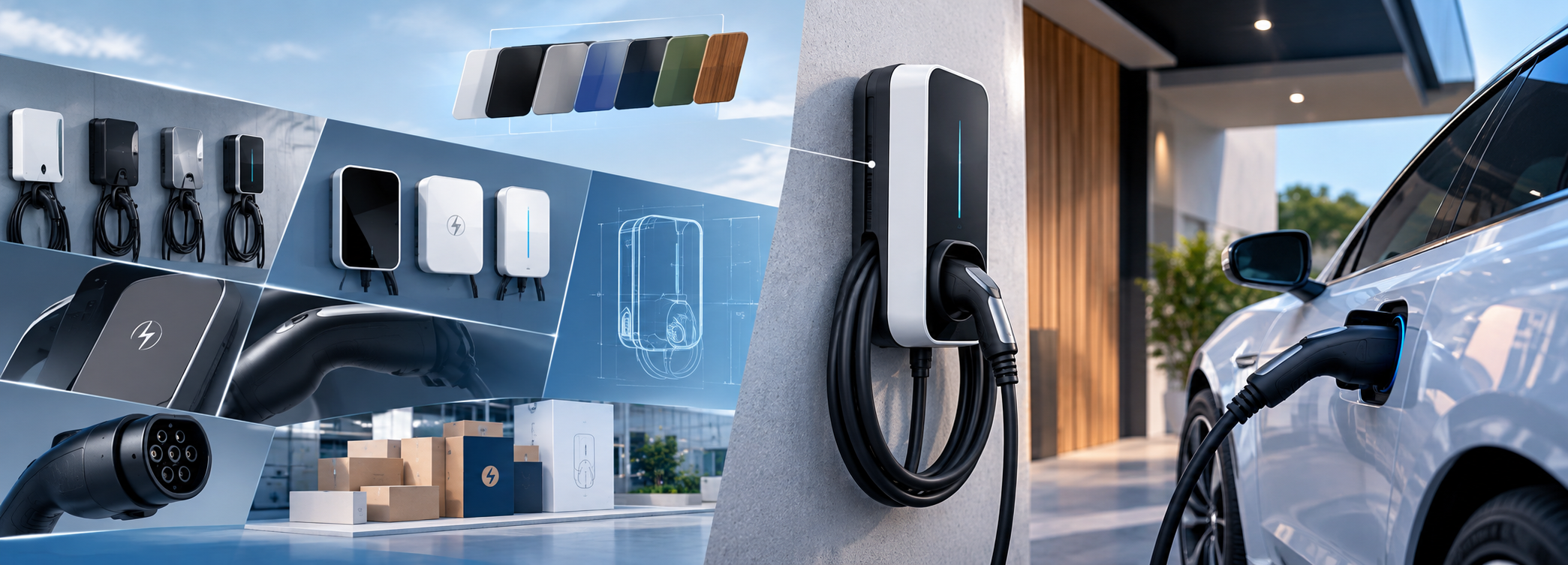
You do not have to choose between full control and no control. Many distributors start with an ODM model that already has a test history, add their logo and packaging, and only later fund custom features.
- Start small. EVDANCE runs private-label orders from an MOQ of 50 units, which keeps the first commitment limited. See EV charger MOQ explained.
- Use certified platforms. Ask for the certificate and test report for the exact model and configuration, since certification marks vary by model.
- Register your trademark before you order. See register your trademark before ordering.
- Agree warranty support in writing. EVDANCE offers a 3-year standard warranty, and our warranty and after-sales checklist lists what to cover.
- Talk to a lawyer or compliance adviser about your role in each market before launch.
Which model suits you?
Reselling a branded charger suits companies that want a quick start, have no appetite for compliance work, or sell into channels where an established name is required. Private label suits sellers who have a defined market, a sales channel they control, and the willingness to own documentation, complaints and reporting.
Some distributors run both: a branded range for tenders that specify it, and a private-label range for e-commerce and installer sales. If you want to explore your own range, see our programs for resellers and distributors or become a partner.
Key Takeaways
- Private label usually offers better margin and listing control than reselling, but you become the manufacturer in the eyes of the law.
- In the EU, putting your brand on a charger makes you responsible for CE documentation and treats you as manufacturer for product liability.
- In the US, CPSC reporting duties apply to importers, distributors and retailers, not only to manufacturers.
- Starting with a certified ODM model and a small first order limits private-label risk while you test the market.
Sources & Standards
- European Union (EUR-Lex) — Directive (EU) 2024/2853 on liability for defective products
- Amazon (Sell on Amazon) — What are the requirements for enrolling a brand in Amazon Brand Registry?
- U.S. Consumer Product Safety Commission — Duty to Report to CPSC: Rights and Responsibilities of Businesses
- Your Europe (European Union) — CE marking
- GOV.UK — Placing UKCA or CE marked products on the market in Great Britain