
To plug in an EV charger at home, park and switch the car off, plug the charger into the wall outlet first, wait for its ready light, then push the connector into the car until it clicks and confirm charging has started on the dashboard. To stop, end the session, remove the connector from the car first, then unplug from the wall and coil the cable.
Key Takeaways
- Plug into the wall first, wait for the ready light, then connect the car until it clicks.
- Confirm the session on the car’s display; timers are the most common false alarm.
- End in reverse: stop the session, remove the car connector, then the wall plug.
- Match the outlet and circuit to the charger, and never use an extension cord.
Step 1: Choose the Right Outlet
| Outlet | Charging level | What to check |
|---|---|---|
| Standard household outlet (120V in the US) | Level 1, about 1 kW | Socket condition; best for overnight top-ups |
| 240V outlet such as NEMA 14-50 | Level 2, 7–19 kW range | Circuit rating must match the charger’s setting |
| Hard-wired wallbox (no plug) | Level 2 | Nothing to plug in at the wall; use the connector only |
The outlet decides your speed before anything else, as how portable chargers depend on the outlet explains. Use a socket in good condition, plug the charger in directly, and do not use an extension cord: our portable EV charger safety guide covers why extension cords are not a workaround.

Step 2: The Plug-In Sequence
- Park and power down. Position the car so the cable reaches without stretching, and switch it off.
- Plug into the wall first. Push the charger’s plug fully into the outlet. The control box runs its self-check.
- Wait for the ready light. A steady ready or power light means the charger is prepared; a fault light means stop and check the manual.
- Connect the car. Remove the connector from its holster and push it into the car’s inlet until it clicks or latches.
- Confirm the session. The car should show a charging status, a rising percentage or a scheduled start time. If nothing starts, check the car’s charge timer before blaming the charger.
This order lets the charger’s protection checks pass before the car is connected. It is the user routine; the electrical handshake itself is described in how home EV chargers work.
Step 3: Ending a Session and Storing the Cable
Stop the charge from the car or app first if a session is running, then press the release on the connector and pull it straight out of the inlet. Hang it back in its holster so the contacts stay clean, then unplug the charger from the wall if you store it between uses, and coil the cable loosely without sharp bends. Drivers who keep a portable unit connected permanently should read whether you can leave a Level 1 charger plugged in.
A Plug-In Charger Built for This Routine
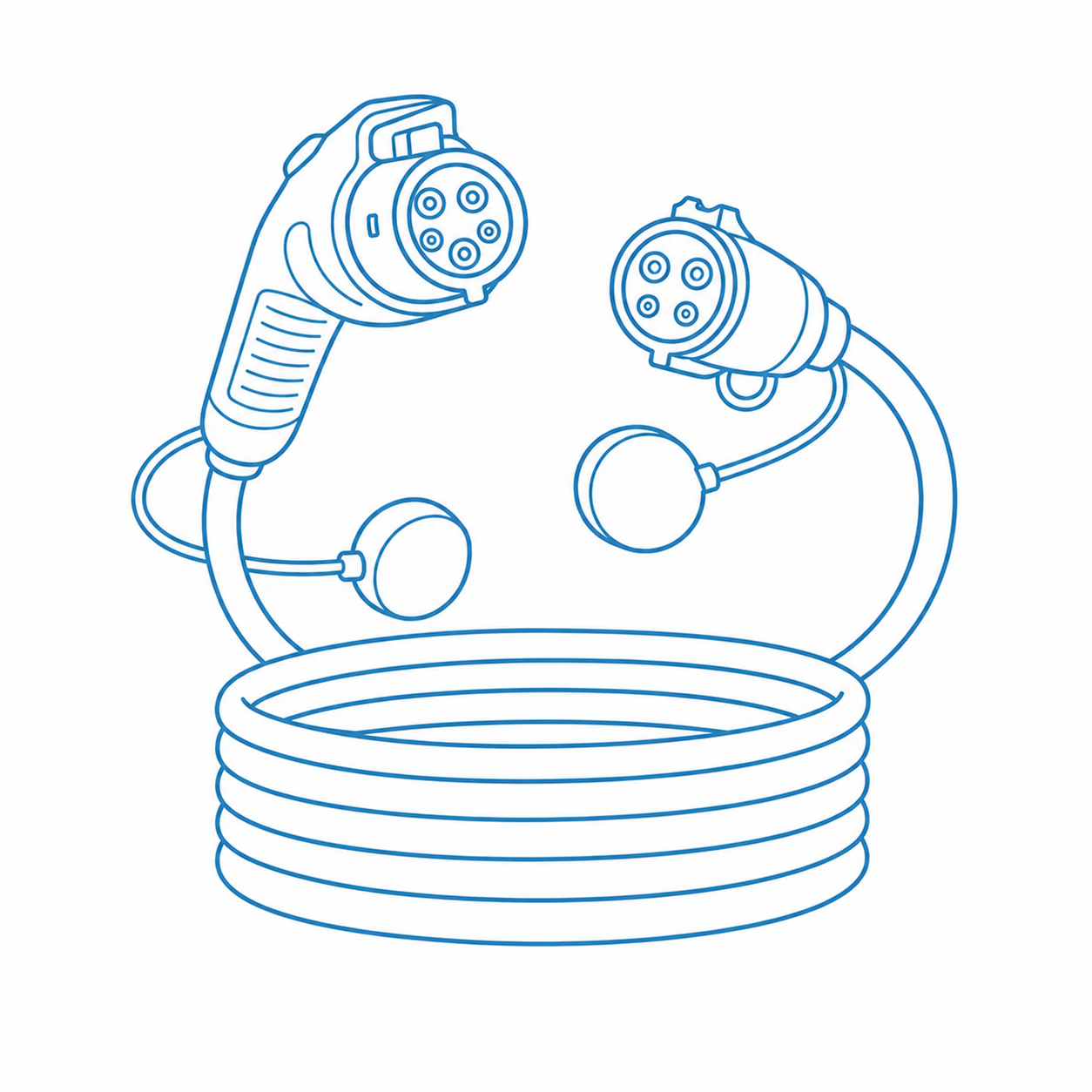
The EV-AC04001U 40A J1772 portable charger plugs into a NEMA 14-50 outlet, delivers 9.6 kW with an SAE J1772 connector, and is IP66 rated with a 25 ft cable, so the same plug-in routine works in a garage or on a driveway. Set its current to match your circuit, and have a licensed electrician check any outlet you are unsure about.
Frequently Asked Questions
Which end do I plug in first, the wall or the car?
The wall. Plugging the charger into the outlet first lets its self-checks run, and only then should you connect the car. When you finish, reverse the order: car connector out first, wall plug last.
Where can I plug in an EV charger at home?
Into a household outlet for slow Level 1 charging, or into a 240V outlet such as a NEMA 14-50 for Level 2 speeds, provided the circuit rating matches. Our guide to charging from a normal socket covers the slow option in depth.
The charger is plugged in but the car is not charging. What should I check?
Check the car first: a scheduled-charging timer, a charge limit, or an unlatched connector are the usual causes. Then check the charger’s indicator lights and the outlet. If the outlet or breaker shows any sign of heat or damage, stop and call an electrician.
Related Reading
- Do Portable EV Chargers Work? How Speed Depends on the Outlet
- Can I Charge an Electric Car From a Normal Socket?
- Portable EV Charger Safety Guide 2026: NEC Rules, Extension Cords, and What to Avoid
- How Do Home EV Chargers Work?

