
A 7 kW charger uses about 7 kWh of electricity for every hour it charges at full power. A four-hour session uses about 28 kWh, and an eight-hour overnight session about 56 kWh. At the U.S. average residential price of 18.31 cents per kWh, those sessions cost roughly $5.13 and $10.25.
Key Takeaways
- A 7 kW charger uses about 7 kWh per hour at full power.
- An eight-hour session is about 56 kWh, roughly $10.25 at the U.S. average rate.
- Real use is lower when the car tapers or accepts less than 7 kW.
- Your own tariff, not the national average, decides your real cost.
The Session Numbers
The math is simple: kilowatts multiplied by hours gives kilowatt-hours. The U.S. Department of Transportation puts Level 2 charging at about 10 to 20 miles of range per hour, so you can also estimate the range each session buys you.
| Session length | Energy used | Cost at 18.31 cents/kWh | Range added (approx.) |
|---|---|---|---|
| 1 hour | 7 kWh | $1.28 | 10 to 20 miles |
| 4 hours | 28 kWh | $5.13 | 40 to 80 miles |
| 8 hours | 56 kWh | $10.25 | 80 to 160 miles |

What a Month Looks Like
Take a driver who charges for four hours, three times a week. That is roughly 12 sessions a month: 12 times 28 kWh is 336 kWh, or about $61.52 at the U.S. average residential rate. Your own figure depends on how far you drive and how efficient your car is. Drivers who cover fewer miles will use less, no matter what the charger is rated at. Our breakdown of the cost to charge an electric car at home works through the same calculation in more detail.
Why Your Real Number Varies
The table assumes the charger runs at a full 7 kW the whole time. Real sessions differ for a few reasons:
- Your car’s limit: if the onboard charger accepts less than 7 kW, the session draws less per hour and runs longer.
- Tapering: most cars slow down as the battery nears full, so the last part of a session uses less.
- Conversion losses: some energy is lost as heat when AC power is converted to DC in the car.
- Your tariff: 18.31 cents is a national average. Check your own bill, and note that time-of-use plans can make overnight energy cheaper.
Efficiency also differs by charging level, as we explain in does Level 1 charging use more electricity.
A 7 kW Charger to Do It With
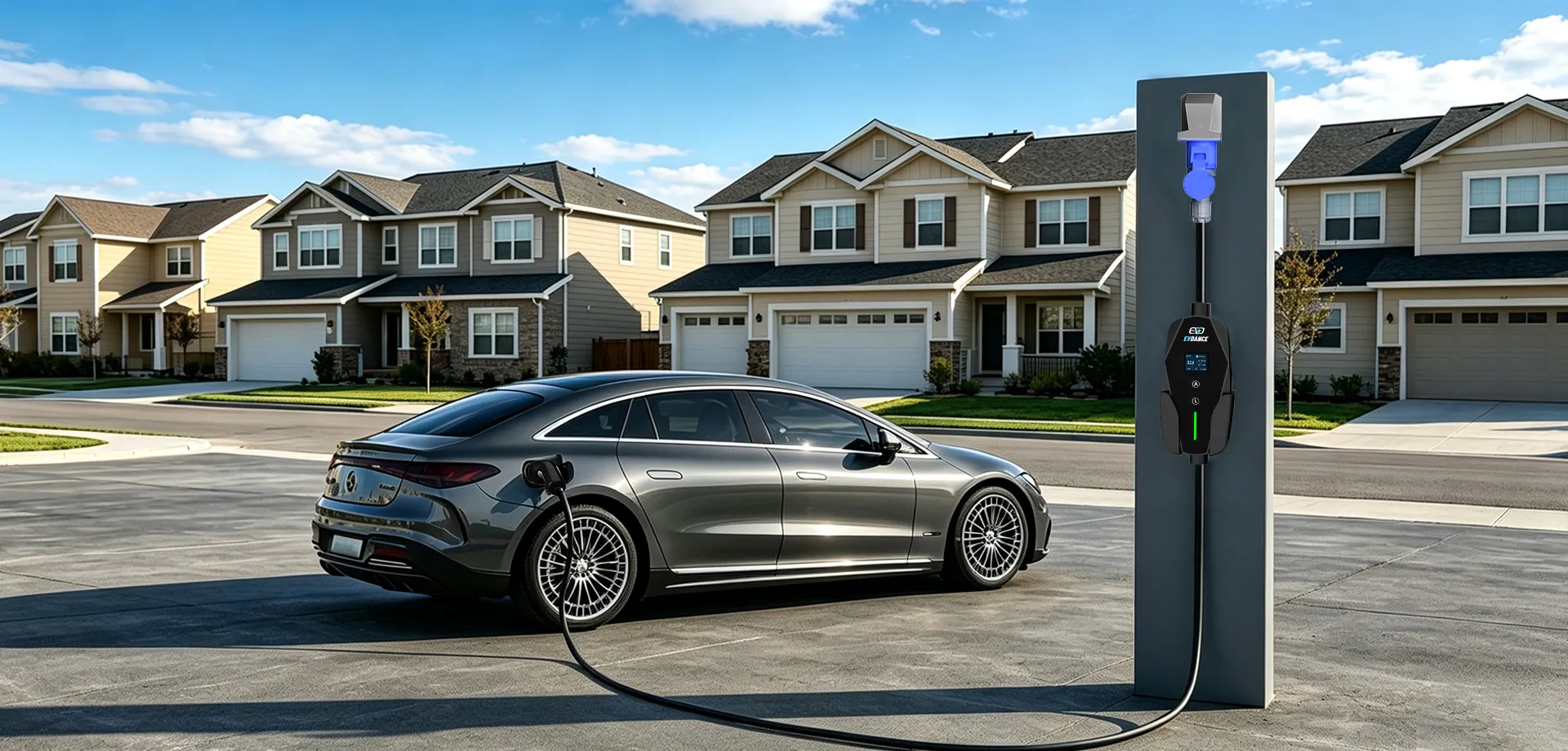
The EV-ACS3210E is a 32A Type 2 portable charger delivering about 7 kW on a single-phase supply, with an IP66 rating for outdoor use. Plugged in overnight, it covers the eight-hour row of the table above without any fixed installation.
Frequently Asked Questions
Does a 7 kW charger draw 7 kW all night?
Only while the car is actively charging at full rate. Once the battery reaches its target, the charger drops to near zero, apart from a small standby draw.
How many kWh is a full charge?
It depends on the battery size and how empty it is. A car that needs 40 kWh to fill will take about six hours at 7 kW, and the meter will record roughly that amount plus losses.
How do I find my own price per kWh?
Look at your electricity bill. Divide the total energy charge by the kWh used, or find the per-kWh rate printed in the tariff section.
Related Reading
- Cost to Charge an Electric Car at Home
- Is Charging an Electric Car Cheaper Than Gas?
- Does Level 1 Charging Use More Electricity?
- EV Charging Time: 7 kW vs 11 kW vs 22 kW

