
A J1772 charger does not have one fixed speed, because J1772 is a connector, not a power level. The same plug carries Level 1 charging at 120 volts, about 1 kW and 2–5 miles of range per hour, and Level 2 charging at 240 volts, 7–19 kW and 10–20 miles per hour, using U.S. Department of Transportation figures. Which one you get depends on the circuit and the charger, not the plug.
Key Takeaways
- J1772 is a connector, not a speed; it carries both Level 1 and Level 2 AC charging.
- Level 1 J1772 charging is about 1 kW; Level 2 runs from 7 to 19 kW.
- The charger, the circuit and the car’s onboard charger all cap the rate; the lowest wins.
- J1772 is not DC fast charging, but Level 2 J1772 covers most overnight charging needs.
One Plug, Two Speeds
J1772 is the standard AC connector for most non-Tesla EVs in North America, as explained in what J1772 is. Because it works at both voltages, asking how fast a J1772 charger is really means asking which level it is running at:
| Setup | Voltage | Power | Range per hour | Time to add 40 kWh |
|---|---|---|---|---|
| Level 1, 12 A | 120 V | About 1.4 kW | 2–5 miles | About 28 hours |
| Level 2, 32 A | 240 V | 7.7 kW | 10–20 miles | About 5 hours |
| Level 2, 40 A | 240 V | 9.6 kW | 10–20 miles | About 4 hours |
| Level 2, 48 A | 240 V | 11.5 kW | 10–20 miles | About 3.5 hours |
The times are simple division of energy by power, so treat them as estimates. Real sessions vary with charging losses, battery temperature and how full the battery already is. Our overview of Level 1 vs Level 2 vs DC fast charging puts the three levels in context.

What Actually Limits Your Speed
Three ratings decide the real charging rate, and the slowest one wins:
- The charger. A portable or wall unit is rated for a maximum current, such as 32 A or 40 A.
- The circuit. EV charging is a continuous load, so under the NEC the breaker must be 125% of the charging current: a 40 A charger needs a 50 A breaker.
- The car. The onboard charger converts AC to DC and has its own limit. A car that accepts 7.7 kW will charge at 7.7 kW even on an 11.5 kW unit.
This is also why two cars on the same J1772 station can charge at different speeds, and why a public Level 2 post may be slower than your home unit.
Is J1772 a Fast Charger?
Not in the DC fast-charging sense. J1772 on its own carries AC power only. DC fast charging uses different connectors, such as CCS1, which adds two DC pins below the J1772 shape, as covered in does J1772 work with CCS. Compared with Level 1, though, Level 2 J1772 charging is roughly five to ten times faster, which is enough to refill most cars overnight.
J1772 Charging at Home
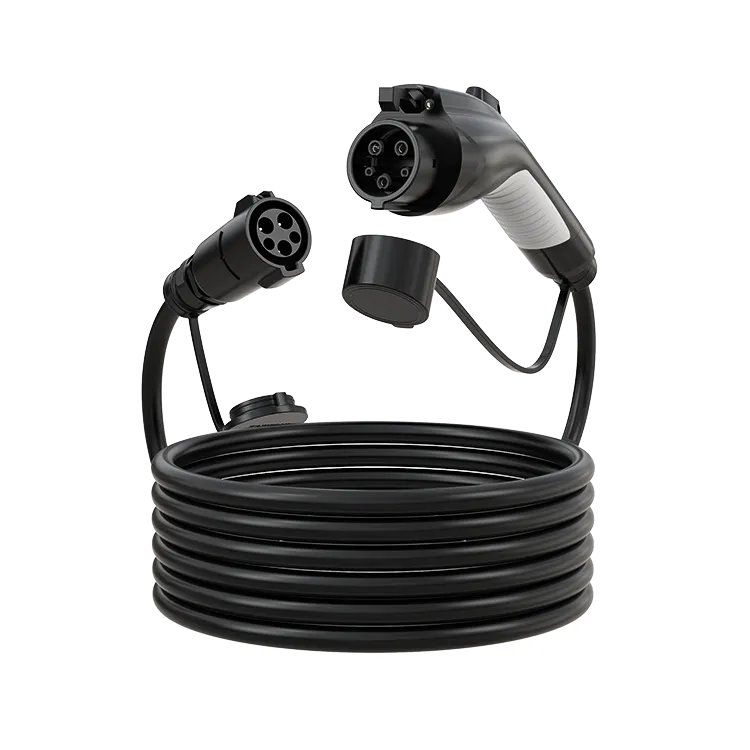
For home use, the EV-AC04001U 40A J1772 portable charger delivers 9.6 kW from a NEMA 14-50 outlet, near the top of what most cars can accept on AC. Drivers whose cars have a NACS port can also meet J1772 equipment with the right adapter strategy; the JT02 NACS-to-J1772 adapter supports AC charging at up to 80 A where the car and station allow it.
Frequently Asked Questions
Are J1772 chargers Level 2?
They can be either. J1772 is used for both Level 1 (120 V) and Level 2 (240 V) AC charging. Most wall-mounted and public J1772 chargers are Level 2; portable cords plugged into a household outlet are Level 1.
How long does a J1772 charger take to charge a car?
It depends on the level and the battery. Adding 40 kWh takes about 28 hours at Level 1 power, about 5 hours at 7.7 kW, and about 4 hours at 9.6 kW. Few drivers charge from empty, so daily top-ups are much shorter.
Why is my J1772 charging slower than the charger’s rating?
Usually the car’s onboard charger is the limit, or the charger has been set to a lower current to match its circuit. Charging also slows as the battery nears full.
Related Reading
- What Is J1772? The North American EV Plug Explained
- Level 1 vs Level 2 vs DC Fast Charging
- Does J1772 Work With CCS?
- Can a Tesla Use J1772 Chargers?

