
Treat a flooded EV charger as damaged until a professional says otherwise. Do not use it, do not touch it with wet hands or while standing in water, and only switch it off at the breaker if you can do so safely from a dry position. Once the water is gone, an electrician or the manufacturer should inspect the unit before it is powered again — and submerged chargers are often replaced rather than repaired.
Key Takeaways
- Never touch or use a charger in standing water; cut power only from a safe, dry position.
- Rain ratings (IP65/IP66) do not make a charger flood-proof — submersion means professional inspection before reuse, and often replacement.
- Drying is not a safety check: flood residue and corrosion stay inside after the surface dries.
First Steps, In Order
- Stay clear while water is present. Never wade to a charger, unplug a connector, or open a panel while standing in floodwater.
- Cut power only if it is safe. If the breaker panel is dry and reachable without entering water, switch the charger’s breaker off. If the panel itself is wet or flooded, leave it and call your utility or an electrician.
- Do not try a test charge. “It still lights up” is not a safety check; internal damage from water does not always show.
- Photograph everything. Water lines on the unit, the connector and the wall — useful for the manufacturer, your insurer and the electrician.
- Keep people and pets away from the unit until it is assessed.
Rain Is Not Flooding
It is worth being precise, because ordinary wet weather is fine. Charging in rain is normal use for rated equipment, as charging an electric car in the rain explains, and home chargers carry IP ratings for exactly that — see IP ratings compared. Ratings such as IP65 and IP66 describe protection against rain and water jets hitting an intact enclosure. They do not certify the unit to be submerged, and floodwater is worse than clean water: it carries silt, salt and chemicals into every seal and connector it reaches. A portable charger from a flooded garage has the same problem: as portable charger waterproofing makes clear, a rating is not permission to dunk the unit.

After the Water Goes Down
What happens next depends on how far the water got; let the professional’s verdict override this guide:
| Situation | Action |
|---|---|
| Rain and spray only; water never stood around the unit | Normal use; wipe down and check the connector as usual |
| Connector or cable sat in puddles, unit stayed dry | Let everything dry fully, inspect the connector closely, test cautiously once dry — replace if pins are corroded or the shell is damaged |
| Water reached the bottom of the wallbox or the portable unit’s control box | Power off. Electrician inspection before any reuse; expect seals and internal boards to be checked |
| Unit was submerged, or floodwater entered the enclosure | Do not energise. Plan on replacement; ask the manufacturer and your insurer before buying |
Why Drying It Out Is Not Enough
A charger can look perfectly dry a week later and still be unsafe. Floodwater leaves conductive residue and corrosion on circuit boards, relay contacts and connector pins, and it can sit inside a cable or enclosure long after the surface dries. Ground-fault protection, described in our GFCI guide, reduces shock risk but is not a clean bill of health for water-damaged equipment. As whether home EV chargers are safe explains, listed equipment stays safe while it is intact — and flooding can end that.
Replacing a Flood-Damaged Charger
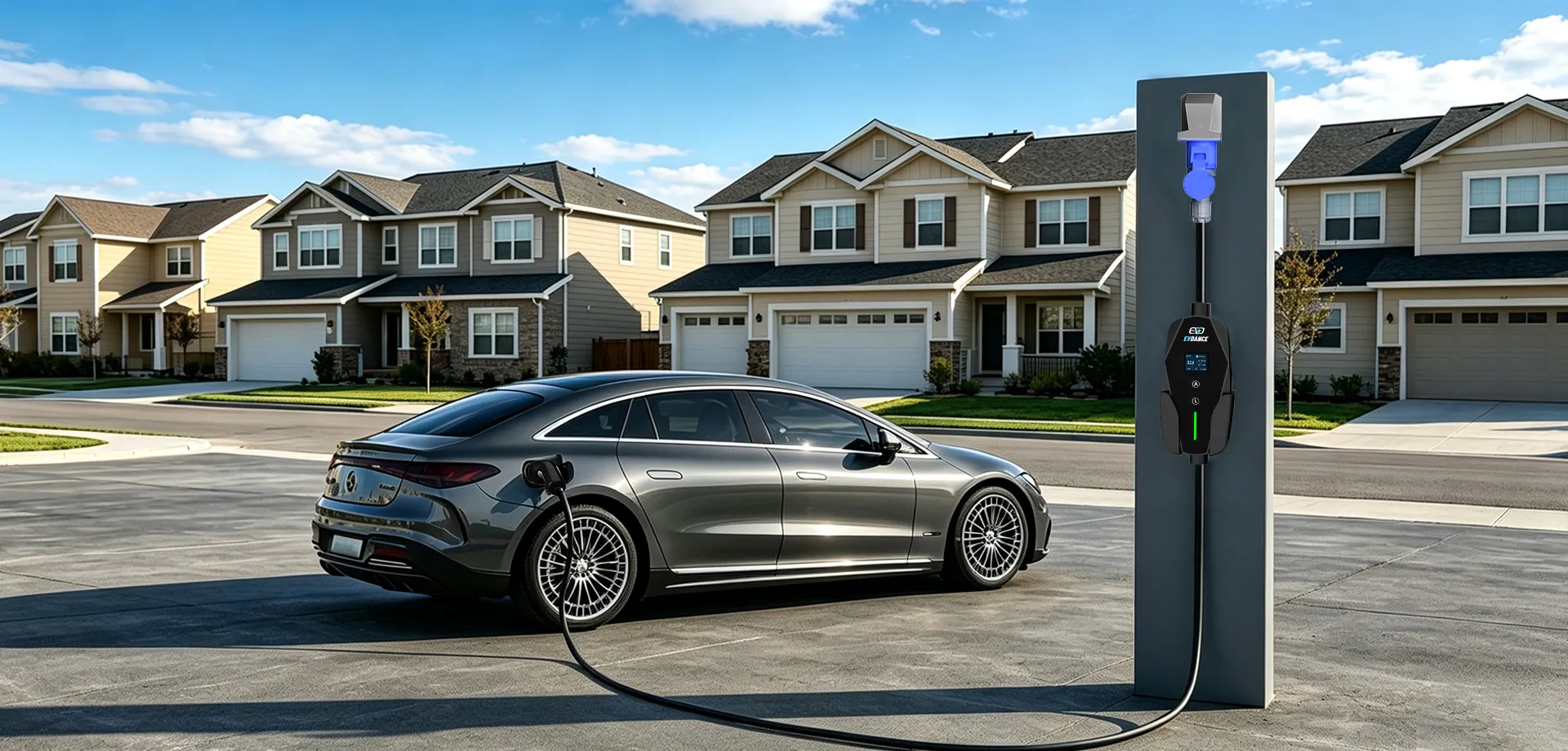
If the verdict is replacement, the existing circuit must be checked too — floodwater reaches junction boxes and outlets, not just the charger. For an outdoor replacement, a sealed wall charger such as the EVDANCE EV-ACT5006T (48 A, IP65/IP66, ETL listed) is built for weather exposure; mounting it higher, where your installer and local rules allow, keeps ordinary splash and shallow pooling away from it.
Frequently Asked Questions
My portable charger fell in a puddle. Can I dry it and use it?
A splash or shallow puddle on an intact IP66 unit is usually survivable: dry it fully, inspect the connector and cable, and stop at any sign of corrosion. If it was submerged or sat in deep water, have it assessed as flood-damaged instead.
Does an IP66 rating mean my charger is flood-proof?
No. IP66 covers water jets, like heavy rain or a hose, against an undamaged enclosure. It does not cover immersion, and floodwater brings contamination that clean test water does not.
Who should inspect a flooded charger?
A licensed electrician for the circuit and the installation, and the charger manufacturer (or its service partner) for the unit itself. Do not open the enclosure yourself — there are no user-serviceable parts inside.
Related Reading
- IP Ratings for EV Chargers: IP54, IP65 and IP66 Compared
- Can You Charge an Electric Car in the Rain?
- Are Portable EV Chargers Waterproof?
- Does an EV Charger Need GFCI Protection?

