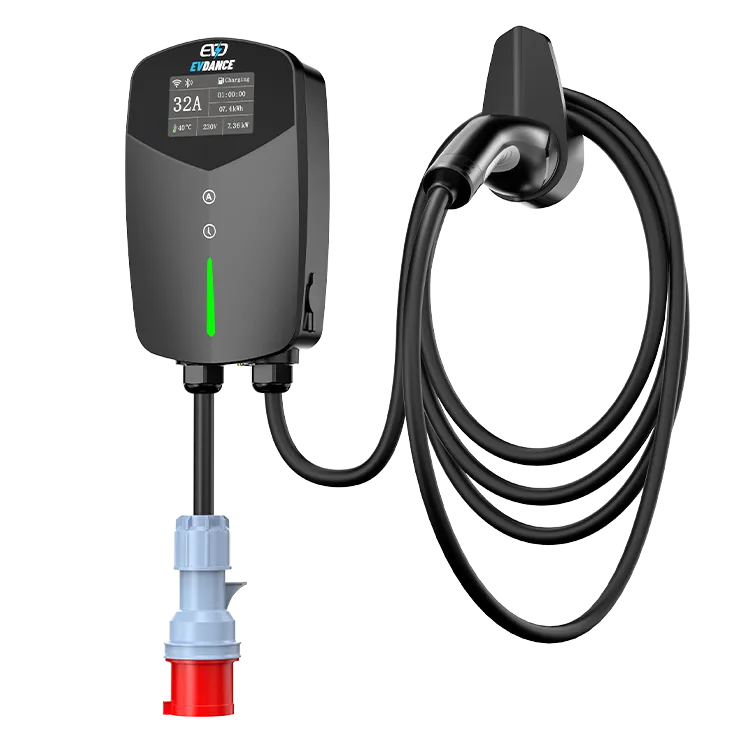
If you’re shopping for an EV charger to install at home in 2026, you’ve probably noticed the market is crowded with “Level 2” chargers, “smart wallboxes,” and portable units that claim to do it all. The truth is that a properly specified wall-mounted EV charger is still the single best upgrade you can make for daily electric vehicle ownership — it charges roughly 5 to 7 times faster than a standard household outlet, it’s built to live outdoors permanently, and the right unit will quietly serve your garage or driveway for well over a decade. This guide breaks down exactly what separates a genuinely good wall-mounted charger from a mediocre one, and what to look for on the spec sheet before you buy.
What Makes a Charger “Wall-Mounted,” and Why It Matters
A wall-mounted EV charger (sometimes called a wallbox) is a Level 2 AC charging unit that is permanently fixed to a wall near your parking space, hard-wired or plugged into a dedicated circuit, with the charging cable and connector built into or coiled around the housing. This is different from a portable EV charger, which is designed to be unplugged, packed into a bag, and carried in the trunk for use at multiple locations.
For a primary home charging station, wall-mounted units generally win on three fronts: durability (a fixed enclosure rated for permanent outdoor exposure holds up better over years of daily use than a plug-in unit that gets coiled and uncoiled constantly), cable management (integrated cable wraps or holsters keep a heavy charging cable off the garage floor), and peace of mind (nothing to forget indoors on the one day you actually need it).
The Specs That Actually Matter
1. Output Current and Power
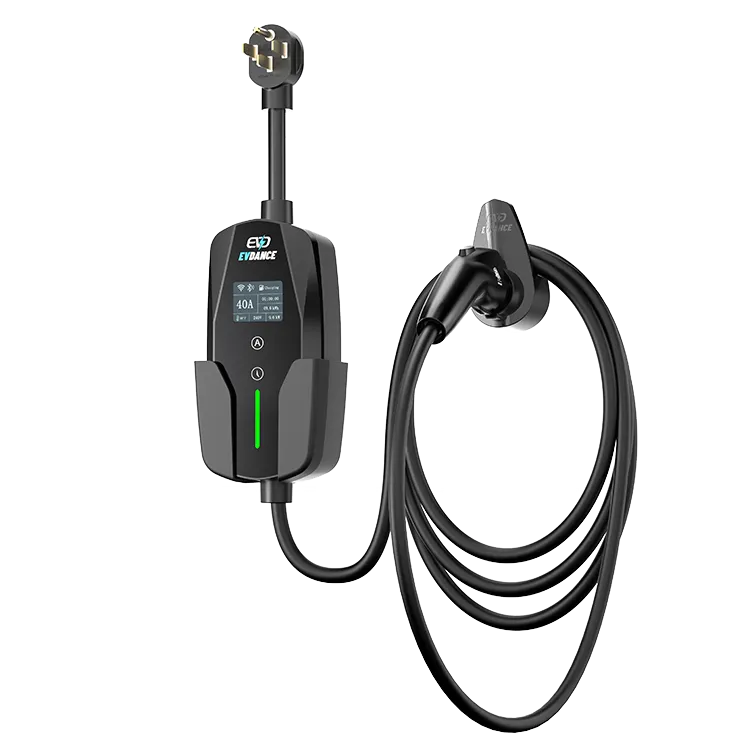
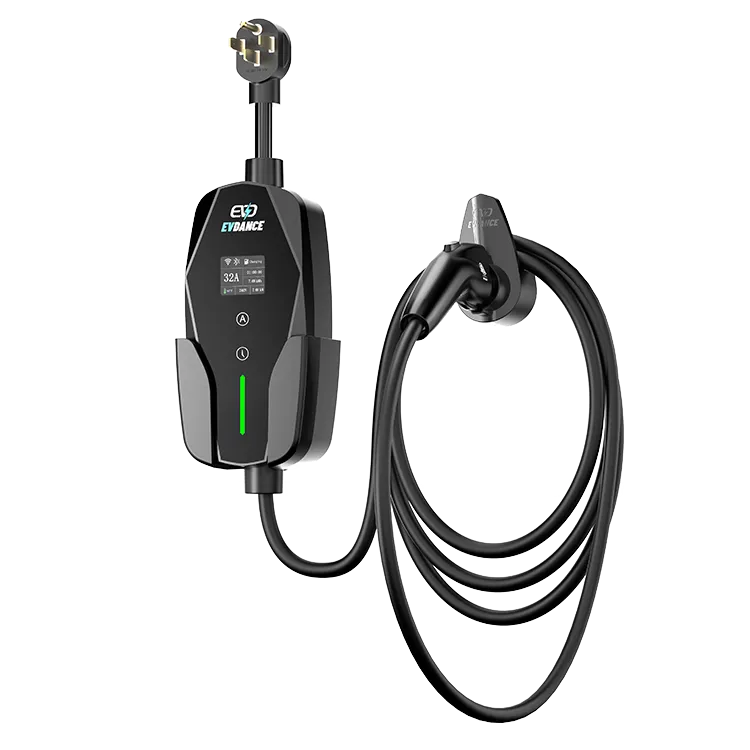
Home wall-mounted chargers are typically available in 32A, 40A, and 48-50A configurations, translating to roughly 7kW, 9.6kW, and 11.5-12kW of charging power on a 240V circuit. A 40A/9.6kW charger, like EVDANCE’s EV-ACS4005 series, will add around 30-35 miles of range per hour for most EVs — enough to fully replenish a typical daily commute overnight, several times over. If your electrical panel and vehicle onboard charger can support it, stepping up to 48-50A (11.5-12kW), such as the EV-ACT5006U/B commercial-grade wallbox, future-proofs your setup for larger battery packs and faster onboard charging rates in upcoming EV models.
Look for a unit with adjustable current settings (commonly 6A up to the unit’s maximum, in steps). This lets an electrician safely dial in the exact output your home’s panel and breaker can support, rather than being locked into a single amperage that may not match your service.
2. Connector Compatibility
In North America, most wall-mounted chargers ship with a SAE J1772 (Type 1) connector, which is the standard for the vast majority of non-Tesla EVs. Tesla owners have two options: a NACS-native charger, or a J1772 unit paired with a Tesla-to-J1772 adapter. If you drive a Tesla but might switch brands later, or if your household has more than one EV, a J1772 wallbox with a compatible adapter kit is the more flexible long-term choice. In Europe and other IEC 62196 markets, Type 2 (Mennekes) connectors are standard instead.
3. Weatherproofing (IP Rating)
Because a wall-mounted charger lives outside permanently, its ingress protection (IP) rating is not a minor spec — it’s the difference between a charger that survives ten winters and one that fails after two. Look for at least IP66, meaning the enclosure is fully dust-tight and can withstand powerful water jets from any direction. EVDANCE’s entire Smart AC Series is built to IP66, with a working temperature range of -30°C to +50°C and storage tolerance down to -40°C, so the charger performs reliably whether it’s mounted in a Minnesota winter or a Texas summer.
4. Smart Features and Connectivity
A genuinely “smart” charger does more than push electrons — it should offer an onboard display (LED or TFT screen) showing real-time current, voltage, energy delivered, and session time; app control for scheduling charging during off-peak electricity hours; and increasingly, support for OCPP 1.6 and ISO 15118 protocols, which allow the charger to communicate with utilities, energy management systems, and future vehicle-to-grid (V2G) setups. Scheduling charging overnight during off-peak rates can measurably cut your electricity costs, and grid-interactive protocols are quickly becoming a baseline expectation as utilities roll out time-of-use pricing.
5. Build Quality and Certifications
Because a wallbox handles high current continuously, material quality inside the housing matters as much as the plastic shell outside it. Look for TPU-jacketed cabling and copper conductors for lower resistance and better heat dissipation, and confirm the unit carries recognized independent safety certifications. EVDANCE manufactures its charger lineup in an ISO 9001-certified facility in Shenzhen and holds CE, UL, RoHS, CB Scheme, and other regional certifications across its product range, which matters both for your home insurance and for resale value if you ever sell the house.
Certifications and marks EVDANCE hardware carries:






Home Wall-Mounted Charger Comparison
| Model | Output | Power | IP Rating | Best For |
|---|---|---|---|---|
| EV-ACS3210 Series | 32A | 7kW | IP66 | Standard daily commuters, single-EV households |
| EV-ACS4005 Series | 40A | 9.6kW | IP66 | Larger battery EVs, faster overnight top-ups |
| EV-ACT5006U/B | 48-50A | 11.5-12kW | IP65/IP66 | Future-proofing, multi-EV households, small fleets |
A Quick Pre-Purchase Checklist
- Confirm your electrical panel has enough spare capacity for a dedicated 40-60A circuit (have an electrician check this before you buy).
- Match the connector type to your vehicle — J1772/Type 1, Type 2, or NACS.
- Choose at least IP66 for any charger mounted outdoors or in an unconditioned garage.
- Prioritize adjustable current so the installer can tune output to your exact circuit rating.
- Check for app connectivity and, ideally, OCPP 1.6 support if you want scheduling and future smart-grid compatibility.
- Verify independent certifications (CE, UL, RoHS, CB Scheme) rather than taking “safety tested” claims at face value.
- Ask about warranty length and whether the manufacturer offers OEM/ODM or bulk options if you’re buying for a property with multiple units.
The Bottom Line
The best wall-mounted EV charger for your home in 2026 is the one that’s correctly sized for your vehicle and electrical service, weatherproofed to at least IP66, built with quality copper conductors and independently certified components, and smart enough to schedule around off-peak electricity rates. Brands like EVDANCE, which has been manufacturing EV charging hardware since 2011 out of a 10,000+ square meter facility in Shenzhen, design specifically around these criteria — which is why their AC home charger lineup spans 32A through 50A with consistent IP66 protection and full safety certification across the range. Whatever charger you land on, treat the amperage, IP rating, and certifications as non-negotiable — everything else is a matter of preference.