
Only two of the pins in an EV charging connector carry the power that charges the car. One more is the protective earth. The remaining small pins carry signals, not power: one runs the conversation that agrees the current limit and confirms the connection, and one connects to the latch button so the car knows the plug is about to be removed. That division of labour is why the big pins are dead in your hand and only go live after the small pins have done their work.
Key Takeaways
- Two pins carry power, one is earth, and the small pins carry the pilot and proximity signals.
- The earth pin connects first and leaves last; signal pins break first on removal.
- That ordering is why unplugging stops power before the power pins separate.
- Type 2 adds pins for three-phase power and keeps the same signal jobs.

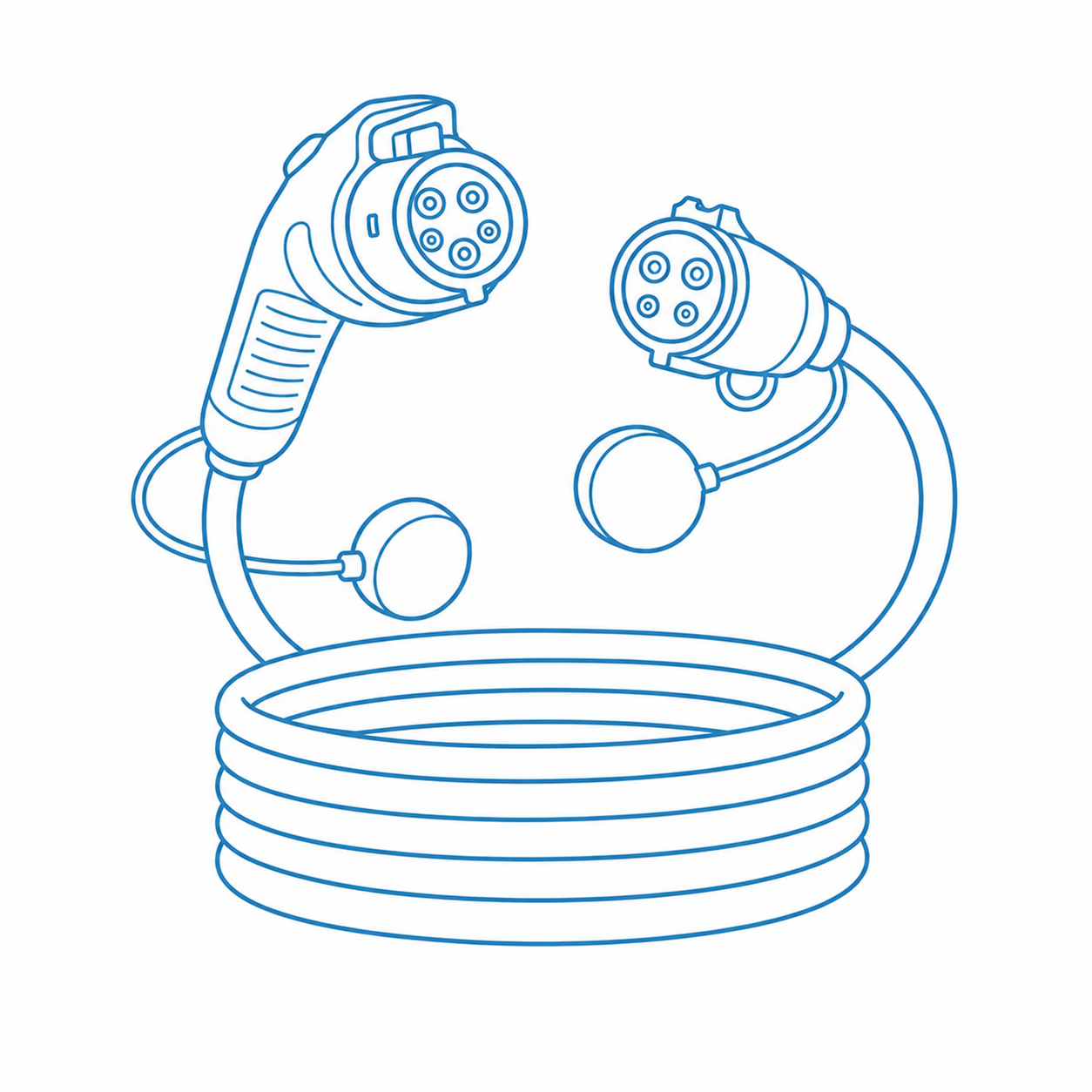
The Five Pins of a J1772 Connector
| Pin | Job | What it means for you |
|---|---|---|
| Two large power pins | Carry the AC supply to the car’s on-board charger. | These are the pins that must never be live before the connector is latched into the car. |
| Protective earth pin | Connects the car and charger to earth so protection can act on a fault. | It is made longer, so it connects first when you plug in and disconnects last when you unplug. |
| Pilot pin | Carries the signal that confirms the connection and tells the car the maximum current it may draw. | If this signal is missing or wrong, charging simply does not start. |
| Proximity pin | Connected to the latch button on the handle. | Pressing the button tells the car to stop taking power before you pull the connector out. |
The recognition guide to what J1772 is shows the connector from the outside. The pin layout explains the behaviour: the signal pins are shorter than the power pins, so on removal they separate first and the session shuts down in the fraction of a second before the power pins part. No arc, no live pins in the air.
How the Order of Contact Protects You
- Plugging in: earth makes contact first, then power pins, then the signals confirm everything before power is switched on.
- During charging: the pilot keeps watch; break the signal and the session ends.
- Unplugging: the button and the short signal pins end the session before the power pins separate.
Type 2 and CCS: More Pins, Same Idea
The European Type 2 connector has seven pins: extra power pins allow three-phase charging, while the pilot and proximity signals keep the same jobs. The comparison of Type 2 vs J1772 vs NACS maps the shapes, and the explainer on whether J1772 works with CCS shows how CCS adds two large DC pins below the J1772 section for fast charging. Equipment built on these layouts, such as the EVDANCE EV-AC04001U 40A J1772 portable charger and the Type 2 EVDANCE EV-ACT3204PE 22 kW wallbox, relies on the same pin discipline.
Looking After the Pins
Pins are not user-serviceable. Keep the connector capped or in its holster so the pins stay clean and dry, and never poke anything into the connector. A bent, corroded or burnt-looking pin, or a latch that no longer clicks, is a stop-and-inspect problem for the manufacturer or an electrician, not something to straighten at home.
Frequently Asked Questions
Why are there five pins if only two carry power?
Because safe charging needs more than power: an earth for protection, a pilot signal to agree limits and confirm the connection, and a proximity signal so unplugging stops the session first.
What happens if a signal pin is damaged?
Usually the session will not start, because the charger and car cannot confirm the connection. That refusal is the system working as designed; have the connector inspected.
Are the pins live when the charger is plugged into the wall but not the car?
The connector pins are not energised with charging power until the handshake completes with the car. Treat any damaged cable or connector as a reason to stop using it, all the same.
Related Reading
- What Is J1772? The North American EV Plug Explained
- Type 2 vs J1772 vs NACS: Which EV Charger Connector Does Your Market Need?
- Does J1772 Work With CCS? CCS Connectors Explained
- How Do Home EV Chargers Work?

