
Level 1 and Level 2, yes — every EV can charge on both, because every EV carries an onboard charger and an AC inlet. DC fast charging is different: it is separate hardware that bypasses the onboard charger, most battery-electric cars include it, but some models and trims do not, and plug-in hybrids typically charge on AC only. Before you rely on fast charging, check what your specific car has.
Key Takeaways
- Every EV supports Level 1 and Level 2 AC charging; only the speed varies with the onboard charger.
- DC fast charging is separate, model-specific hardware — most BEVs have it, most plug-in hybrids do not.
- Check the port, the spec sheet’s DC line, and the manual before assuming your car can fast-charge.
- Adapters fix connector mismatches; they cannot add DC capability to an AC-only car.
Why AC Charging Works on Every EV
Level 1 and Level 2 are both AC charging. The energy arrives as alternating current and the car’s onboard charger converts it to DC for the battery — that conversion equipment is part of every EV, which is why AC support is universal. What varies by market is the connector shape: J1772 or NACS in North America, Type 2 in Europe. Our explainer on what J1772 is covers the North American AC standard, and our comparison of Level 1, Level 2 and DC fast charging sets out the speeds each level delivers. The car’s onboard charger size still caps how fast AC charging goes, but it never decides whether AC charging works.
DC Fast Charging Is Extra Hardware
A DC fast charger converts power inside the station and feeds DC straight to the battery, so the car needs a DC-capable inlet and battery hardware that can accept it. That is fitted model by model, not by default:
| Level | What the car needs | Who has it |
|---|---|---|
| Level 1 (AC) | Standard AC inlet and onboard charger | Every EV and plug-in hybrid |
| Level 2 (AC) | The same AC inlet and onboard charger | Every EV and plug-in hybrid — only the speed varies |
| DC fast charging | A DC-capable inlet (CCS1, NACS or CHAdeMO) plus battery hardware rated for it | Most battery-electric cars; usually absent on plug-in hybrids; missing on some older or base models |
This is the trap for used-car buyers and for drivers planning a first road trip: “it’s an EV” does not guarantee a DC inlet. Plug-in hybrids, in particular, are usually AC-only by design, as our guide to EV chargers for plug-in hybrids explains.
How to Check What Your Car Supports
- Look at the charge port. On a CCS car, the DC pins sit below the AC inlet, often behind a second flap. A plain round AC inlet with no DC section means AC only.
- Read the spec sheet for two separate lines. “Onboard charger” in kW describes AC speed. “DC fast charging” listed — or not listed — settles the DC question.
- Check the owner’s manual under charging: it states the supported types and any rate limits for your exact model and year.
- On a used car, verify, don’t assume. DC capability varied by trim and model year, so confirm the port and the spec before you buy.
Adapters Bridge Connectors, Not Missing Hardware
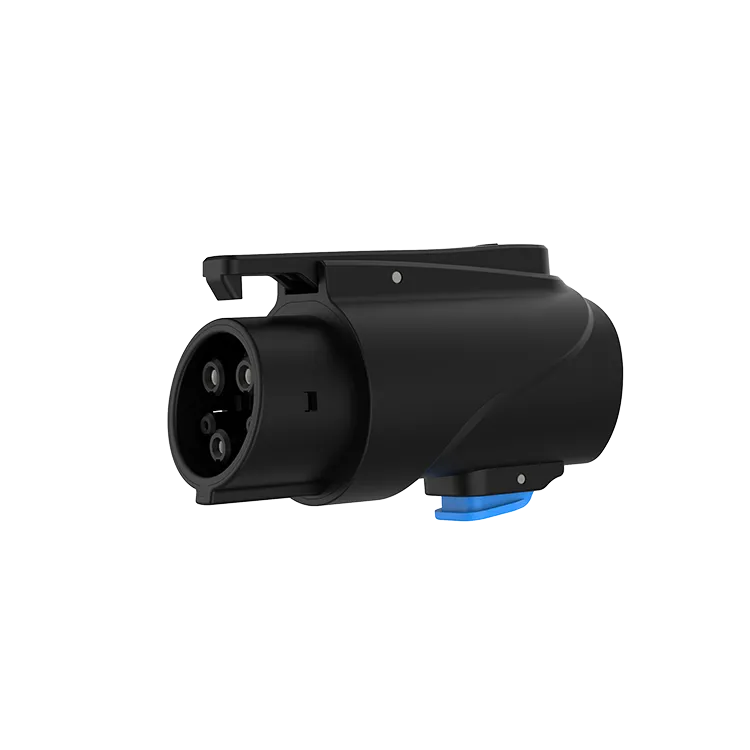
An adapter changes the shape of the plug, nothing more. The JT02 NACS-to-J1772 adapter lets a J1772 car use a NACS AC charger, up to 80 A — useful, but still AC charging. The JT08 NACS-to-CCS1 DC adapter connects a CCS1 car to a NACS DC fast charger, and only where the automaker approves its use — the car still needs its own DC hardware, which is why our guide to whether J1772 works with CCS separates the AC and DC halves of the port. Public infrastructure assumes the same split: under the federal NEVI rules (23 CFR 680), corridor stations provide J1772 on Level 2 ports and CCS1 on DC ports, so the car side is the half you have to confirm.

Frequently Asked Questions
Can a plug-in hybrid use a DC fast charger?
Typically no. Most plug-in hybrids have no DC inlet and charge on Level 1 or Level 2 AC only. Check your model’s port and manual to be sure.
My car has one port. Can it do all three levels?
Possibly. NACS cars handle AC and DC through a single inlet, and CCS cars combine both in one connector. One port does not mean AC-only — what matters is whether the car has DC hardware behind it.
Will an adapter let my AC-only car fast-charge later?
No. Adapters only match connector shapes. DC fast charging needs a DC inlet and battery hardware fitted at the factory, so it cannot be added with an accessory.
Related Reading
- Level 1 vs Level 2 vs DC Fast Charging: A Practical Comparison
- Does J1772 Work With CCS? CCS Connectors Explained
- What Is J1772? The North American EV Plug Explained
- Is DC Fast Charging Level 3?

