
No. An electric car cannot charge itself while driving in any way that adds net energy. Regenerative braking returns part of the energy the car used as it slows down, and a small number of cars carry solar roofs, but both only slow the battery’s drain. To actually gain charge, an EV has to take in energy from outside the car, which in practice means plugging it in.
Key Takeaways
- No EV can add net charge while driving; every conversion loses energy as heat.
- Regenerative braking recovers part of the braking energy, which extends range but never reverses the drain.
- A solar roof is a trickle contribution, not a charger. Sunshine works when panels are on a building.
- Plugging in, even at Level 1 speed, is the only practical way to put charge back.
What “Charging Itself” Would Have to Do
For a car to charge itself while driving, it would have to create energy at the same time as it spends it. Every conversion in the car loses some energy as heat: battery to motor, motor to wheels, and back through the generator to the battery. A recovery loop therefore always returns less than went into it. That is basic physics, not a gap in current technology.
Self-charging claims usually turn out to be one of the real effects below, described generously.
| The claim | What actually happens |
|---|---|
| “It charges while you drive” | Regenerative braking returns part of the braking energy. Total charge still falls over any trip. |
| “The solar roof keeps it charged” | A car-sized panel produces a small amount of power. It can offset parked drain, not fill a traction battery. |
| “Self-charging hybrids do it” | A hybrid charges its small battery from a gasoline engine. The energy comes from fuel, not from the car’s motion. |
| “It gains charge downhill” | Gravity repays some energy the car spent climbing first. The full loop still loses energy. |
Regenerative Braking: Recovery, Not Charging
When you lift off the accelerator or press the brake, the drive motor works in reverse as a generator. It turns the car’s motion back into electricity and stores it in the battery. FuelEconomy.gov describes regenerative braking as a standard part of how EVs and hybrids use energy.
Regen is genuinely valuable: it captures energy a gasoline car throws away as brake heat, and it is a big reason EVs are efficient in stop-and-go traffic. But it recovers only part of what accelerating cost. Over a normal drive the battery ends lower than it started; regen makes it end less lower. A long downhill can make the gauge climb for a while, but that is energy the car spent earlier to reach the top, returned with losses deducted.
What About Solar Roofs?
A roof panel is limited by its area and sun angle. Its peak output is a small fraction of a kilowatt, while a traction battery holds tens of kilowatt-hours. Parked in strong sun all day, it can offset standby drain and add a little range. It cannot replace charging.
The workable version of solar driving moves the panels off the car. Our guide to charging an EV from rooftop solar panels covers how home panels, timing and a charger work together so the car charges from sunshine while it is parked at home.
The Only Way to Add Charge: Plug In
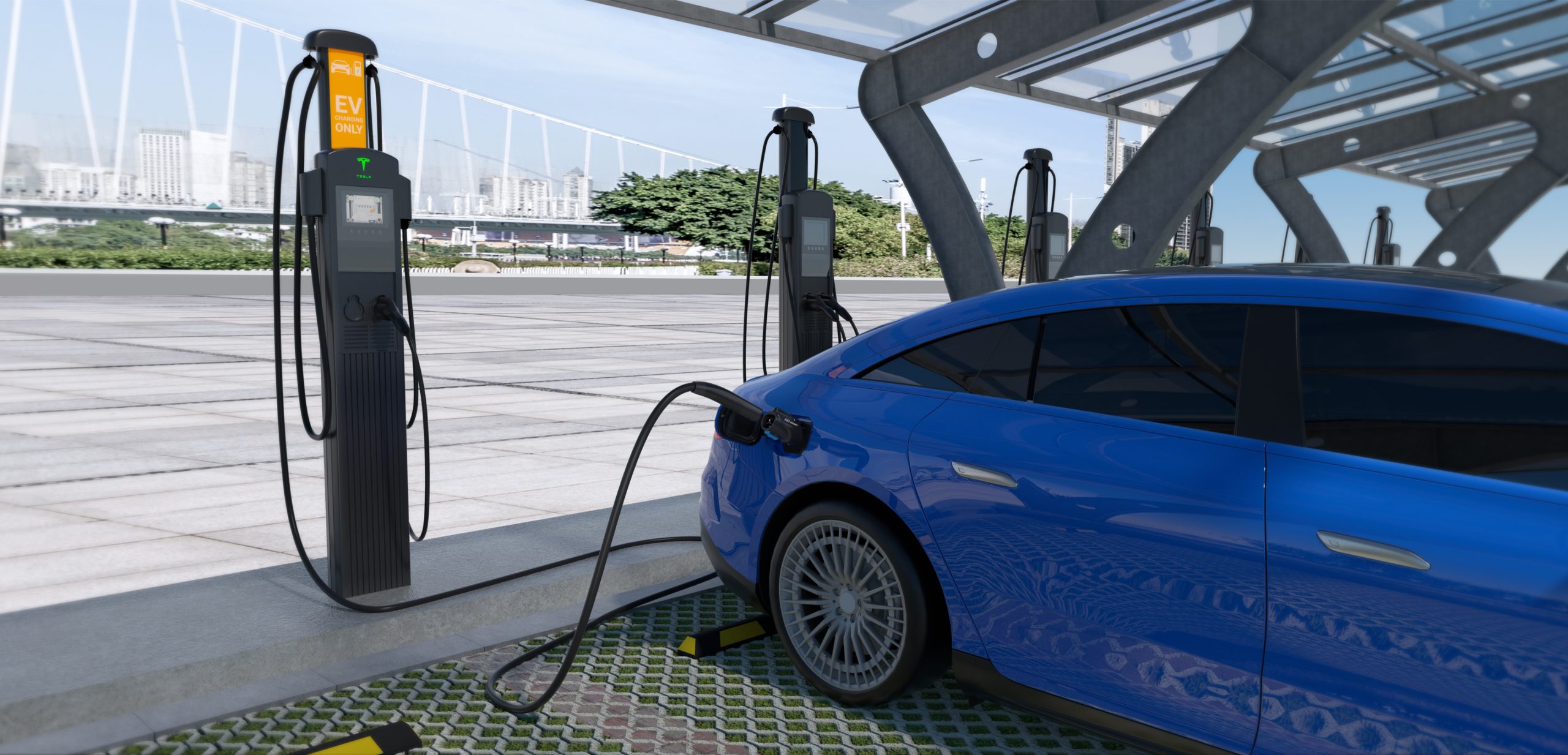
Because the energy has to come from outside, charging hardware is the real answer. The U.S. Department of Transportation lists Level 1 at about 1 kW (2–5 miles of range per hour) and Level 2 at 7–19 kW (10–20 miles per hour). Even the slowest plug adds energy more reliably than any onboard recovery system.

Two EVDANCE options cover most homes. The EV-ACS3210T 32A NACS portable charger delivers about 7.7 kW from a NEMA 14-50 outlet, adjustable from 10 to 32 A, with an IP66 enclosure. For a fixed installation, the EV-ACT5006T 48A Level 2 wall charger can be hard-wired or plugged in. It also helps to know how many kWh a charge takes.
Frequently Asked Questions
Does regenerative braking mean my battery charges itself on every trip?
No. Regen returns part of the braking energy, so the battery drains more slowly. The overall charge still goes down on every trip.
Can a solar roof fully charge an electric car?
No. A car roof is too small to generate the tens of kilowatt-hours a traction battery holds. It can offset parked drain and add a little range on a sunny day, but the car still needs to plug in.
Is there any EV that never needs plugging in?
No. Every production EV needs energy from outside the car. Hybrids that market themselves as self-charging still burn gasoline to generate their electricity.
Related Reading
- Solar Panels and EV Chargers: How to Charge Your Car With Sunshine
- How Many kWh Does It Take to Charge an EV?
- How Long Does It Take to Charge an EV at 7 kW, 11 kW and 22 kW?
- Is Bidirectional Charging Available in Australia?

