
Some cable wear is cosmetic, and some means stop today. A cut that reaches the inner insulation, a crushed or sharply kinked section, bent or heat-discoloured connector pins, a cracked handle, or scorch marks at the plug are all stop signs — unplug, and replace the cable or unit before charging again. A charging cable carries high current for hours, so damage that would be trivial on a lamp cord is not trivial here.
Key Takeaways
- Cuts, crushes, pin damage, cracked housings and scorch marks all mean stop and replace — no exceptions for “small” ones.
- Scuffs and dirt are cosmetic; when you cannot tell which kind you have, treat it as stop damage.
- Tape and splices cannot restore a tested cable assembly; replacement is the only repair.
- Route, coil and holster the cable properly, and inspect weekly.
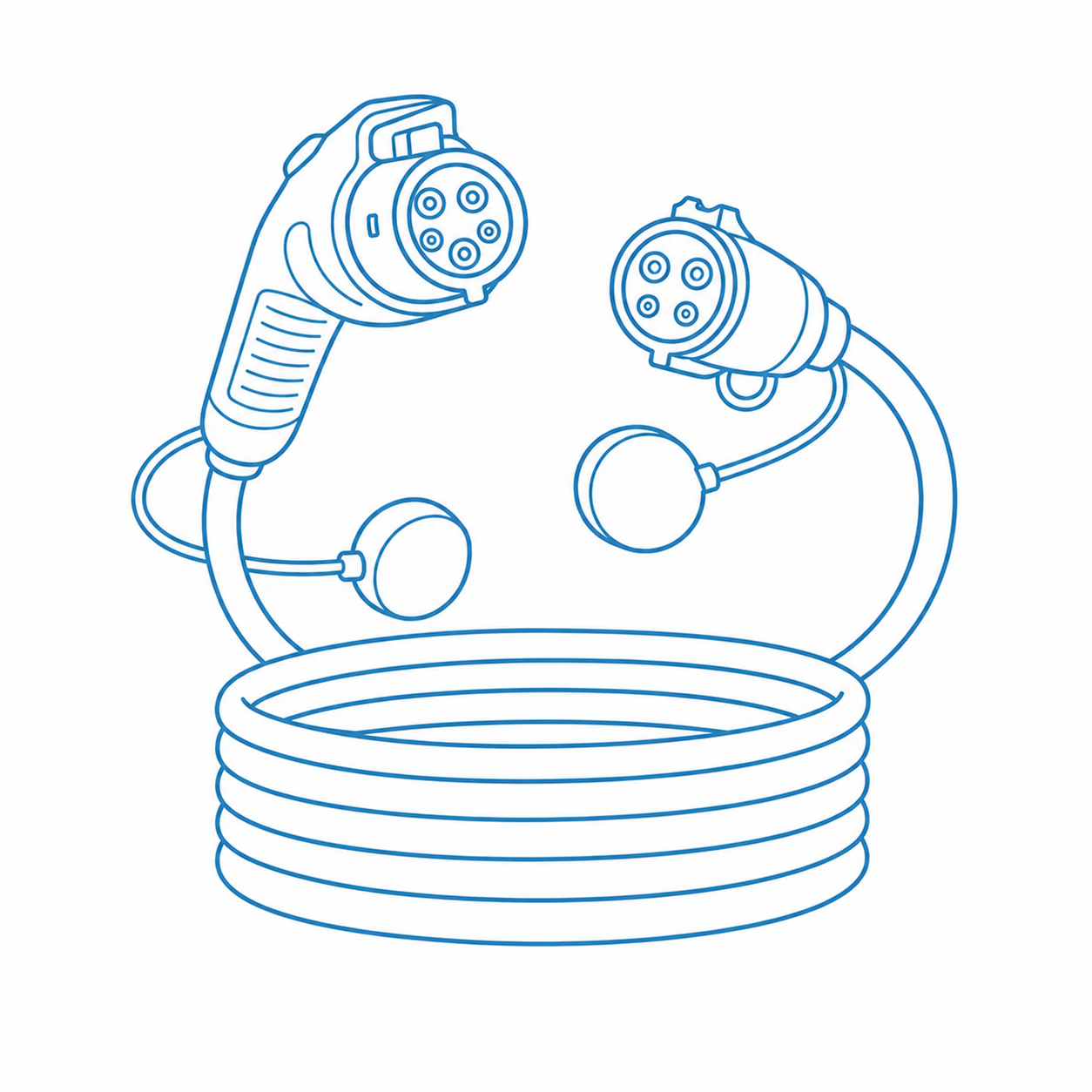
Damage That Means Stop
| What you see | Why it matters | What to do |
|---|---|---|
| Cut or nick through the outer jacket | Inner insulation or conductors exposed to moisture and contact | Stop. Replace the cable or unit |
| Crushed, flattened or sharply kinked section | Strands can be broken inside even where the jacket looks whole, creating a hot spot under load | Stop. Replace |
| Bent, loose or discoloured pins in the connector | Poor contact concentrates heat at the joint — the failure behind melted outlets | Stop. Replace; check the car inlet too |
| Cracked handle or housing | The weather seal the rating depends on is gone; water can reach live parts | Stop. Replace |
| Scorch marks or a burnt smell at the plug | Overheating has already happened | Stop. Have the outlet checked as well before charging again |
| Jacket gone stiff, brittle or cracking with age | The insulation itself is failing | Replace before it reaches the rows above |
Heat damage usually involves both sides of a connection. Our article on whether a NEMA 14-50 outlet is a fire hazard explains how those joints overheat; the wider picture is in are home EV chargers safe.
Wear That Is Usually Cosmetic
- Surface scuffs and scrapes that do not break the jacket.
- Dirt, dust and road grime — wipe the connector dry before plugging in.
- Faded labels or printed markings.
- A gentle permanent curve from coiling, with no flat spot or stiffness.
“Usually” is doing work in that heading. If you cannot tell whether a mark breaks the jacket, treat it as stop damage and ask the manufacturer — guessing wrong leaves a compromised connection carrying current for hours. Wet conditions make the distinction sharper, as charging an electric car in the rain explains.
Why Tape and DIY Repairs Are Not the Fix
Under NFPA 70, the National Electrical Code, EV charging is a continuous load, with the breaker at 125% of charger current. Hours of that load is exactly the condition under which a patched joint heats up. Tape cannot restore the insulation rating, strain relief or weather seal the cable was tested with, and certification applies to the tested assembly, not a repaired one — see our guide to EV charger certifications. Cables are replaced as assemblies; on a tethered wallbox the cable is a manufacturer service part. Never open the connector yourself.

Habits That Keep a Cable Alive Longer
- Do not drive over the cable, and route it so nobody has to.
- Coil it loosely; tight kinks at the same point every day become the flat spot in the table.
- Keep the connector capped or holstered, off wet ground.
- Support the cable so its weight does not hang from the car inlet.
- Inspect the full length weekly — damage is cheap to catch early.
Replacing a Portable Unit
On a portable charger, the cable and electronics are one sealed unit, so “replace the cable” means replace the charger. A unit such as the EVDANCE EV-ACS4005T 40A NACS portable charger (9.6 kW, NEMA 14-50P, IP66) or the EVDANCE EV-ACS3210T 32A NACS portable charger (about 7.7 kW, six current steps, IP66) restores the full tested assembly in one step. Check your warranty first — EVDANCE’s standard warranty is 3 years — and keep the damaged unit unplugged meanwhile.
Frequently Asked Questions
Can I tape over a small cut in the jacket?
No. Stop using the cable. Tape does not restore the insulation system or the weather seal, and the joint sits under a continuous load for hours. Replacement is the fix.
My car drove over the cable once. It looks fine — is it?
Not necessarily. Crushing can break internal strands without marking the jacket. If that section feels flat, lumpy or unusually stiff, or warms up in use, stop and replace it.
The cable gets warm while charging. Is that damage?
Mild, even warmth at high current is normal. A hot spot, any smell, or discolouration at the connector is not — stop and have both checked.
Related Reading
- Are Home EV Chargers Safe?
- Is a NEMA 14-50 Outlet a Fire Hazard for EV Charging?
- Portable EV Charger Safety Guide 2026
- EV Charger Certifications Explained: CE, UKCA, UL, ETL, CB

