
Regenerative braking is how an EV turns slowing down into charging. Lift off the accelerator and the drive motor runs in reverse as a generator: it resists the wheels, slows the car, and sends electricity back into the battery instead of wasting the car’s motion as heat in the brake discs. It stretches your range between plug-ins — it never replaces them.
Key Takeaways
- Regen runs the motor as a generator when you slow down, sending energy back to the battery.
- It recovers part of a drive’s energy — most in city driving, least on the highway.
- A full or cold battery limits regen for the same reason it limits plug-in charging.
- It stretches the interval between charges; it never replaces the charger.

How It Works
An electric motor and a generator are the same machine running in opposite directions. Driving, the motor takes electricity from the battery and turns the wheels. Slowing down, the wheels turn the motor, and it produces electricity that flows back into the battery. The resistance you feel is the generator loading up — which is why strong regen can bring the car almost to a stop by itself, the “one-pedal driving” many EVs offer.
| Situation | What does the slowing |
|---|---|
| Lifting off in normal driving | Mostly regeneration, up to the level you have set |
| Gentle braking | Regeneration first; the car blends in friction brakes as needed |
| Hard or emergency braking | The friction brakes do the work — regen alone cannot stop a car quickly |
| The final few metres of a stop | Friction brakes: regen fades as speed falls, and they hold the car still |
How Much Energy Does It Actually Get Back?
It varies too much for one honest number. Stop-and-go city driving offers a braking event every few hundred metres, so recovery there is real and noticeable. A steady highway run offers almost none. Two honest limits apply everywhere:
- Recovery is partial, never total. Every conversion — battery to motion, motion back to battery — loses some energy. You always get back less than you spent speeding up, so accelerating in order to brake is a losing loop, not a charging strategy.
- It is a top-up, not a refill. Regen returns part of a drive’s energy while you are on it; the battery still ends the day lower than it started. That is why the car still needs a charger — as our explainer on how home EV chargers work sets out.
When Regen Feels Weak
Drivers notice regen fading in three situations, all with the same root cause: the battery cannot accept energy at that moment.
- The battery is nearly full. There is nowhere to put recovered energy, so the car limits regen and leans on the friction brakes. It is the mirror image of plug-in charging tapering near full — why charging slows after 80% explains the battery’s side of it.
- The battery is cold. A cold pack accepts charge slowly, from a plug or from the wheels. Battery preconditioning exists for the plug-in version of this problem; on the road, regen returns as the pack warms.
- Your settings say so. Many cars offer regen levels, including a light setting that coasts like a petrol car. Check the drive settings before assuming a fault.
What Regen Means for Your Charging Routine
Plan your plug-in charging as if regen did not exist, and treat what it returns as margin. One habit connects the two: if your routine starts with a long descent, leaving home slightly below a full charge leaves room for the energy the hill will hand back. Everything else is unchanged: tomorrow’s energy still comes from the wall.
The Chargers That Do the Rest
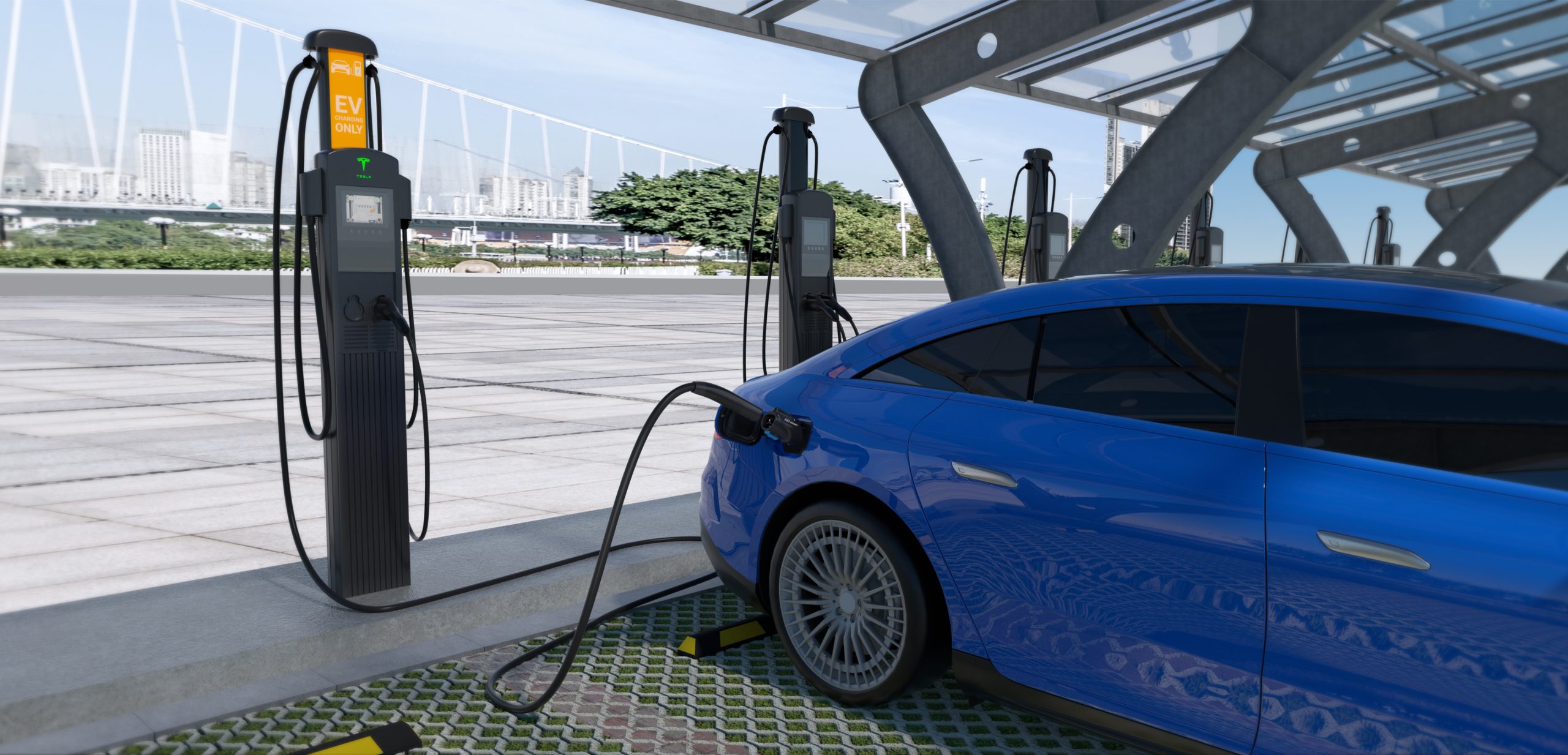
Regen handles the small change; the wall charger does the real work. The EVDANCE EV-ACS4005T 40A NACS portable charger delivers 9.6 kW from a NEMA 14-50 outlet with adjustable current. For J1772 cars, the EVDANCE EV-AC04001U 40A J1772 portable charger provides the same 9.6 kW, IP66 rated with a 25 ft cable. Either refills overnight what a day of driving — minus regen’s contribution — used up.
Frequently Asked Questions
Does regenerative braking work in hybrids and plug-in hybrids too?
Yes. The same motor-generator arrangement is standard in hybrids, which is how they recover energy without ever being plugged in. In a plug-in hybrid it works the same way, alongside charging from the wall.
Do brake pads last longer on an EV?
Regen does most of the routine slowing, so the friction brakes work far less than in a petrol car. They still need inspection — little-used brakes age in their own ways — so follow the maker’s service schedule rather than assuming they are maintenance-free.
Can I turn regenerative braking off?
On many models you can reduce it to a lighter level; the setting lives in the drive or vehicle menu. Turning it down saves nothing — the friction brakes simply waste what regen would have recovered.
Related Reading
- What Is EV Battery Preconditioning?
- Why Does EV Charging Slow Down After 80%?
- How Do Home EV Chargers Work?

