
Yes, in most cases you can install an EV charger at a listed or historic building, but the building adds a step an ordinary house does not have. The charger itself is standard electrical work. What needs care is fixing it to a protected building: changes to the fabric or appearance may need consent first, so check before you order anything.
Key Takeaways
- A charger at a listed or historic building is usually possible; consent for changes to the fabric is the extra step.
- Rules and deciding offices vary by place — ask your local planning or conservation office before booking work.
- Portable chargers, garage or extension mounting, and freestanding pedestals keep fixings off protected surfaces.
- Consent never replaces the normal electrical rules: licensed electrician, correct circuit sizing, local permits.
Why Protected Buildings Are Different
Listing or heritage designation protects a building’s character: historic masonry, original facades, old boundary walls and sometimes the interior. Drilling into that fabric, running a visible conduit across a front wall or adding a new box to a protected face can count as an alteration, not just an installation. The rules, the names of the permissions and the office that decides all vary by country and locality, so there is no single rule to quote here.
What the protection covers also varies. Sometimes it is the whole property, sometimes mainly the exterior or the street-facing side. A garage, a later extension or a modern outbuilding may be treated differently from the original facade. That difference is often what makes a charger possible, so ask rather than assume.
Four Ways to Add Charging, Least Invasive First
| Approach | What it avoids | What to check |
|---|---|---|
| Portable charger on an existing suitable outlet | Any permanent fixing to the building | The outlet must be suitable for EV charging and checked by an electrician |
| Wall charger inside a garage or on a later extension | Fixings on the protected facade | Whether the garage or extension is itself covered by the designation |
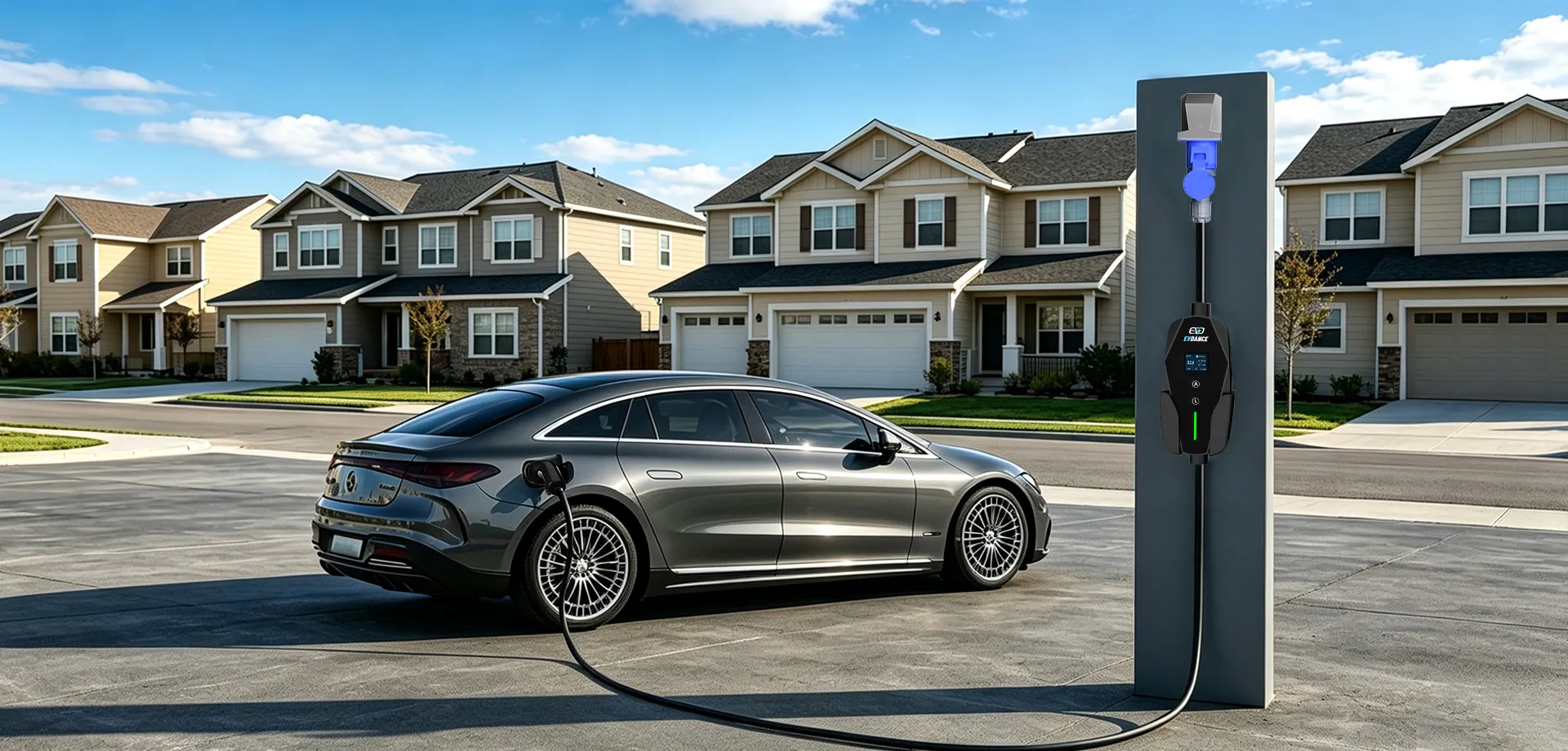
| Freestanding pedestal in the parking area | Any fixing to the building at all | The buried cable run is still a ground change; see what a pedestal EV charger is |
| Wall charger on the protected facade | Nothing — this is the most visible option | Most likely to need consent; plan a discreet, reversible cable route |
The general placement question — charger inside or outside, near which wall — is covered in where to install a home EV charger and inside or outside the garage. On a protected building, work through those questions after the consent question, not before.
Checks to Make Before You Book the Installer
- Confirm what the designation covers. Whole plot, facade only, interior too? Your local planning or conservation office can tell you.
- Ask whether a charger needs consent in your case, and get the answer in writing before any work is booked.
- Tell the installer about the protected status at the quote stage. The survey should cover cable routes that avoid historic fabric where possible.
- Prefer reversible fixings and routes that could be removed without damage, if consent is granted on that basis.
- Keep photographs of the affected walls and ground before work starts, as a record of the building’s condition.
Consent, where it applies, sits alongside the normal electrical rules rather than replacing them: the circuit work still belongs to a licensed electrician, sized as a continuous load under the applicable code, with permits and inspection as local rules require.

Hardware That Keeps Your Options Open
Until consent is clear, a portable charger keeps every option open because it fixes nothing to the building. The EVDANCE EV-ACS4005T 40A NACS portable charger delivers 9.6 kW from a NEMA 14-50 outlet, adjusts from 16 to 40 A, and is IP66 rated. If a fixed unit is approved, the EVDANCE EV-ACT3204PE 22 kW wallbox offers a tethered Type 2 cable, RFID and app control, and an IP66 rating — mounted where the approval allows.
Frequently Asked Questions
Does a charger inside a listed garage need consent?
It depends on what the designation covers and whether the fixings alter protected fabric. Ask the local authority before assuming an interior is exempt; the electrical work needs a licensed electrician either way.
Can I avoid the question with a portable charger?
Mostly. A portable charger adds no permanent fixing, but it still needs a suitable outlet, and installing a new outlet is electrical work that may itself fall under the building’s rules. Check first, then plug in.
What if consent for a wall charger is refused?
Work down the table: a pedestal in the parking area, a charger on a non-protected structure, or charging away from home. A refusal for one position is rarely a refusal for every position.
Related Reading
- Where Should You Install a Home EV Charger?
- Should an EV Charger Be Inside or Outside the Garage?
- What Is a Pedestal EV Charger?
- Can I Have an Electric Car Charger at Home? Houses, Rentals and Condos

