
An EV battery is built in stages, not poured into a case in one step. Active material is coated onto metal foil to make electrodes, the electrodes are assembled into cells, each cell is charged and tested for the first time, and only then are cells grouped into modules and sealed into the finished pack with its cooling and controls. Every stage is tested, because one weak cell limits the pack it joins.
Key Takeaways
- EV batteries are built in stages: electrodes, cells, formation and grading, modules, then the sealed pack.
- Formation — the first charges — is where weak cells are found and rejected.
- A pack is only as consistent as its cells, which is why identical chemistries age differently.
- Pack design, set at production, decides cooling, safety and later repairability.

Stage 1: Electrodes and Cells
Production starts with the two electrodes. Battery-active powders are mixed into a coating and spread in a thin, even layer onto metal foil — one material for the negative electrode, another for the positive. The coated foil is dried, compressed and cut. The electrodes are then wound or stacked with a separator between them, placed in the cell’s casing, filled with electrolyte and sealed. The result is a single cell in a standard format — cylindrical, prismatic or pouch — the building block every pack shares.
Stage 2: Formation — The First Charges
A freshly sealed cell has never worked. In formation, it is charged and discharged under controlled conditions for the first time, which stabilises its internal chemistry, then rested and measured. Cells are graded by the capacity they actually show, not by what the design promised. Outliers are rejected here, because a cell weaker than its neighbours would drag down every module it entered. This slow stage is a large part of why battery production cannot be sped up simply by adding assembly machines.
| Stage | What happens | Why it matters to the owner |
|---|---|---|
| Electrode making | Active material coated onto foil, dried and cut | Coating consistency sets how evenly the cell wears |
| Cell assembly | Electrodes wound or stacked, cased, filled and sealed | Sealing quality keeps moisture out and the chemistry stable |
| Formation and grading | First charges, resting, measuring; weak cells rejected | The pack starts life with matched cells, not a mix |
| Module and pack assembly | Cells grouped, wired, fitted with cooling, controls and housing, then tested as a whole | The pack’s safety, cooling and repairability are decided here |
Stage 3: Modules, Pack and Electronics
Graded cells are grouped into modules, and modules are built into the pack with the parts that make it a car component rather than a box of cells: busbars and wiring, a cooling system to hold temperatures even, the battery management electronics that watch every group of cells, and a rigid, sealed housing that protects the assembly in a crash and against water and dirt. The finished pack is tested as a whole before it is released to a vehicle line.
Why Two Packs With the Same Chemistry Age Differently
Because a pack is only as consistent as its cells. Even coating, careful formation and strict grading produce thousands of cells that behave alike, so the pack wears evenly; loose tolerances leave weak cells that limit capacity and age faster, as our look at whether EV batteries degrade over time explains. DOE guidance puts battery life at 12–15 years in moderate climates and 8–12 in severe ones — manufacturing consistency is one reason real packs land at different points in that range. Pack design also decides the later story: modular packs can sometimes be repaired at module level, as our guide to battery replacement and repair sets out.
The Same Staged Logic Builds Your Charger
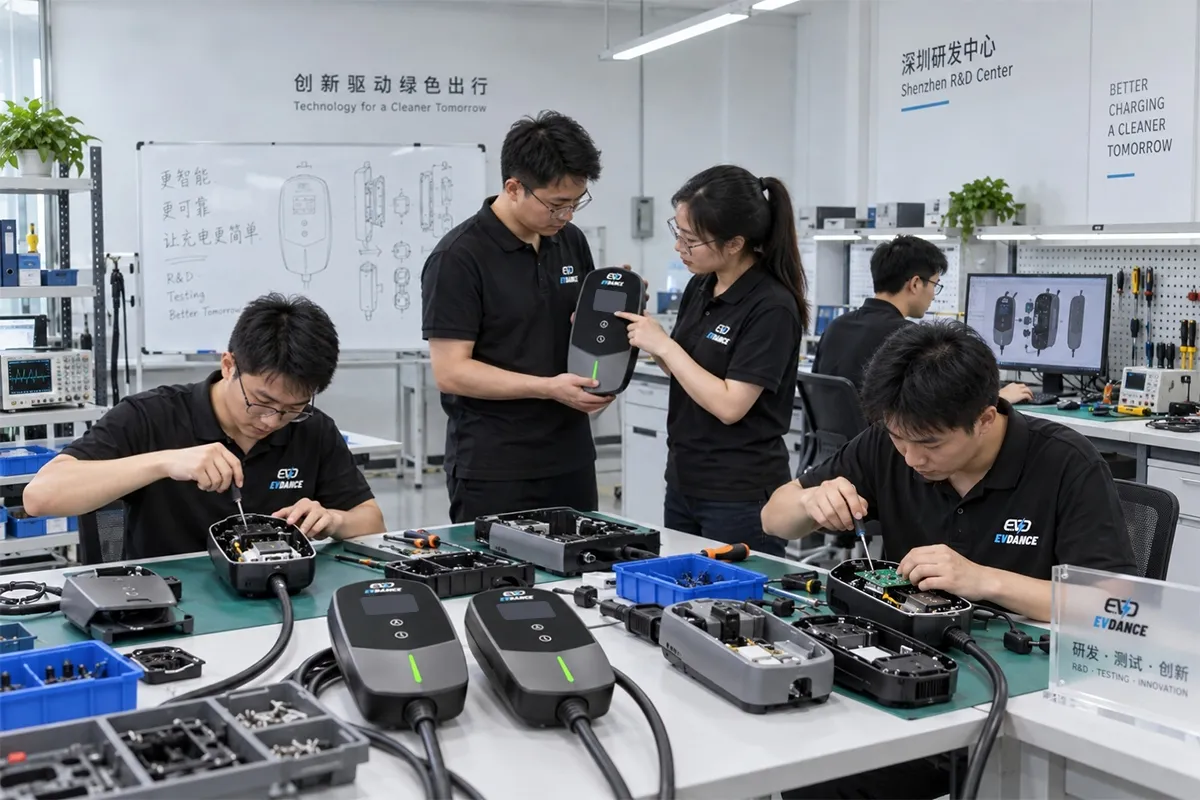
Chargers are manufactured the same way — components, assembly, then testing before anything ships. EVDANCE has made EV chargers in Shenzhen since 2011, runs its own factory, exports to more than 30 countries and offers private label from 100 units, with a 3-year standard warranty; how a real factory differs from a trading company is set out in our comparison of charger manufacturers. Brands building their own range can start with our OEM and private-label program or browse the full product range.
Frequently Asked Questions
Are all EV batteries made the same way?
The stages are shared — electrodes, cell assembly, formation, modules, pack, testing — but details differ. Cell formats and chemistries vary, and some makers skip the module stage and build cells straight into the pack.
Why does formation take so long?
Because it is measurement, not assembly. Each cell must be cycled, rested and graded before it can be trusted in a pack, and that runs at the speed the chemistry allows.
Does where a battery is made decide its quality?
Less than how it is made. What matters is process control: coating consistency, grading standards and pack testing — which is why audits and specifications matter more than addresses.
Related Reading
- Does an EV Battery Degrade Over Time?
- Can an EV Battery Be Replaced or Repaired?
- How to Check EV Battery Health
- Chinese EV Charger Manufacturers: Factory, Trading Company or Marketplace Seller?

