
You do not repair an EV battery yourself. A traction battery is a sealed, high-voltage unit; repairing one is specialist workshop work. When a pack goes in for repair, the sequence is fixed: the fault is confirmed as a battery fault, the pack is isolated and removed, the failed part is replaced, and the pack is rebalanced, resealed and tested. If the case is damaged, or water or fire has reached the inside, repair stops and replacement is the route.
Key Takeaways
- EV battery repair is specialist, high-voltage workshop work — never a home job.
- The sequence is diagnosis, isolation and removal, a module- or component-level fix, then rebalancing, resealing and testing.
- Case damage, water ingress and fire damage stop a repair; the route becomes replacement.
- Gentle daily AC charging is the habit that keeps most packs out of the workshop entirely.
First, Prove the Fault Is in the Pack
Many symptoms that look like a battery failure are not one. A car that will not charge may have a charger, cable, 12-volt battery or software problem, and gradual range loss may be ordinary wear. So the workshop starts with diagnosis: fault codes are read, the pack’s measured health is checked along the lines set out in how to check EV battery health, and the warranty position is established, because an in-warranty defect is normally the manufacturer’s repair to make. The options at this point are compared in can an EV battery be replaced or repaired. Only once a specific failed part is identified does the repair below begin.
The Repair Itself, Step by Step
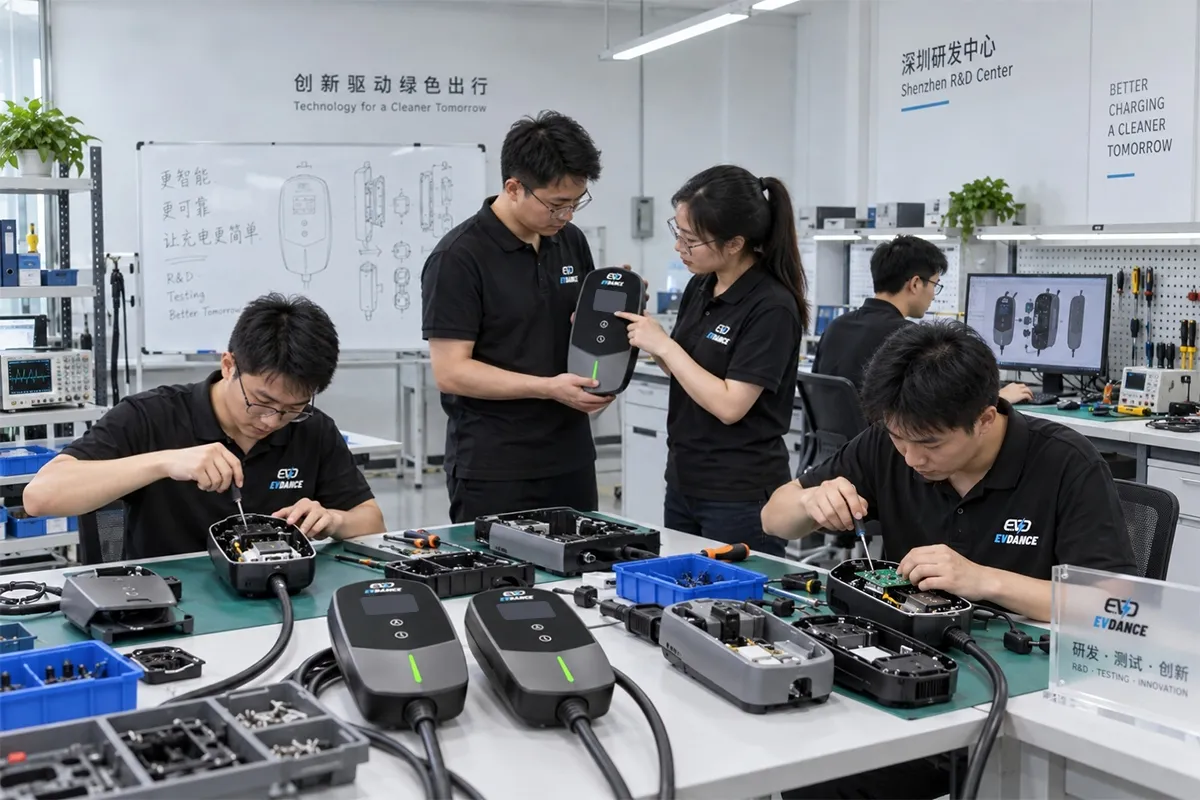
The work is done by technicians trained for high-voltage systems, with insulated tools and protective equipment:
- The car is made safe. The high-voltage system is isolated and the pack disconnected, so the unit can be handled safely.
- The pack comes out. It is heavy and sealed into the car’s structure, so it is lowered and moved with lifting equipment.
- The failed part is found. The case is opened and modules are tested individually until the faulty one is found.
- The part is replaced. A failed module, contactor or sensor is swapped for a matched replacement; the rest of the pack stays in service.
- The pack is rebalanced. Modules are balanced again and the battery management system recalibrated, so the pack charges and discharges evenly.
- The pack is resealed and tested. The case is resealed, the pack goes through charge and discharge testing, then it is refitted and the car road-tested.
Nothing on that list is owner work. Opening a pack at home risks severe injury and ends any argument about warranty cover, so the owner’s role is limited to describing the symptom clearly and keeping service records.
Where Repair Stops and Replacement Starts
| What the workshop finds | Likely route |
|---|---|
| One module has failed, the rest test healthy | Module-level repair |
| A contactor, sensor or control component has failed | Component-level repair |
| The case is cracked or crushed, for example after a crash | Replacement — a damaged case is not resealed |
| Water has entered the pack | Replacement, with the old pack handled as a safety risk |
| Fire or serious heat damage | Replacement and specialist disposal of the damaged pack |
| The whole pack is evenly worn, no single fault | Neither — wear is not a repair item; see EV battery degradation |
The pattern is simple: repair fixes a fault in one place. Structural damage, or contamination inside the pack, is a safety question, and the answer is a different pack.

Charging Habits That Keep the Pack Out of the Workshop
Most packs never need a repair; the ones that age best are charged gently. FuelEconomy.gov cites DOE estimates of 12 to 15 years of battery life in moderate climates and 8 to 12 in severe ones, and daily home AC charging supports the long end of that range. A portable unit such as the EVDANCE EV-ACS4005T 40A NACS portable charger (9.6 kW, adjustable from 16 A to 40 A, IP66) covers daily charging from a NEMA 14-50 outlet, while the EVDANCE EV-ACT5006T 48A Level 2 wall charger suits a fixed install. See also whether DC fast charging degrades the battery.
Frequently Asked Questions
Can I open my EV battery and swap a module myself?
No. The pack is a sealed high-voltage unit, and opening one without high-voltage training and equipment risks severe injury, as well as undermining the warranty terms. Battery repair is dealer or specialist work only.
Does a repair make the battery like new?
No. A repair removes the fault — the failed module or component — but the rest of the pack keeps its age and wear. Range afterwards reflects the whole pack, not a new one.
How long does a battery repair take?
There is no standard time: it depends on what diagnosis finds, whether the part is in stock, and workshop booking. A realistic time can only be given after the pack has been tested.
Related Reading
- Can an EV Battery Be Replaced or Repaired?
- How to Check EV Battery Health
- Does an EV Battery Degrade Over Time?
- Does DC Fast Charging Degrade the Battery?

