
An EV battery does not come from one factory. It is the end of a chain: raw materials are mined, refined into battery-grade chemicals, built into cells in specialist plants, and only then assembled into the finished pack that is fitted to the car. The materials, the cells and the pack in a single car often come from three different places.
Key Takeaways
- An EV battery comes from a chain, not a single factory: mining, refining, cell making, then pack assembly.
- Refining is the hidden middle step; mined material is not battery material until it is purified.
- Cells often come from specialist manufacturers, while the car brand usually builds the pack near its car plant.
- Materials, cells and the finished pack in one car commonly come from three different places.
It Starts as Rock, Ore and Brine
A lithium-ion battery is named for the material that moves inside it, but a cell holds more than lithium: graphite for the negative electrode, and metals such as nickel, manganese and cobalt in many positive electrodes, or iron and phosphate in others. All of them start as mined material: hard rock, ore, or mineral-rich brine pumped from underground.
Mining is concentrated in a few regions worldwide, because that is where the deposits are. What leaves a mine is only a raw ingredient: it cannot go straight into a battery and is usually shipped elsewhere for the next step.

Refining Is the Hidden Middle Step
Between the mine and the battery plant sits refining. Ore and brine are processed and purified until they meet the strict chemical grades cell production needs. Battery chemistry is controlled to tight tolerances, so impurities that other industries accept are not fine here.
Refining often happens in a different country from the mine. It matters as much as mining itself: dug-out material is not battery material until it has been refined.
Cells Are Built by Specialists
The refined materials go to cell factories, where electrodes are coated, cells are assembled in cylindrical, prismatic or pouch formats, and each cell is charged, rested and graded before it may enter a pack. Many cells come from specialist manufacturers rather than the car brand. Car makers buy cells in volume, build them under licence, or produce them with partners.
This split is normal in the car industry: a brand designs the car and its pack even when another company made the cells, just as it rarely makes its own tyres or glass.
The Pack Is Finished Near the Car Plant
The final stage is the pack: graded cells grouped into modules, wired together, and sealed into a rigid housing with cooling and the electronics that watch every cell group. Packs are heavy and shaped for one model of car, so they are expensive to ship far. Pack assembly therefore usually sits close to the vehicle plant, even when its cells travelled far.
| Stage | What happens | Who usually does it |
|---|---|---|
| Mining | Lithium, graphite and electrode metals are extracted as ore or brine | Mining companies, near the deposits |
| Refining | Raw material is purified to battery-grade chemicals | Specialist processors, often in another region |
| Cell making | Electrodes coated, cells assembled, charged and graded | Specialist cell manufacturers, or car brands with partners |
| Pack assembly | Cells grouped into modules and sealed into the car’s pack | The car maker or its supplier, near the car plant |
Once fitted, the pack’s working life is long: U.S. Department of Energy guidance says EV batteries may last 12–15 years in moderate climates. Our articles on whether EV batteries degrade over time and checking EV battery health cover what happens next.
Your Charger Travels a Similar Chain
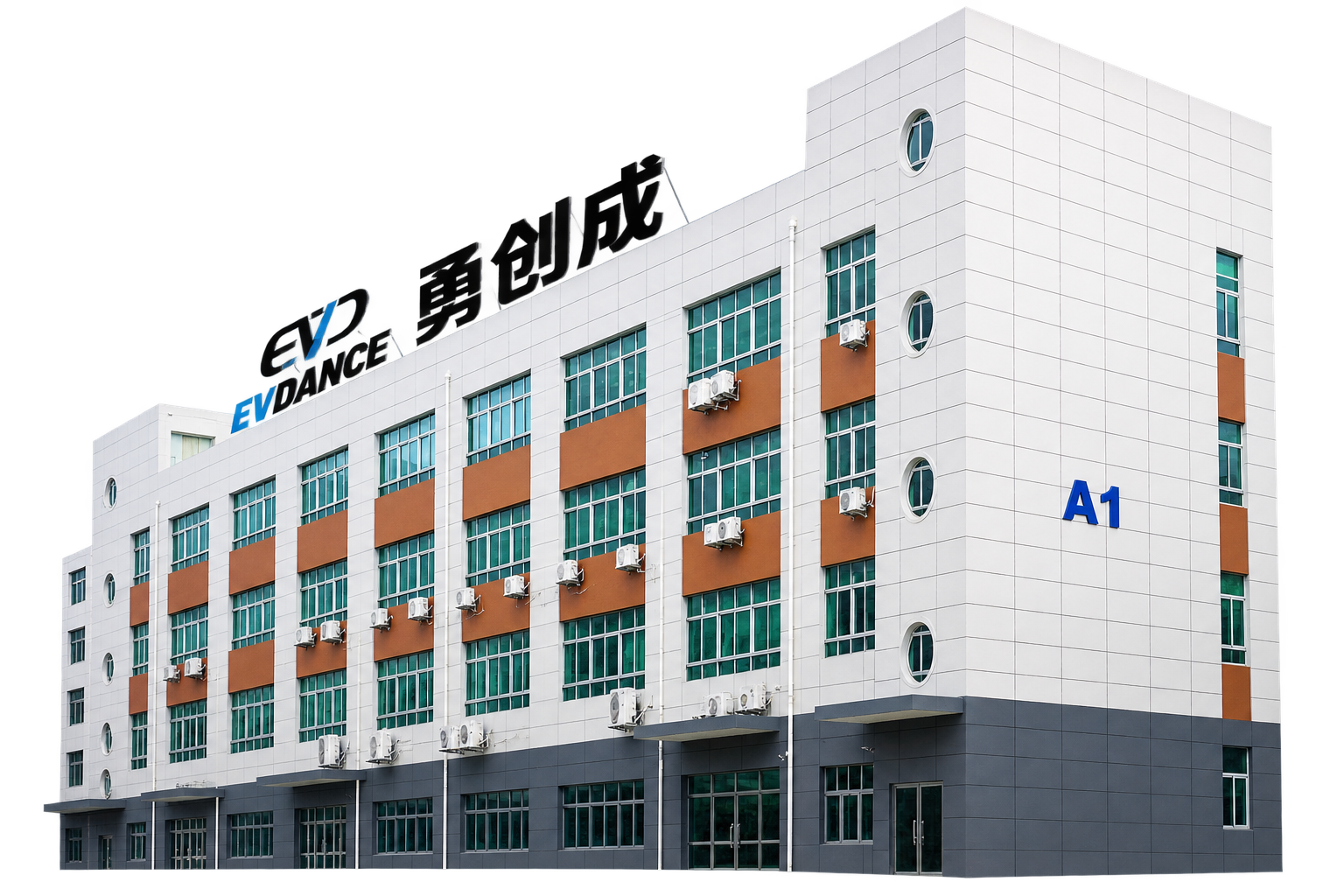
Charging hardware is built the same way: made in specialist factories, then shipped to where drivers use it. EVDANCE is a Shenzhen manufacturer founded in 2011, with its own factory, exporting to more than 30 countries. Its EV-ACT5006T 48A Level 2 wall charger and portable EV-ACS3210T 32A NACS charger are the finished end of that chain.
Frequently Asked Questions
Does the car brand make its own battery?
Usually it makes the pack, not necessarily the cells. Many brands buy cells from specialist manufacturers and design the pack, cooling and electronics themselves; others produce cells with partners. The badge tells you who built the car, not always who made the cells.
Do all EV batteries come from one country?
No. Materials are mined in a few regions, refining and cell production are concentrated in others, and packs are finished near car plants on several continents. That spread is exactly why car brands have been arranging cell supply closer to their own factories.
Where do the materials go when a battery wears out?
A worn-out pack is not the end of the chain. Packs can be repaired, reused in stationary storage, or recycled so their metals re-enter production, as our article on whether an EV battery can be replaced or repaired explains.
Related Reading
- Does an EV Battery Degrade Over Time?
- Can an EV Battery Be Replaced or Repaired?
- How to Check EV Battery Health
