
Charging two EVs at home costs roughly the sum of charging each one alone — the price per kilowatt-hour does not change because a second car plugs in. What changes is the total energy on the bill, how well both cars fit inside the cheap hours, and the one-off cost of the second charging point. Run each car through the same maths you would use for one, then add them.
Key Takeaways
- Two EVs cost the sum of each car’s own charging maths — the per-kilowatt-hour price does not change.
- At example figures (0.30 kWh per mile, 18.31 cents), two cars driving 1,600 miles a month use about 480 kWh, roughly $87.89.
- The real second-car effects are a crowded cheap window, longer shared-power sessions, and one extra charging point to buy.
- Staggered scheduling, not a different tariff, is what keeps two-car running costs down.
The Running Cost Is Both Cars Added Together
Each car’s cost is its miles, times its consumption, times your price per kilowatt-hour. The table is a worked example — 0.30 kWh per mile and the U.S. average residential price of 18.31 cents per kWh are example figures, so substitute your own:
| Car (example) | Monthly miles | Energy used | Cost at 18.31 cents per kWh |
|---|---|---|---|
| Car A — the commuter | 1,000 miles | 300 kWh | About $54.93 |
| Car B — the runabout | 600 miles | 180 kWh | About $32.96 |
| Both together | 1,600 miles | 480 kWh | About $87.89 |
Nothing in that arithmetic is doubled except the energy, because nothing about the tariff is per car. How much it costs to charge an electric car at home builds the single-car figure in full.

What the Second Car Actually Changes
- The cheap window gets crowded. Two cars and one off-peak window: energy that spills outside the window bills at the standard rate, so the timing saving each car earns alone shrinks. Smart charging and time-of-use tariffs is the scheduling side of that squeeze.
- Shared power means longer sessions. Where two chargers share one circuit’s capacity, the power splits between them, each session runs longer, and the spill above gets more likely. The fitting side — circuits, load sharing, what an electrician checks — is a separate question from the running cost here.
- The second charging point is a one-off cost. Equipment and installation vary by home, panel and cable run; an electrician’s quote is the only honest figure, and it is paid once, not monthly.
- Fixed charges do not double. The flat monthly customer charge on the bill stays one charge. Only the per-kilowatt-hour part grows.
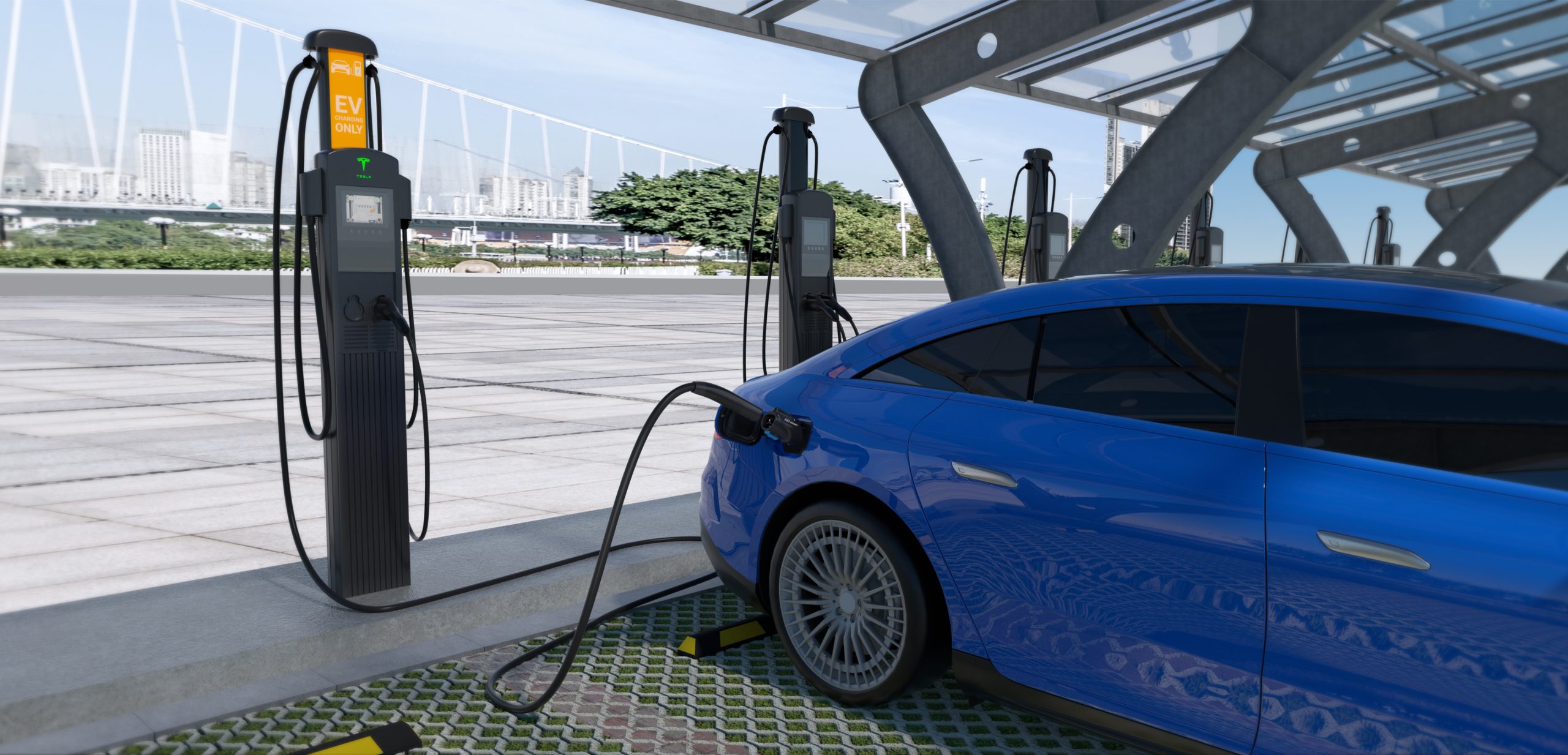
Two Cars, One Routine
Scheduling is what keeps two-car charging cheap: stagger the start times so the high-mileage car gets the heart of the cheap window and the runabout tops up around it. The EVDANCE EV-ACT5006T 48A Level 2 wall charger (up to 48 A, hard-wired or NEMA 14-50P, NACS, ETL/FCC/CE) handles the main car at full home speed, while a portable second unit such as the EV-ACS4005T 40A NACS portable charger (9.6 kW, adjustable from 16 A to 40 A) can be set lower when both cars run the same night. The home range is on our residential charging solutions page.
Frequently Asked Questions
Does a second EV raise my electricity price per kilowatt-hour?
On ordinary residential tariffs, no. The rates are the same; you simply buy more units at them. What changes is how much of the total lands inside any cheap window your plan offers.
Can both cars charge at the same time?
Often, yes — if the home’s supply and the chargers’ settings allow it, the two either share the available power or take turns under a schedule. What your panel supports is a question for a licensed electrician, and it decides the fitting, not the per-unit price.
Is one shared charger cheaper to run than two?
The running cost is the same energy at the same rates either way. One charger swapped between cars saves the second unit’s purchase, but both cars then compete for the same plug and the same cheap hours — a convenience trade, not a billing one.
Related Reading
- How Much Does It Cost to Charge an Electric Car at Home?
- Smart Charging and Time-of-Use Tariffs: How Scheduling Cuts EV Charging Costs
- Solar Panels and EV Chargers: How to Charge Your Car With Sunshine

