
Public charging stations are built and listed for unsupervised public use, and federally funded corridor stations in the US must stay open 24/7 with average uptime above 97% (23 CFR Part 680). For the driver, the equipment is rarely the concern. The practical safety questions are situational: where the station is, how well lit it is, and how you spend the wait.
Key Takeaways
- Public chargers are listed, protected equipment; NEVI sites add 24/7 access and uptime duties.
- The driver’s safety levers are the site chosen, the light, and how the wait is spent.
- Check the Station Locator before you go, prefer lit busy sites, and skip damaged units.
- Home or workplace charging removes the question from your routine entirely.
The Equipment Side Is Regulated
A public charger is not a socket on a post. The connector is designed so its pins are not live until it is latched into a car and the station and vehicle have agreed to start, and stations are listed equipment with built-in ground-fault and over-current protection. The NEVI rules add service duties on top of the hardware:
| NEVI requirement | What it means for you |
|---|---|
| Open 24/7 | Corridor stations are available at night, not locked away |
| Average annual uptime above 97% | The station should be working when you arrive |
| Contactless card payment, no membership needed | You can charge without handing your details to another network |
| CCS1 on DC ports, at least 150 kW | A standard connector at a predictable minimum speed |

Choosing a Safer Stop
- Check before you arrive. The DOE’s Station Locator lists public stations and their access hours, so you can plan the stop instead of discovering it.
- Prefer lit, busy sites. A charger at an open shop, services or staffed car park beats an isolated one at the back of an empty lot, especially after dark.
- Plan the wait, not just the charge. Know roughly how long the session takes and where you will spend it — in the car, or in the business the charger serves. Our guide to how to use a public EV charger covers the session itself.
While the Car Charges
- Stay in or near the car, or wait inside the business. Keep valuables out of sight, as you would in any public car park.
- Keep the cable tidy against the car so it is not a trip hazard across a walkway and cannot be driven over.
- Do not use a unit that is visibly damaged, vandalised or has a broken connector. Report it in the network’s app and move to another station — you are rarely limited to one, as our guide to using any charging station explains.
- On a long trip, tell someone your rough stops and keep your phone charged, so a dead station is an inconvenience, not a problem.
The Simplest Safety Upgrade: Charge Where You Park
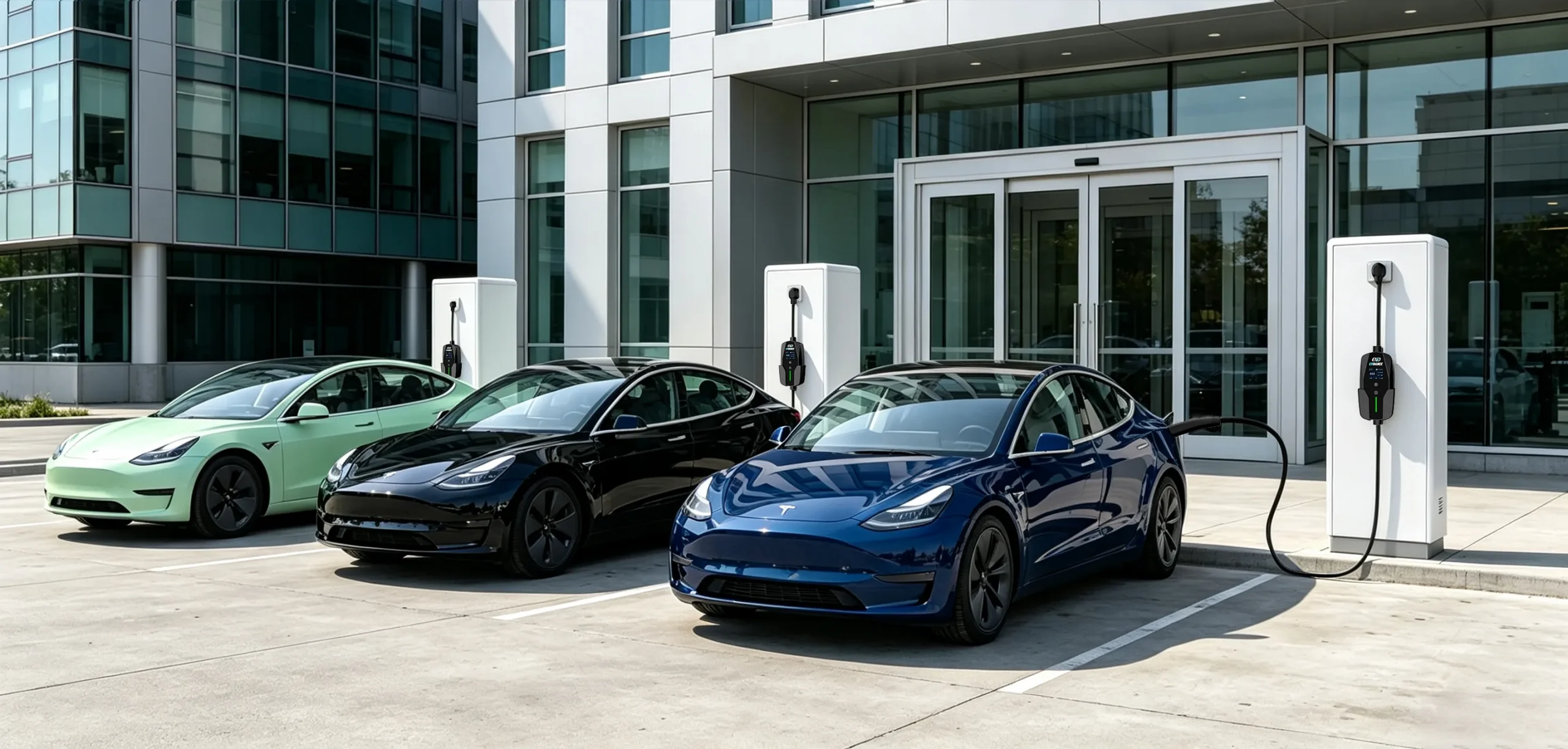
Most public-station caution disappears if your routine charging happens at home or work. A portable charger such as the EV-ACS4005T 40A portable charger (9.6 kW, NEMA 14-50, IP66) turns a parking space with an outlet into your personal station, and our residential charging solutions cover wall-mounted options. Public chargers then become the exception, for trips, where the habits above apply.
Frequently Asked Questions
Is it safe to charge at a public station at night?
Millions of sessions happen after dark. Choose a lit site attached to something open, stay in or near the car, and prefer the 24/7 corridor stations, which must meet the NEVI duties listed above.
Can someone unplug my car or steal my cable?
On most cars the connector locks while charging, and tethered station cables belong to the station. For your own portable cable, our guide to whether EV charging cables can be stolen, and how to lock yours, covers the options.
Is it safe to sit in the car while it charges?
Yes. Cars are designed to be occupied while charging, and you can run the cabin heating or cooling during the session. It is the normal way to wait out a fast charge.
Related Reading
- How to Use a Public EV Charger (and How to Stop It)
- Can EV Charging Cables Be Stolen? How to Lock and Protect Yours
- Are EV Charging Adapters Safe?
- Can You Use Any EV Charging Station?

