
The strange hum an EV makes at walking pace is deliberate: safety regulations in the United States and Europe require electric and hybrid cars to emit a warning sound at low speeds, because a near-silent car is a risk to pedestrians. The other noises — a rising whine as you accelerate, clicks when charging starts, a soft fan or pump hum while plugged in — come from the motor, inverter and cooling system doing their jobs. None of them is engine noise, because there is no engine.
Key Takeaways
- The low-speed hum is a pedestrian warning sound required by safety regulations — deliberate, not a fault.
- The whine is the motor and inverter; its pitch follows how hard the drivetrain is working.
- Clicks are battery contactors, and fan or pump sounds during charging are the cooling system.
- Grinding, knocking, or a warning sound that stops working are the noises to get checked.

Sound by Sound: What You Are Hearing
| Sound | When it happens | What makes it |
|---|---|---|
| Low hum or chime | Slow driving, manoeuvring, reversing | The pedestrian warning system — a speaker playing a sound the car must make at low speed |
| Rising whine | Accelerating, and sometimes easing off | The electric motor and the inverter that feeds it; pitch follows motor speed |
| Click or clunk | Charging starts or ends, car wakes or sleeps | Contactors — heavy-duty switches connecting and disconnecting the battery |
| Fan or pump hum | While charging, especially fast charging or hot weather | The car’s cooling system moving liquid around the battery and electronics |
| Road and wind noise | At speed, on the highway | Tyres and air — with no engine note, these ordinary sounds become the loudest ones |
The warning sound is the one that surprises new owners most. It is generated by a speaker, not the drivetrain, which is why it can sound musical, synthetic or oddly like a spaceship. It fades out as speed rises and tyre noise takes over. Reversing often gets its own tone or beeping pattern, for the same reason: people behind the car cannot hear it coming.
Why the Whine Changes With Speed
An electric motor spins far faster than a petrol engine and is geared down once, so its note is a smooth whine rather than a growl. The inverter switches power thousands of times a second to drive the motor, and that switching adds a high-pitched edge that rises and falls with your right foot. Strong regenerative braking can produce a similar whine in reverse logic — the motor running as a generator. Drivers coming from petrol cars notice these sounds more, because there is no engine noise masking them; the U.S. Department of Energy’s EV technology overview explains the motor-and-inverter layout behind them.
Noises While Charging, and When to Worry
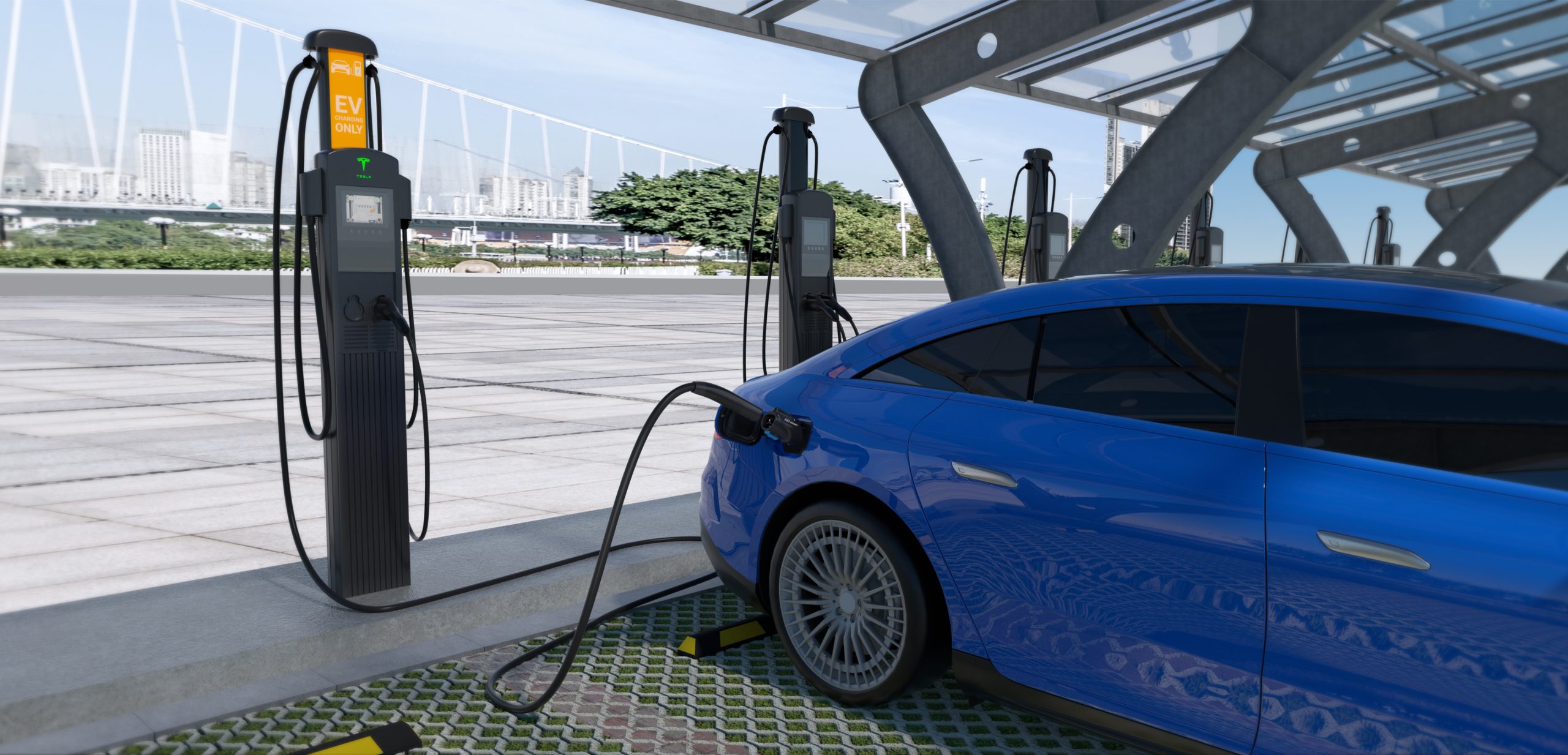
A plugged-in car is not fully asleep. Contactors click when a session starts, and pumps or fans may run to keep the battery in its comfort zone — more likely during DC fast charging and in hot or cold weather. Those sounds come from the car; the charger on the wall makes its own separate set of noises, from fan hum to status beeps, which are covered by different checks. Basic electrical safety around any of this equipment is set out in the Portable EV Charger Safety Guide 2026.
Sounds that are not normal: grinding, scraping, a new loud knocking, or a warning sound that stops working altogether. The warning tone is a safety system, so if it falls silent, have the car checked. For anything mechanical-sounding, the manufacturer or a dealer is the right call — not a charger setting.
For quiet home charging once you are back, a portable unit such as the EV-ACS3210T 32A NACS portable charger (about 7.7 kW, NEMA 14-50P, IP66) covers overnight charging without fixed installation.
Frequently Asked Questions
Can I turn off the pedestrian warning sound?
On most cars, no — it is a required safety feature, and disabling it may breach local rules as well as removing protection for people around the car. Some models let you choose between sound styles instead.
Why does my EV sound louder in reverse?
Reversing is the manoeuvre where pedestrians are most at risk and least likely to see the car, so many models use a more noticeable tone or beeping pattern in reverse than when creeping forward.
Is the whine a sign of a motor problem?
A smooth whine that rises and falls with speed is normal motor and inverter behaviour. A whine that suddenly changes character, or arrives with vibration or grinding, is worth a dealer visit.
Related Reading
- Portable EV Charger Safety Guide 2026
- Does an EV Battery Drain When Parked?
- Can You Drive Over an EV Charging Cable?

