
There is no single answer. Quotes for the same driver can put one EV above a similar petrol car and another about level — it depends on the model, the repair network behind it and where you live. What decides the number is repair economics, not the fuel: insurers price what a claim would cost them, and an EV claim is built differently.
Key Takeaways
- There is no universal EV premium: quotes are set model by model, mostly by expected repair cost.
- The battery pack drives the difference — it is valuable, model-specific and assessed by specialists, so insurers price in the uncertainty.
- Quote the exact car before you buy, and ask which approved repairers stand behind the policy.
- Declare your home charger to your home insurer and keep the installation paperwork.

What an Insurer Is Really Pricing
A premium is mostly expected repair cost, plus how long the car would be off the road. On those two measures an EV differs from a petrol car in specific places:
| Factor | Petrol car | Electric car |
|---|---|---|
| Most expensive component | Engine and gearbox, widely understood and repaired everywhere | The battery pack — a large share of the car’s value, assessed by the maker’s network |
| Who can do the work | A broad network of independent workshops | Fewer approved repairers with high-voltage training and equipment |
| After underbody damage | Panels and mechanical parts | Panels, plus a specialist inspection of the pack before anyone can quote |
| Parts supply | Deep, competitive, often next-day | More model-specific; a wait for parts extends the claim and any courtesy car |
None of this makes an EV uninsurable. It means the spread between models is wide: two EVs of similar price can carry quite different quotes because their repair networks and parts supply differ.
The Battery Sits Behind Most of the Difference
The pack is the one component with no fixed replacement price — it varies by model, and even assessing damage is specialist work. Insurers dislike uncertainty, so they price it in. This is also why quotes improve as a model’s repair network matures: more approved repairers and better parts supply mean a cheaper expected claim, and the premium follows the claim, not the badge. The practical lesson for buyers is to price insurance for the exact model and trim before you commit, the same way you would price charging — the running-cost comparison in whether charging an electric car is cheaper than gas only covers the energy side of ownership.
What You Can Actually Control
- Quote the exact car, not the category. “EV insurance” is not one price. Get quotes on the specific model, trim and battery size you are buying.
- Ask about the repair network. An insurer with approved EV repairers near you is worth more than a small saving with a network that would ship the car across the state.
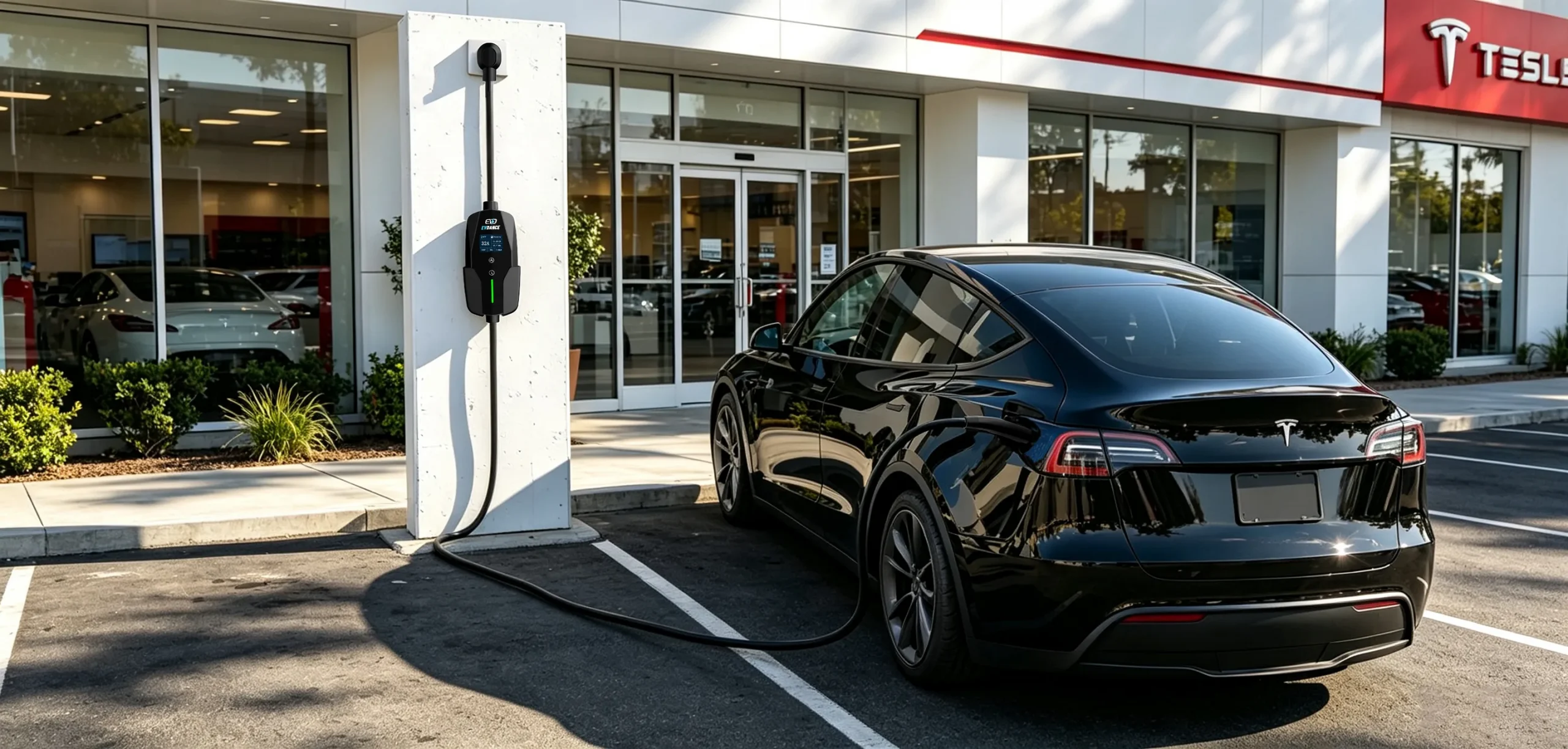
- Declare the home charger properly. A wall charger is a change to your home’s electrical setup. Tell your home insurer it is there, and keep the install paperwork — our guide to having an EV charger at home covers the setup side for houses, rentals and condos.
- Keep the charging side boring. A certified charger, professionally installed, with its paperwork kept, is the version of home charging insurers and buyers both like to see.
On the equipment side, that means listed hardware such as the EV-ACT5006T 48A Level 2 wall charger (ETL/FCC/CE) installed by a licensed electrician, or a portable unit like the EV-AC04001U 40A J1772 portable charger used on a proper outlet — documented, standard, nothing improvised.
Frequently Asked Questions
Will a home charger raise my home insurance?
It should not be a surprise cost, but it must not be a secret either. Policies differ, so tell your home insurer about the installation and keep the electrician’s paperwork. An undisclosed electrical change is a far bigger problem at claim time than a declared one.
Is a plug-in hybrid insured like a full EV?
Insurers treat each model on its own repair economics. A plug-in hybrid carries both an engine and a battery system, so its claims profile is its own — get the quote for the exact car rather than assuming it sits halfway between petrol and electric.
Will EV insurance simply get cheaper over time?
Nobody can promise that, and any date would be a guess. The things that push quotes down are visible, though: wider repair networks, better parts supply and more claims history per model. Check them at renewal rather than assuming the direction.
Related Reading
- Is Charging an Electric Car Cheaper Than Gas?
- How Much Does It Cost to Charge an Electric Car at Home?
- Can I Have an Electric Car Charger at Home? Houses, Rentals and Condos
- Which Level 2 Charger Should I Buy? A Buyer’s Checklist

