
It depends on who the site installed them for. Chargers at shops, gyms, hotels and dealerships fall into three kinds: open to everyone, free or paid for that site’s customers while they visit, and restricted to guests, members or staff. The charger itself will not tell you which kind it is — the site’s signs, the network app listing, or a quick question at the desk will.
Key Takeaways
- Chargers at businesses are open, customer-only, or restricted — the site decides, not the charger.
- Check the sign at the bay, the app listing, or the front desk before plugging in.
- Free means price, not permission; no sign still means it belongs to the site.
- If you are the customer the charger was installed for, using it during your visit is exactly the intent.
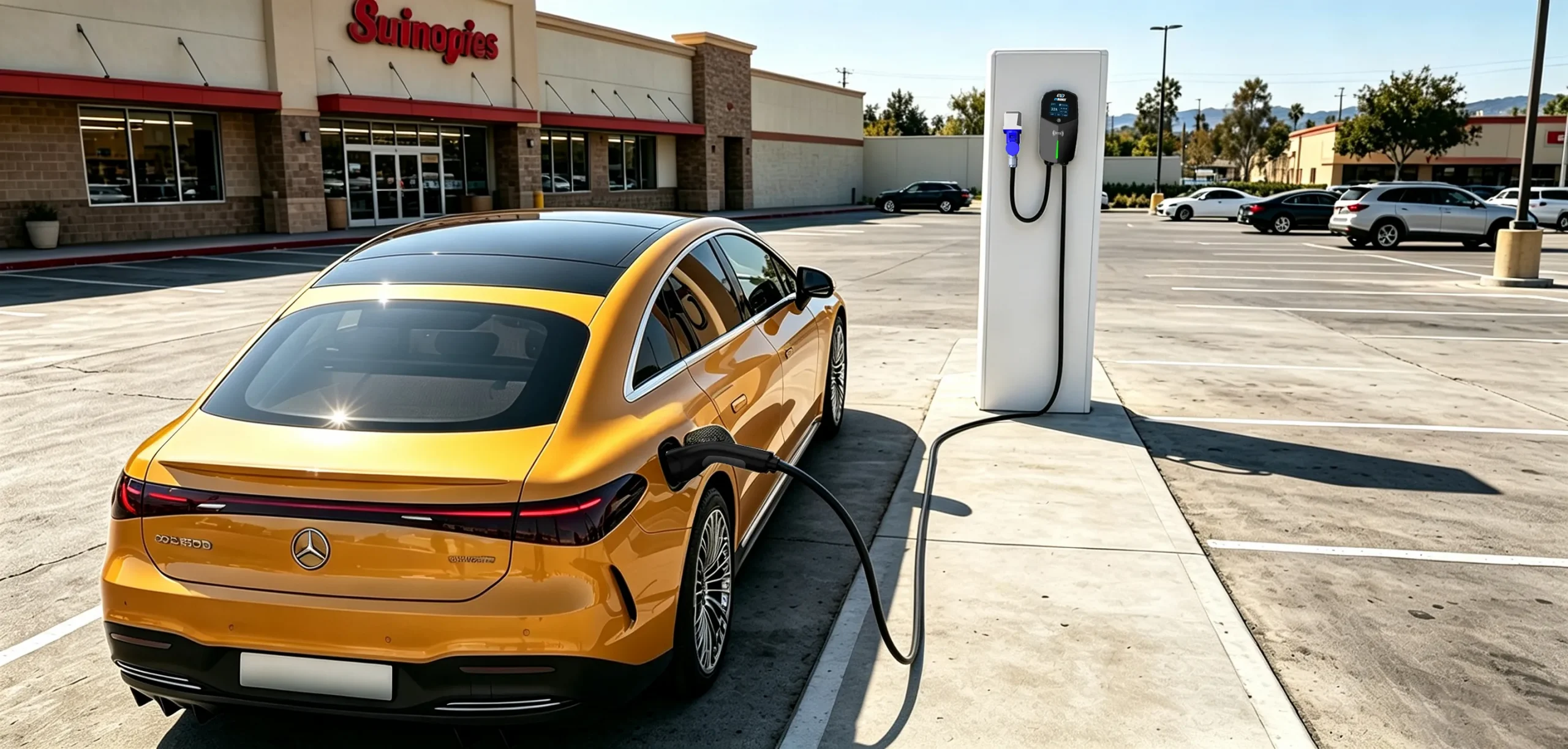
The Three Kinds of “Public-Looking” Charger
| Kind | Who it is for | How you can tell |
|---|---|---|
| Open public | Anyone; often on a national network | Listed as public in station apps, with a price shown |
| Customer charging | People using the business while they are there | Signs say “customers only” or similar; sometimes activated at the desk |
| Restricted | Hotel guests, gym members, staff, or a dealership’s own customers | Behind a barrier, in a members’ area, or started with a card the site issues |
The open kind is the exception that proves the rule about funding: stations built under the U.S. NEVI programme must be open to all drivers, accept contactless payment and require no membership. A charger on private land carries no such duty — the site owner sets the terms, which is why two chargers that look identical can have completely different rules.
How to Check Before You Plug In
- Read the bay, not just the charger. Access terms are usually on the sign at the space or the entrance, not on the unit.
- Check the listing. Station finder apps often note restrictions such as “customers only” or “guests” on the location page — the DOE’s Station Locator is a good first check for genuinely public sites.
- Ask. Reception and service desks are used to the question, and some sites simply switch the charger on for you.
- Take no sign as a no, not a yes. If nothing says who the charger is for, it belongs to the site either way; asking takes a moment and guessing wrong can mean being asked to move mid-session.
If You Are a Customer, You Are the Intended User
Customer chargers exist to be used during a visit: they are typically Level 2 units sized for the length of a shop, a workout or a service appointment, and the business counts your charging as part of why you came. Hotels are the most familiar version — as our guides to hotel charging and whether hotel charging is free show, the usual pattern is guests first, sometimes with a fee, sometimes included. The same etiquette as any shared charger applies: charge while you are there, and free the bay when you leave.
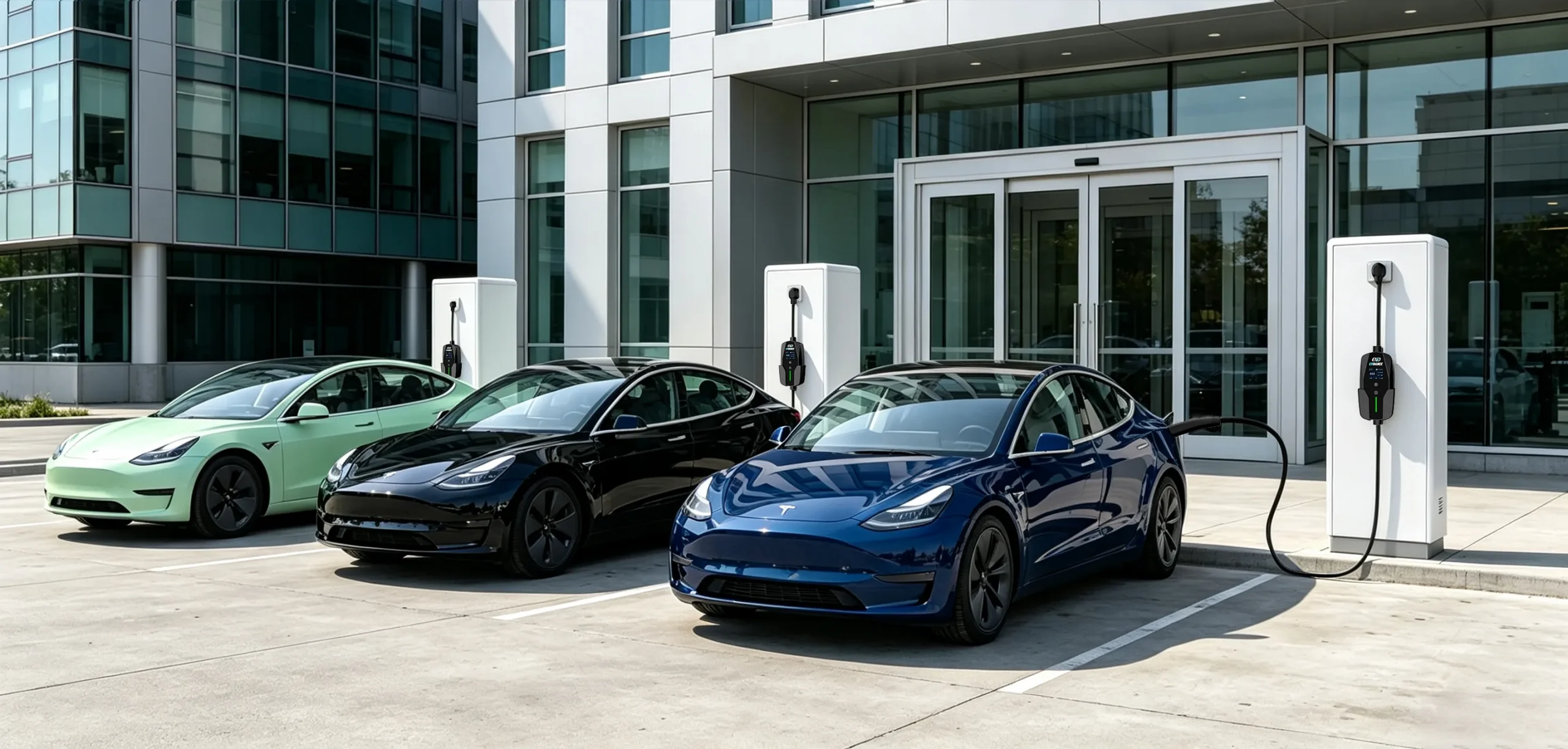
Sites choosing hardware for exactly this customer pattern is where units like the EV-ACT3204PE 22 kW wallbox fit — RFID or app access lets the business decide who can start a session, which is the practical difference between a customer charger and an open one. EVDANCE’s commercial charging page covers the site owner’s side of that choice, and our explainer on how commercial stations work covers the payment and access systems behind it.
Frequently Asked Questions
Can I use a dealership’s charger if my car is a different brand?
The brand of your car is rarely the point. A dealership’s chargers are normally for its own sales and service customers and its own stock, whatever badge is on the unit. If you are there for service, ask — many will plug you in as part of the visit. If you are just passing, treat it as private.
The charger is free. Does that mean anyone can use it?
No. Free describes the price, not the permission. Plenty of customer chargers are free for customers; the cost is carried by the business as part of the visit. A charger with no price and no sign still belongs to the site.
What if the app lets me start the session?
A networked charger that starts from the app is generally offering the session to whoever the network sells it to — but the parking itself may still be customers-only. Follow the site’s parking terms as well as the app’s, and move on if staff tell you the bays are spoken for.
Related Reading
- Do Hotels Have Charging Stations for Electric Cars?
- Is EV Charging at Hotels Free?
- How Do Commercial EV Charging Stations Work?
- How to Charge an EV When You Live in an Apartment

