
If an operator wants to put chargers on your land, the host agreement decides what you get out of it.
Key Takeaways
- A host agreement, not the hardware, decides what a site earns from hosted chargers.
- Read the term, money definition, maintenance and end-of-term clauses first.
- A revenue share is only as good as the document’s definition of revenue.
- Have insurance, liability and exit clauses lawyer-reviewed before signing.
It sets who pays for the hardware and grid connection, who sets the price drivers pay, how long the chargers stay, and what happens when the deal ends. The chargers are the simple part; the paper is where a site’s return is won or lost.
Which Side of the Deal Are You On?
Hosting means the operator owns and runs the chargers on your site: you provide the land, bays and electrical capacity; the operator bills the drivers. It is one model among several — our guide to opening an EV charging station covers setting up on your own, and a charging station franchise is a third route. If a duty is not in the agreement, it is not promised.

The Clauses That Decide Your Return
| Clause | What it decides | What to check |
|---|---|---|
| Term and renewal | How many years the chargers stay on your site | The full commitment, including automatic renewals |
| Installation and grid costs | Who pays for chargers, groundworks and any supply upgrade | A named payer for each item — DOE-cited sums run about $3,500 + $2,500 per Level 2 connector and $38,000–$90,000 + $20,000–$60,000 for DC fast |
| Your return | Rent, a share of charging revenue, or a mix | How it is calculated, what is deducted first, and when you are paid |
| Pricing control | Who sets the price drivers pay | Whether prices can change without your knowledge |
| Maintenance and uptime | Who repairs the chargers and how quickly | Repair duties and who drivers contact — it should not be your staff |
| Electricity | Who holds the supply contract and pays for energy and peak charges | Whether any energy cost can flow back to you |
| Access and the bays | Each side’s daily duties | Your part (bays clear, access open) against theirs (signage, lighting, upkeep) |
| End of term | What happens when the deal finishes | Who removes the chargers, who pays to make the ground good, and what becomes of the grid connection |
The Money Clause Deserves a Second Read
A revenue share sounds simple until you ask what “revenue” means in the document. A share of the gross takings is one thing; a share of what remains after platform fees, payment processing and energy costs is another, and they differ widely at a quiet site. A flat rent is predictable but fixed. Which suits you depends on expected traffic — the modelling question in whether a charging station business is profitable.
Before You Sign
- Read the exit clauses first. Break rights, notice periods and removal duties matter more on year nine than day one.
- Confirm who owns what at the end. Chargers, cabling and the grid connection may each have a different owner at expiry.
- Check insurance and liability. The agreement allocates who insures the equipment and who carries liability for damage or injury. Have a lawyer review it; do not rely on verbal assurances.
- Check permits and resale rules. Some places regulate selling charging to the public; our guide to charging station licences and permits lists what to verify.
- Ask what happens if the operator changes. Networks are bought, sold and rebranded. Check whether the agreement can be assigned without your consent, and what happens if it stops trading.
If You Would Rather Own the Chargers
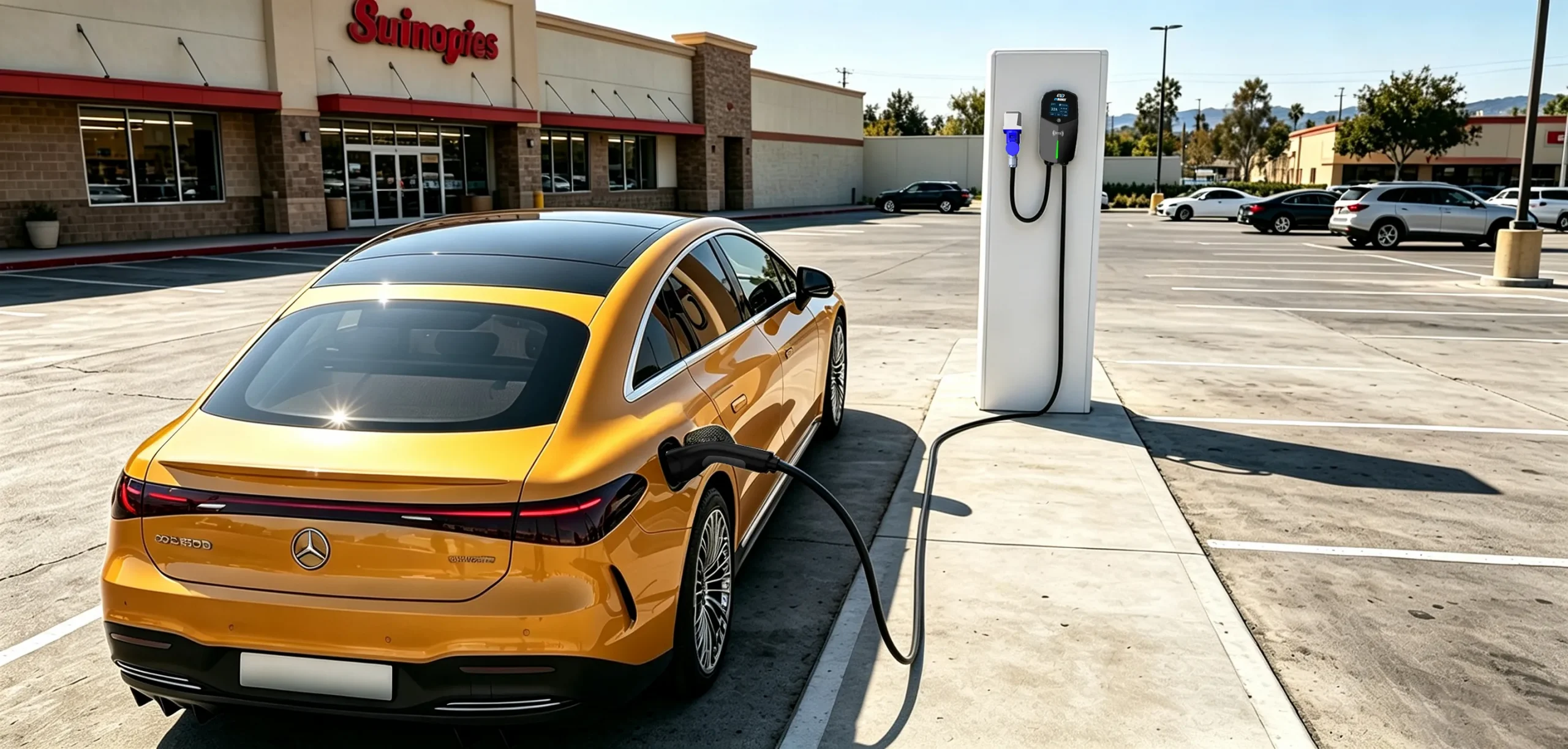
Owning flips every clause above into your own hands: you set the price, keep the revenue and carry the maintenance duty. Sites running their own chargers choose networked hardware, such as the EVDANCE EV-AC03201T dual-connector AC station — up to 43 kW shared across two Type 2 connectors, OCPP 1.6J and RFID — or the EVDANCE EV-RHDC30K-L compact DC fast charger at 22 kW. See our commercial charging solutions.
Frequently Asked Questions
How long does a host agreement usually run?
There is no standard term — offers vary widely. Judge the full commitment, including automatic renewals, and make sure the exit clauses match what you can accept.
Can I take a flat rent instead of a revenue share?
Yes. Rent, revenue share and mixes of the two all exist. Rent is predictable; a share follows how busy the site turns out to be — which is why the document’s definition of revenue matters more than the headline percentage.
Who pays if a hosted charger is damaged or vandalised?
Whoever the maintenance and insurance clauses assign. Under hosting it is normally the operator’s equipment and problem — but “normally” is not a contract term, so have the clauses reviewed first.
Related Reading
- How to Open an EV Charging Station: Step by Step
- Is an EV Charging Station Business Profitable?
- Are EV Charging Stations a Good Investment?
- What Is the Best EV Charger for a Small Business?

