
Sometimes — it depends on the card in your wallet. Fleet and fuel cards were built for petrol and diesel forecourts, while public charging runs on separate networks with their own accounts, so a card accepted at every fuel station can still be declined at a charger. Some fleet cards now include charging; many still cover fuel only. The dependable fallback is a contactless bank card, which chargers built to the federal NEVI standard must accept without any membership.
Key Takeaways
- A fleet card works at a public charger only if the issuer has enabled charging and signed up that network.
- NEVI-standard chargers must accept contactless bank cards with no membership — that is the guaranteed fallback.
- Charge cards are the network-side equivalent of fuel cards, and they roam only where agreements exist.
- Fleets that charge at their own depot sidestep public payment almost entirely.
What a Fleet Card Was Built For
A fuel card works because the forecourt world is standardised: one card per vehicle, accepted across a card network, with the business getting a single consolidated bill and controls over what can be bought. Charging never joined that model. As our explainer on how EV charging stations work sets out, a public charger belongs to a charging network that bills per session, through its own account, app or RFID card.

Why the Charger May Say No
Under the NEVI rules in 23 CFR Part 680, corridor fast chargers must offer contactless payment by card and must not require a membership. That guarantees your bank card a way in; it says nothing about fleet cards, which are private arrangements between the card issuer and each network. So whether your fleet card works at a given charger comes down to whether the issuer has switched charging on and signed up that network — a commercial agreement, not a technical standard. Our guide to whether EV charging stations take credit cards covers the ordinary card routes that sit underneath all of this.
| Payment route | How it works | What to confirm first |
|---|---|---|
| Fleet card with charging enabled | Tap the fleet card at chargers on the issuer’s networks | That charging is switched on for your card, and which networks it covers |
| Employer’s network charge card or app account | The charging-world equivalent: an account with a network, billed to the business | Whether it roams onto other networks or only works on its own |
| Personal contactless card, expensed | Tap your own bank card, keep the session receipt, claim it back | Your employer’s expense policy — the receipt is your evidence |
| Depot or workplace charging | The car charges where it parks; the business pays its own electricity bill | Nothing at the charger — access is arranged by the employer |
The Checks to Make Before You Rely on the Card
- Ask the fleet manager, not the charger. Whether charging is enabled, and on which networks, is a line in your card agreement — find out before a trip depends on it.
- Carry the fallback anyway. A contactless bank card plus the network’s app covers any charger you will meet; station-finding is covered in our guide to where to find EV charging stations.
- Keep every receipt. Whichever route pays, keep the record: a receipt shows the energy, the site and the time.
- Know what the card forbids. A card restricted to fuel will decline at a charger even on a covered network.
The Depot Alternative Fleets Actually Control
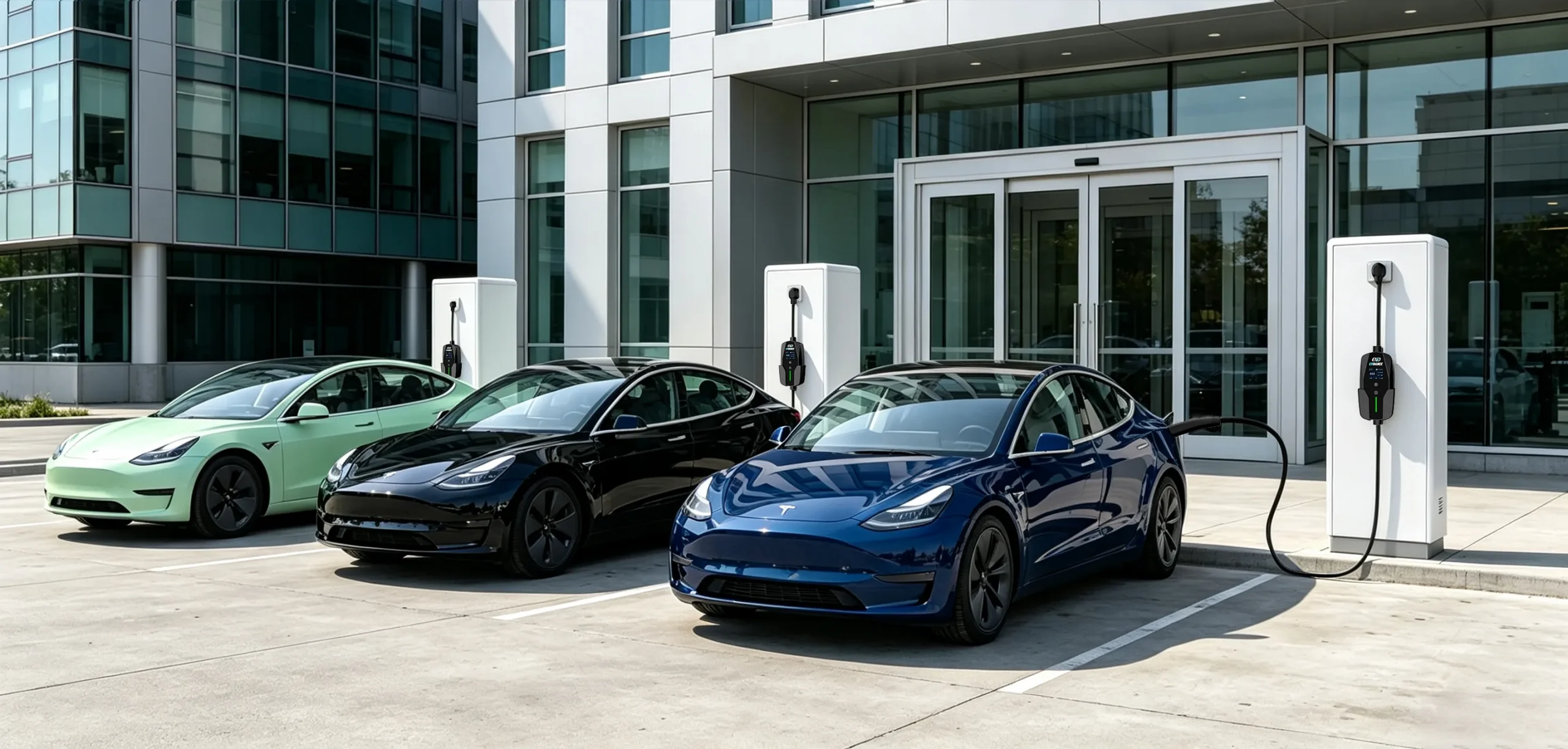
Many fleets answer the payment question by mostly not asking it: vehicles charge at the depot, where the business owns the equipment and the bill. A dual-connector AC station such as the EV-AC03201T (two Type 2 connectors, up to 43 kW shared, OCPP 1.6J, RFID access) lets a business run its own driver access and session records, keeping public charging for the road. More layouts are on our commercial EV charging page.
Frequently Asked Questions
My fuel card was declined at a charger. Is it faulty?
Probably not. The likeliest reasons are that charging is not enabled on the card, or that the charger is on a network your issuer has not signed up. Try a contactless bank card, which NEVI-standard chargers must accept, and raise the fleet card with your fleet manager afterwards.
Is a charge card the same thing as a fuel card?
It is the charging-world equivalent, issued against a network account rather than a forecourt card network. It works on that network — and on roaming partners where the network has agreements.
Can I just pay myself and expense the session?
In most workplaces, yes: tap a contactless card, keep the session receipt, and claim it under your employer’s normal expense policy. Check that policy first, because what counts as evidence is your employer’s decision, not the charger’s.
Related Reading
- Do EV Charging Stations Take Credit Cards?
- How Do EV Charging Stations Work?
- Can You Use Any EV Charging Station?
- Where to Find EV Charging Stations: Maps, Apps and Tips

