
Yes, at stations that have them, but never assume yours does. Train station and park-and-ride car parks are a natural fit for charging, because the car sits there all day. The chargers are usually Level 2 units run by the car park or a charging network. Check your specific station before you build one into your commute.
Key Takeaways
- Station and park-and-ride car parks suit Level 2 charging because the car is parked all day.
- Check your own station first: chargers, bay rules, payment and time limits all vary.
- Plug in when you need the charge; an all-day bay is a shared resource.
Why a Station Car Park Suits Level 2
Most charging problems are really parking-time problems. A commuter car parks for a full working day, and that is far longer than a Level 2 charger needs. The U.S. DOT puts Level 2 charging at roughly 10 to 20 miles of range per hour. Even at the slow end of that band, a working day parked adds far more range than most drives home.
| Time parked | Range added at DOT Level 2 speeds |
|---|---|
| 2 hours | About 20 to 40 miles |
| 4 hours | About 40 to 80 miles |
| 8 hours | About 80 to 160 miles |
These are band figures, not promises for a specific car. Your car, its battery state and the unit itself decide the real number.
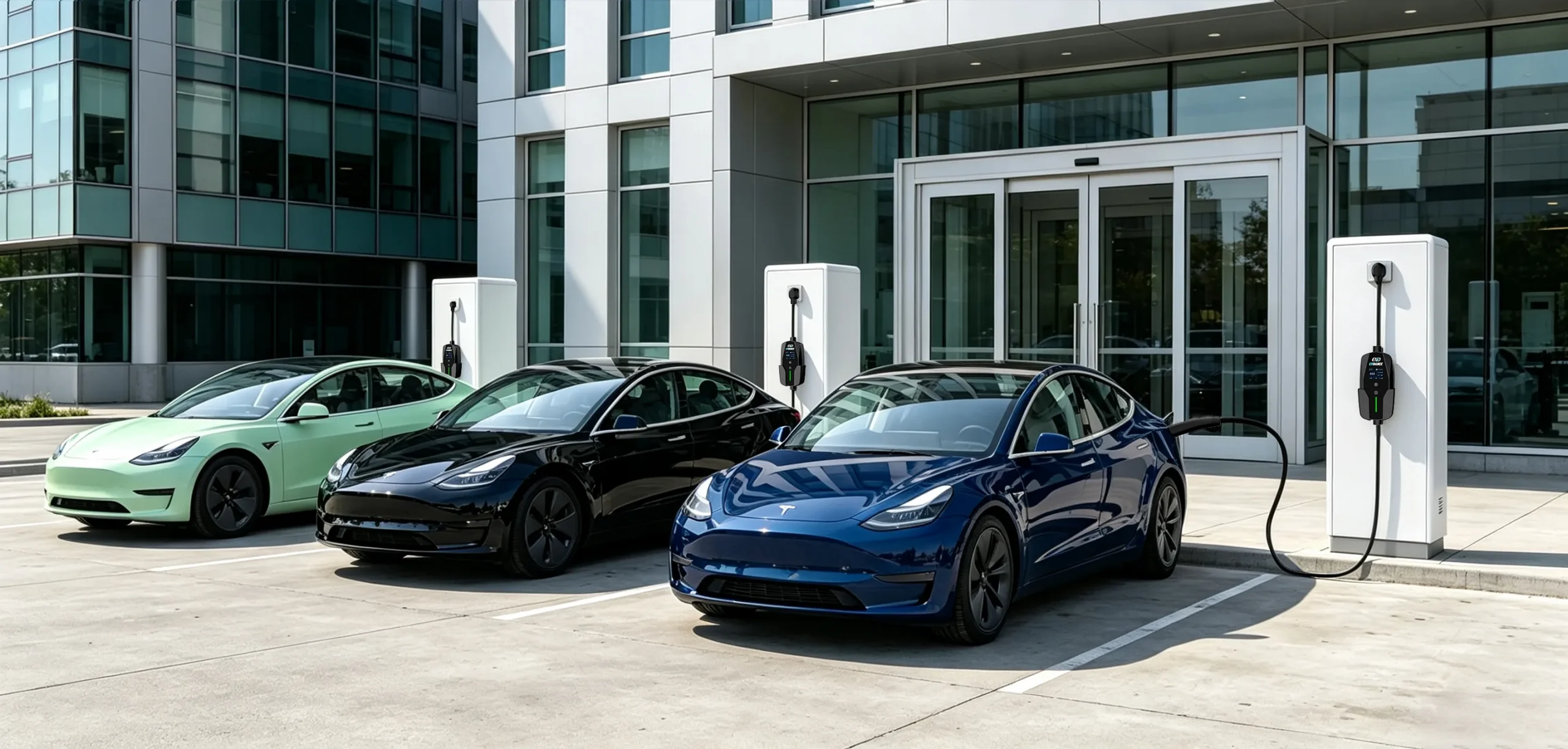
What to Check Before You Rely on It
- Does your station have chargers at all? Coverage varies station by station. The U.S. DOE’s Station Locator lists public chargers by location, so check your station there first.
- Where are the bays? Some sit inside the paid or permit side of the car park. A charger you cannot legally park at is no use.
- How do you start and pay? Station units may need an app, an RFID card or contactless payment. Set that up before the morning you need it.
- Are there time limits? Some charging bays carry a maximum stay, even inside an all-day car park. Read the bay’s own signage, not just the car park’s.
- Is it working? A commuter plan built on one charger needs a fallback. Know the next charger on your route.
How these units work, and who runs them, is covered in our guide to how EV charging stations work. The operator’s side of choosing sites is a different question, covered in the site selection guide.
The One Etiquette Problem: All-Day Bays
A station charger is occupied for the whole day by design. That is the deal both sides accept: the driver gets a full battery, the charger turns over slowly. It still pays to plug in when you need the charge rather than by habit. A bay used daily by a car that arrives nearly full is a bay another driver cannot use. Customer chargers at shops work on the opposite pattern, short stays and quick turnovers, as our piece on commercial charging stations explains.

Hardware Note for Car Park Operators
For operators fitting out commuter car parks, the EV-AC03201T dual-connector AC station serves two cars per unit with up to 22 kW per connector, OCPP 1.6J and RFID access. See the wider range on our commercial charging page.
Frequently Asked Questions
Do all train stations have EV chargers?
No. Provision varies by station and by operator. Check the DOE Station Locator or the car park operator’s own listing for your station before relying on it.
Can I leave my car plugged in for the whole day?
Usually the parking is all day, but the charging bay may have its own rules or time limit. The bay signage and the operator’s terms decide, so read both.
Is station car park charging free?
Sometimes, often not. Pricing is set by the operator and can sit on top of the parking fee. Check the charger’s listing or screen before your first commute, not during it.
Related Reading
- How Do EV Charging Stations Work?
- How Do Commercial EV Charging Stations Work?
- Where to Install an EV Charging Station: Site Selection Guide

