
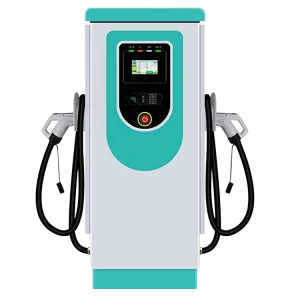
How to Set Different Prices for Members and the Public at Your EV Chargers
Member and public prices are two tariffs on two driver groups in your platform. The charger meters; the platform applies the tariff your credential earns.
Member and public prices are two tariffs on two driver groups in your platform. The charger meters; the platform applies the tariff your credential earns.
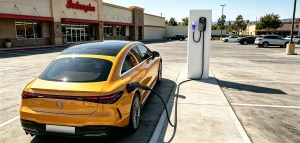
Yes: one station can run a free customer group and a paid public group. The group is set at authorisation, and the free group stands on validation, not trust.
A session price is lines added in order: measured energy and/or time, a session fee if set, an idle line if earned, then tax treatment. The charger measures; the platform calculates.
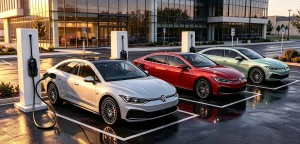
The resale question turns on what you are actually selling: measured energy steps towards supply and metering law; a charging service follows different rules. Your billing basis points at the shape.
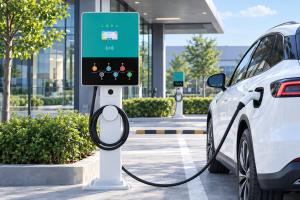
When a third party runs chargers on your land, permissions split by role: site duties to the owner, selling duties to the seller, programme duties to the grantee. The agreement settles the split.
Under kWh billing only the meter matters. Under time billing, the operator’s tariff defines when the clock starts and stops — and those definitions decide the bill.
Choose by sequence, not headline power: who stops, how long, how much energy, what the supply feeds, what the budget allows — then Level 2 or DC decides itself.
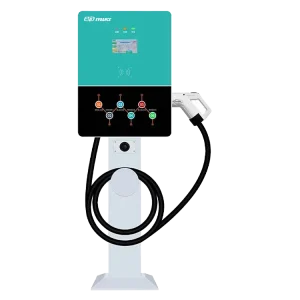
No standard rating exists: work backwards from energy per stop divided by stop length, then check the cars’ acceptance — the charger’s kW is only a ceiling.
60 kW sits inside the DOT fast band, so the class is right. Enough is a throughput verdict: sessions per day, how they bunch, and whether the power is shared.
A dual-port DC charger divides one power source between two plugs. The spec sheet’s simultaneous total — not the per-port peak — decides what two cars actually get.