

Can an EV Charger Be Installed Upside Down or Sideways?
Only if the maker’s instructions for that exact model say so. Orientation is part of how a charger was tested and listed — here is why, and how to check before you plan around it.
Only if the maker’s instructions for that exact model say so. Orientation is part of how a charger was tested and listed — here is why, and how to check before you plan around it.
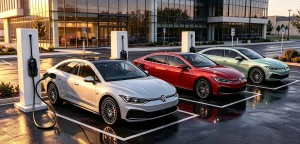
Homes have one decision-maker and one charger. A commercial or shared site needs an installer whose evidence matches the bigger job — here is where to look and what to verify.
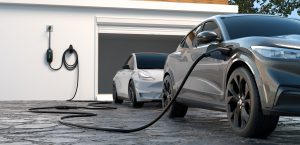
Ask about licence and capacity, the permit, what the quote includes, the charger setup, and aftercare. The questions that separate a clear quote from a vague one.
A job leaves the standard package when the route, the panel, the ground or the setup asks for more than a short run beside a healthy panel. The categories, one by one.
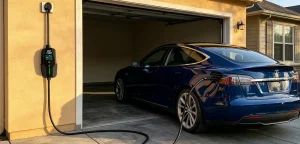
There is no flat trenching price: the line is built from length, surface, ground and who restores it. How the cost is assembled, and how to compare two trench quotes fairly.
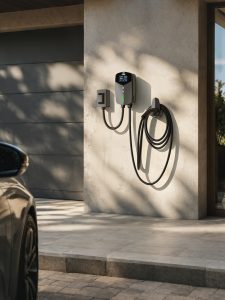
No single US rule decides it: code adoption, licensing law and your permit office do, locally. The layers that decide, and the insurance and warranty tests beyond legality.
Fitting a fixed home EV charger in the UK is regulated electrical work: in England and Wales the doors are a registered installer, or building control.
Your installer notifies the DNO — but the proof sits in your paperwork. Here is what should exist, what to ask for, and how to check years later.
A PEN fault is a break in the supply’s combined earth-and-neutral conductor. It can leave a charging car’s bodywork live while everything looks normal.
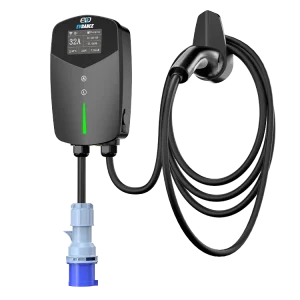
Open PEN protection watches the supply for a broken PEN conductor and disconnects the charger if one is detected. Here is how it works and where it sits.