Electric vans and light commercial vehicles usually return to the same depot every night. That predictable routine makes depot charging one of the most cost-effective charging use cases, as long as the chargers and the electrical supply are sized for the real duty cycle rather than for the biggest number on the spec sheet.
Step 1: Work Out Daily Energy per Vehicle
Start from how far each vehicle drives on a typical day and its energy consumption per kilometre or mile, as reported by the vehicle or the manufacturer. Multiply the two to get daily energy, then add a margin for winter, heavier loads and battery ageing.
Step 2: Compare Energy With Dwell Time
Divide daily energy by the hours each vehicle is parked at the depot. That gives the minimum average power you need. Vans parked for 10 to 12 hours overnight often need far less than a 22 kW charger can deliver.
| Daily energy needed | Parked hours | Minimum average power | Practical charger |
|---|---|---|---|
| 40 kWh | 10 h | 4 kW | 7.4 kW single-phase or 11 kW three-phase |
| 70 kWh | 10 h | 7 kW | 11 kW three-phase |
| 100 kWh | 8 h | 12.5 kW | 22 kW three-phase |
| 100 kWh | 3 h (midday top-up) | 33 kW | DC charging |
The worked figures are illustrative; use your own route data. Remember that the vehicle’s onboard charger also limits AC charging power.
Step 3: Share the Connection With Load Management
A depot with 20 vans and 20 chargers rarely needs every charger at full power at the same time. Load management spreads the available capacity across vehicles, prioritises vans that leave first, and can shift charging into cheaper night-time hours. This often avoids or delays an expensive grid upgrade.
Step 4: Plan for Data
Fleet managers need to know which vehicle charged, how much energy it used and what it cost. OCPP-connected chargers with RFID per driver or vehicle feed that data into a management platform, and make it possible to reimburse drivers who charge at home.
Hardware Checklist for Depots
- Robust enclosures with IP65 or better and impact protection for busy yards
- Tethered cables sized to reach vehicles in their usual bays
- OCPP 1.6J or later with Ethernet or 4G connectivity
- RFID authorization per driver or vehicle
- Portable three-phase chargers as backup for breakdowns and overflow
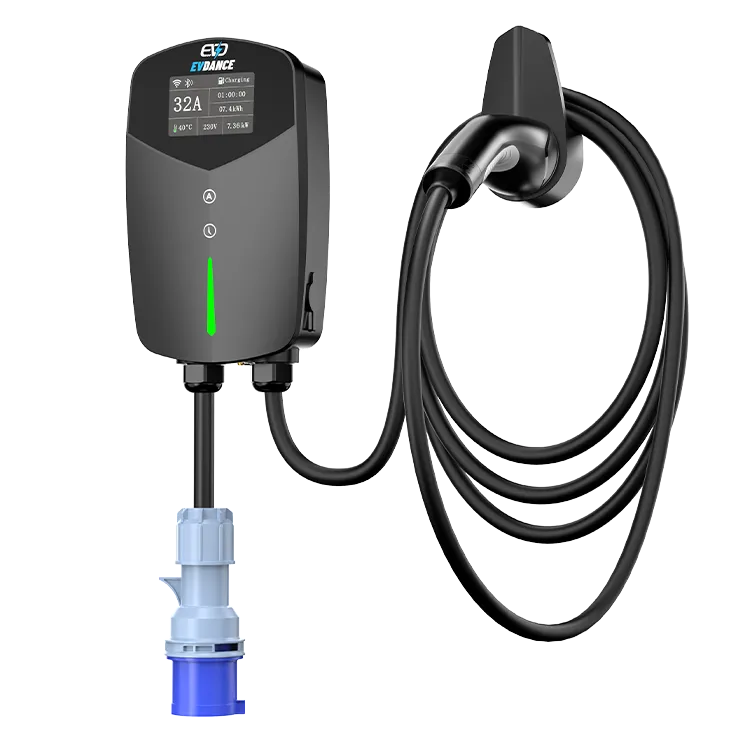
EVDANCE supplies 22 kW wallboxes, the 43 kW dual-gun EV-AC03201T and CEE three-phase portable chargers for depots. See our light commercial vehicle charging solutions.
Related Reading
- Apartment and Condo EV Charging: Solutions for Shared Parking
- Hotel EV Charging: How to Plan Guest Charging That Pays Off
- EV Charging News: Türkiye Nears 48,000 Charging Sockets
Key Takeaways
- Size depot charging from daily energy and dwell time, not maximum charger power.
- Overnight AC charging at 7 to 22 kW covers most van duty cycles.
- Load management shares the connection and can shift charging to cheaper hours.
- OCPP and RFID provide the per-vehicle data fleet managers need.
Sources & Standards
- IEC 61851-1 — Electric vehicle conductive charging system
- EVDANCE — Light commercial vehicle EV charging