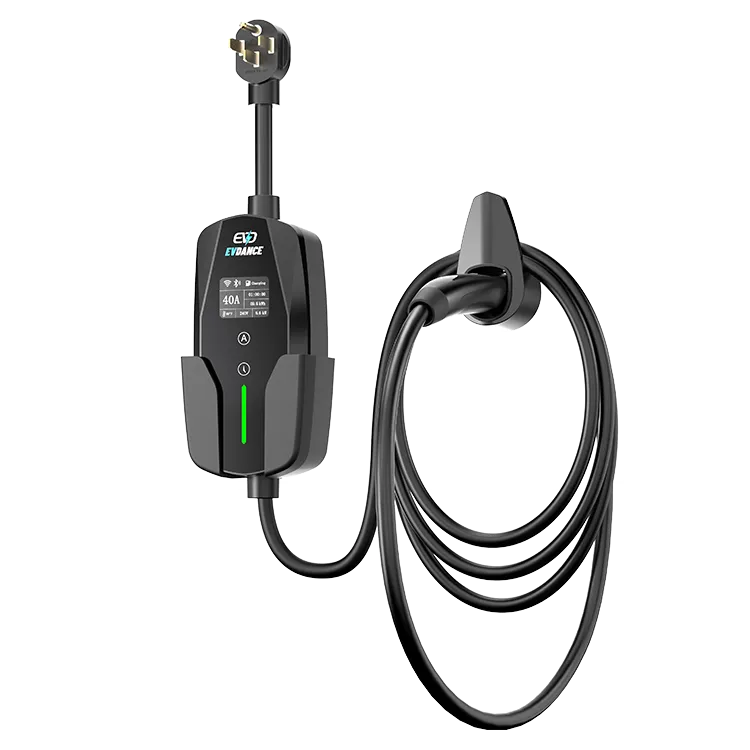
In the United States and Canada, a portable EV charger is only as good as the outlet it plugs into. The four outlets drivers ask about most are the NEMA 14-50, 6-50, 5-15 and 5-20. They differ in voltage, current rating and wiring, and that decides how fast a car can charge.
The Outlets Compared
| Outlet | Voltage | Circuit | Max continuous EV current* | Approx. power |
|---|---|---|---|---|
| NEMA 5-15 | 120V | 15A | 12A | ≈ 1.4 kW (Level 1) |
| NEMA 5-20 | 120V | 20A | 16A | ≈ 1.9 kW (Level 1) |
| NEMA 6-50 | 240V | 50A | 40A | ≈ 9.6 kW (Level 2) |
| NEMA 14-50 | 120/240V | 50A | 40A | ≈ 9.6 kW (Level 2) |
*EV charging is a continuous load, so the charging current is limited to 80% of the circuit rating under the NEC.
NEMA 14-50: The Most Common Level 2 Outlet
The NEMA 14-50 has four prongs: two hots, a neutral and a ground. It is common for electric ranges and RV parks, which is why many portable Level 2 chargers ship with a NEMA 14-50P plug. The charger uses only the 240V hots and ground, so the neutral is not needed for charging.
NEMA 6-50: A Simpler 240V Option
The NEMA 6-50 has three prongs: two hots and a ground, with no neutral. It is often used for welders and in garages. Because an EV charger does not need the neutral, a 6-50 can support the same 40A charging as a 14-50. Some electricians prefer it for dedicated EV circuits. Make sure the charger’s plug or adapter matches the outlet.
NEMA 5-15 and 5-20: Level 1 Charging
Standard household outlets deliver Level 1 charging at 120V. It adds only a few miles of range per hour, but that can be enough for plug-in hybrids or drivers with short commutes. Use a dedicated circuit where possible, and never use an extension cord. See our extension cord safety advisory.
Safety Checks Before Plugging In
- Have an electrician confirm the circuit is dedicated and correctly sized.
- Use a quality, heavy-duty receptacle; cheap outlets can overheat under long continuous loads.
- Check local code for GFCI requirements on EV outlets.
- Set an adjustable charger to a current the circuit can safely carry.
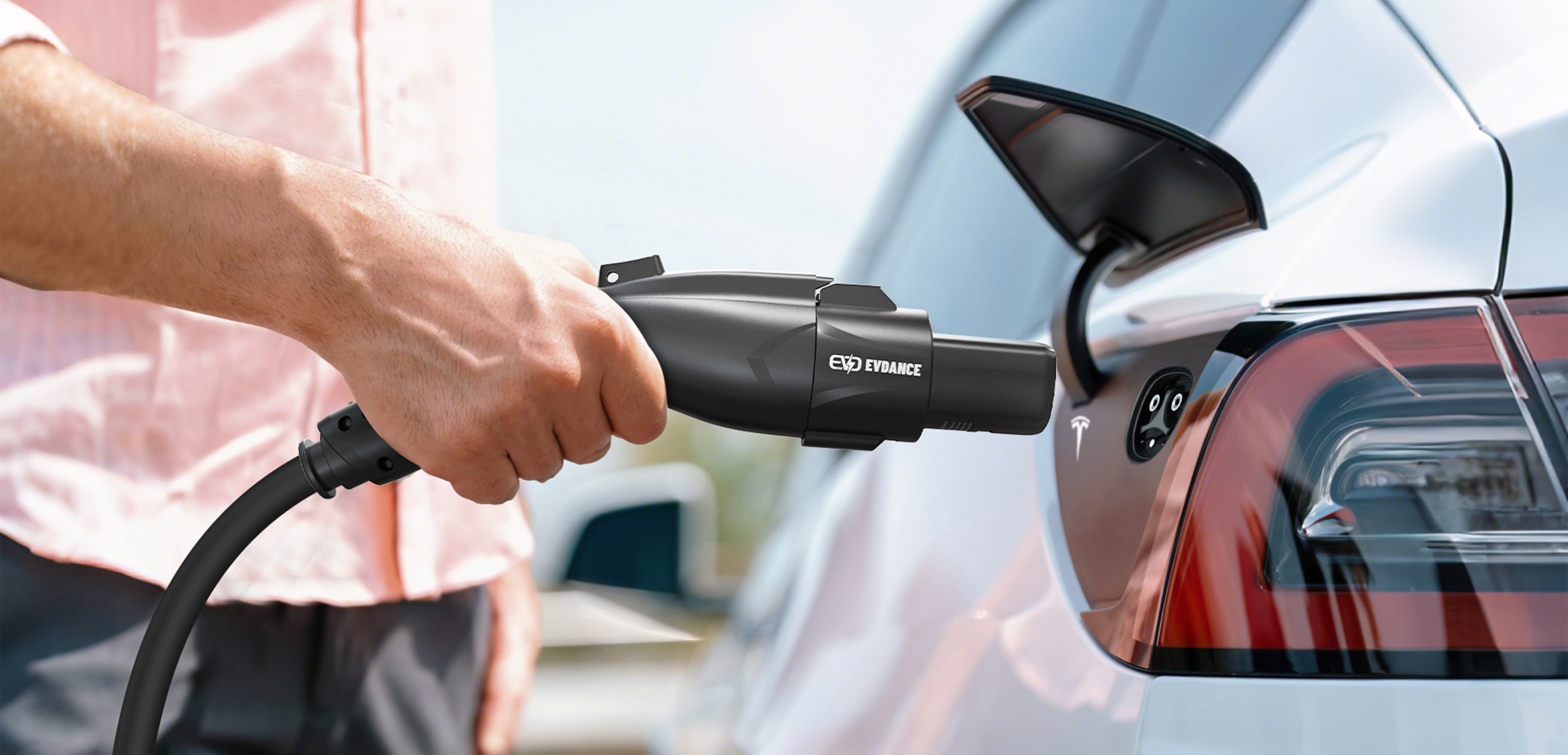
Portable chargers such as the EVDANCE EV-ACS4005T, with current adjustable from 16A to 40A, can be matched to the circuit. Read our portable EV charger safety guide for more.
Related Reading
- Wallbox Home Charger Installation Guide 2026: Costs, Amperage, and What Determines Charging Speed
- What Affects EV Charger Installation Cost? 8 Factors to Check
- EV Charging News: Mexico’s Charging Connections Grow 17.5% in First Half of 2026
Key Takeaways
- NEMA 14-50 and 6-50 outlets on 50A circuits support 40A Level 2 charging.
- NEMA 5-15 and 5-20 outlets give slow Level 1 charging at 120V.
- EV charging is a continuous load: current is limited to 80% of the circuit.
- Use a heavy-duty receptacle and have an electrician check the circuit.
Sources & Standards
- NFPA 70 National Electrical Code — Article 625, Electric Vehicle Power Transfer System
- NEMA WD 6 — Wiring Devices, Dimensional Specifications
- SAE J1772 — Electric vehicle conductive charge coupler