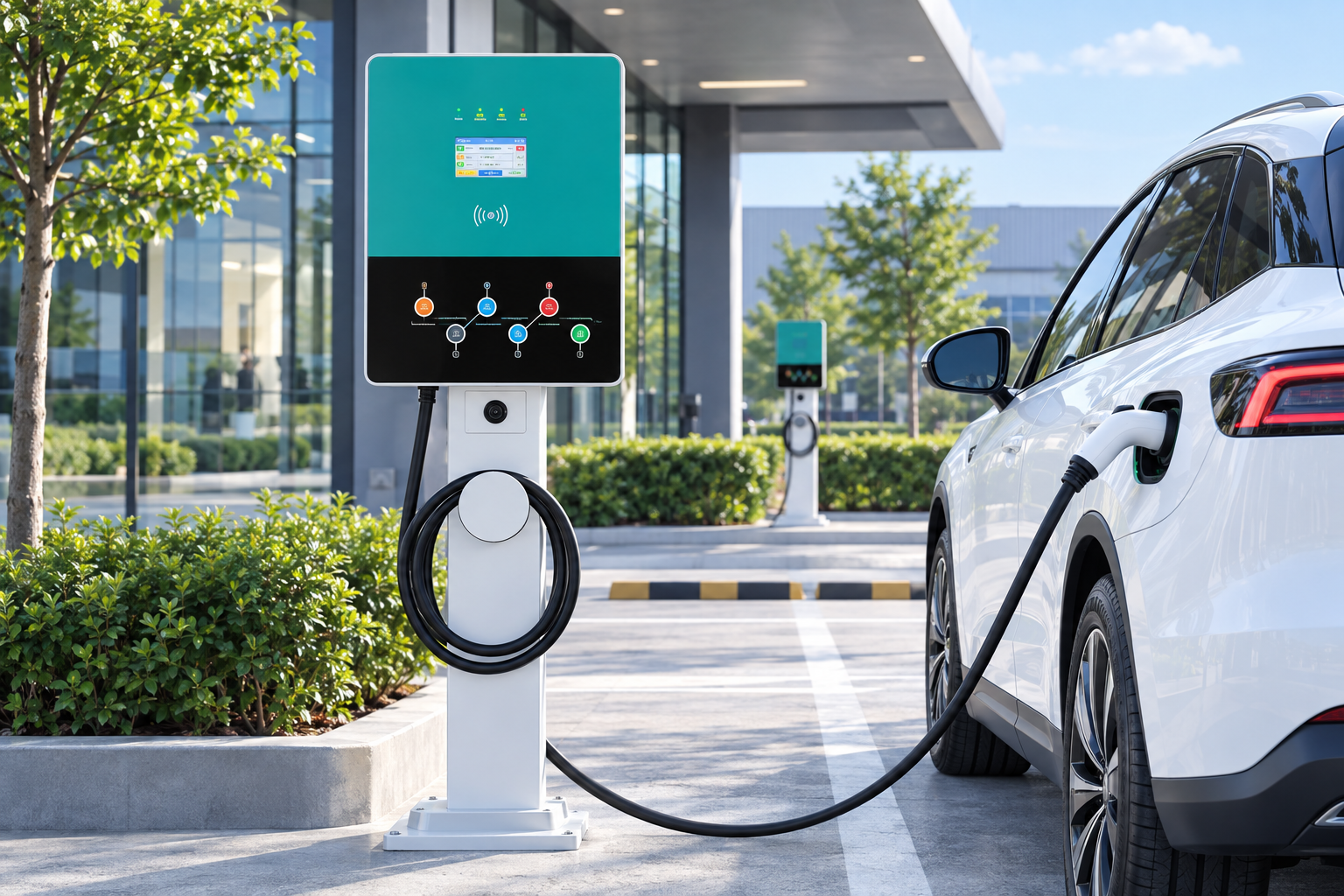
A wallbox home charger is the single most common EV purchase most new owners make after the car itself, and also one of the least understood — the sticker price of the unit is usually the smallest part of the total cost, and “how fast does it charge” has less to do with the charger than with the electrical panel behind it. With the federal tax credit for home chargers now expired and utility rebate programs shifting rather than disappearing, it’s worth walking through exactly what determines the real cost and the real charging speed before buying.
What a Wallbox Installation Actually Costs in 2026
For a straightforward installation with no panel upgrade needed, the typical all-in cost runs $1,100 to $3,600, according to a 2026 breakdown from Elev8 Operations: the charging unit itself runs $300–$600 (with budget and premium units ranging $100–$800), labor runs $800–$3,000, and permits average $297 but range $50–$800 depending on the jurisdiction. Panel work is the biggest variable and the one most homeowners underestimate:
| Scenario | Typical cost | When it applies |
|---|---|---|
| New circuit, existing panel capacity | $60–$150 | Panel already has room for a 240V circuit |
| Sub-panel installation | $500–$1,500 | Panel is full but the main service has headroom |
| Full service upgrade | $1,500–$4,000+ | Older homes or higher-amperage (48A) chargers |
The federal math changed partway through 2026: installations completed before June 30, 2026 could claim the Section 30C credit — 30% of combined equipment and labor costs, up to $1,000 — while installations after that date cannot, since the credit has expired according to the IRS. In practice, that’s roughly $1,000 more out of pocket for an identical installation done today versus one done last year. State and utility rebates still vary widely and are worth checking individually — some utilities, like PSE&G in New Jersey, still offer $1,500+ toward installation even as their other charging incentives change shape.
What Actually Determines Charging Speed
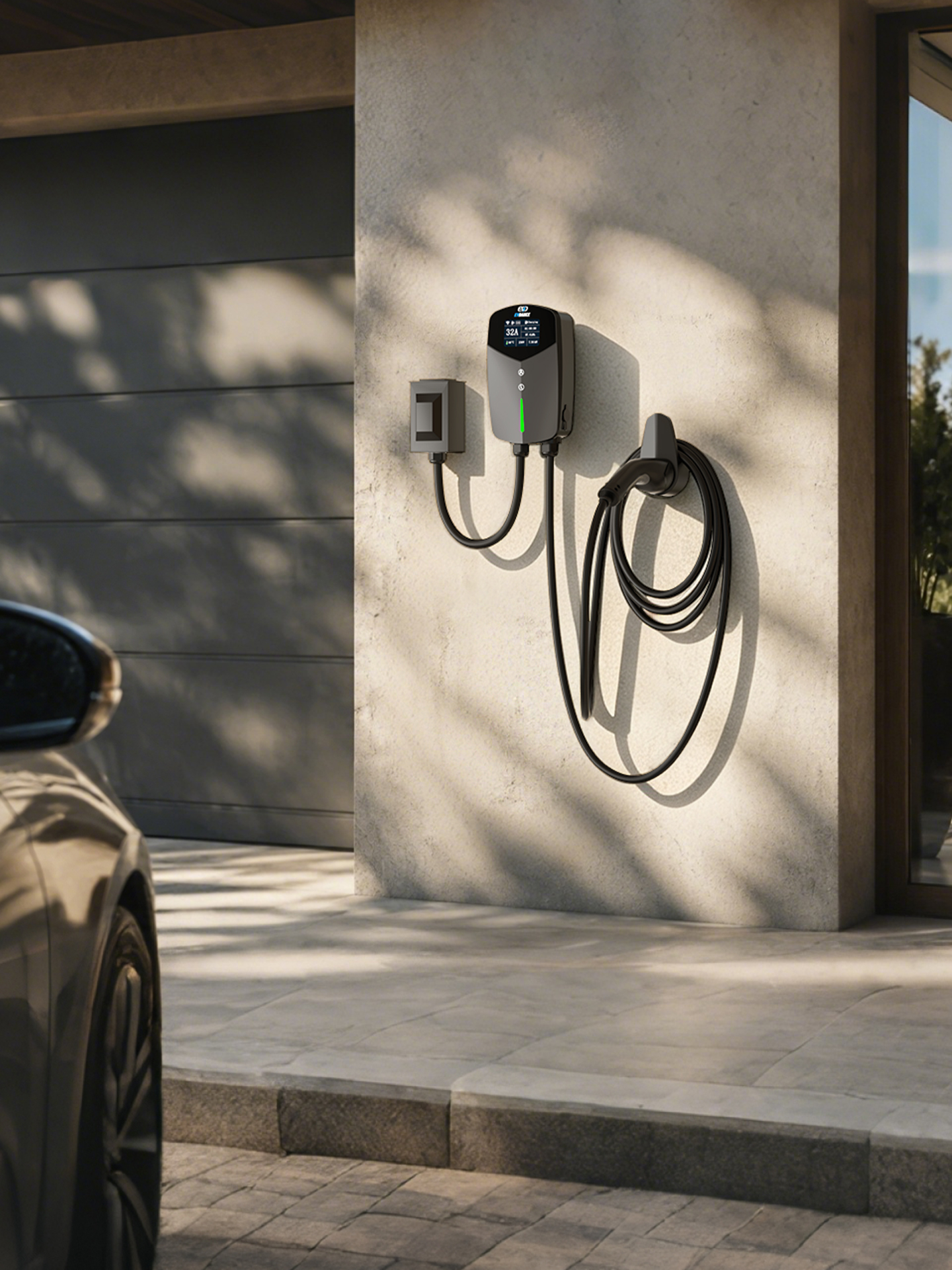
The charger’s max rating is only half the equation — the other half is what your home’s electrical panel can actually deliver to that circuit. Per the Department of Energy’s Alternative Fuels Data Center, Level 2 charging spans a wide range — 2.9 kW to 19.2 kW — with most residential installs landing around 7.2 kW, adding roughly 25 miles of range per hour. A charger rated for 48A does nothing extra if the circuit it’s wired to can only safely deliver 30A; the breaker and wiring size the installer specifies, not the charger’s spec sheet, set the real ceiling.
Consider a homeowner with an older 100A electrical panel that’s already running close to capacity with central air, an electric range, and a dryer. Adding a high-amperage 48A charger circuit on top would likely require the full service upgrade — $1,500 to $4,000+ — while choosing a charger with adjustable output capped around 32A or 24A might fit within the existing panel’s headroom for a fraction of the cost. The right amperage isn’t always the highest one available; it’s the one that matches what the panel can support without triggering an upgrade that wasn’t otherwise necessary.
Three Questions to Ask Before Signing Off on an Installation Quote
- Does my panel need an upgrade, or just a new circuit? This single answer often swings the total project cost by a factor of ten — ask for the panel’s current capacity and headroom explicitly, not just a final number.
- Is the charger’s amperage adjustable? A charger with selectable output can be installed at a lower amperage now and still support a future panel upgrade later, rather than needing to be replaced.
- What does the permit actually cover? Permit costs vary from $50 to $800 by jurisdiction — some of that fee difference reflects inspection requirements that matter for insurance and resale, not just paperwork.
Key Takeaways
- A straightforward wallbox installation with no panel upgrade typically runs $1,100–$3,600 all-in as of 2026.
- Panel work is the biggest cost variable — from $60 for a simple new circuit to $4,000+ for a full service upgrade.
- The federal 30C tax credit expired June 30, 2026, adding roughly $1,000 to the net cost of an identical installation done today.
- Charging speed is capped by the panel and circuit sizing, not just the charger’s maximum rating — a lower-amperage charger matched to existing capacity can avoid an unnecessary panel upgrade.
- Always ask installers to state panel headroom explicitly rather than accepting a lump-sum quote.
Sources & Standards
- Elev8 Operations — EV Charger Installation Cost in 2026: Real Prices Now the Tax Credit Has Gone
- Internal Revenue Service — Alternative Fuel Vehicle Refueling Property Credit
- U.S. Department of Energy, Alternative Fuels Data Center — Electric Vehicle Charging Stations
- Malfettone Electric — PSE&G EV Charger Rebate in NJ: 2026 Guide