Fewer new EVs now arrive with a portable charger in the box — Rivian dropped it from every 2026 R1T and R1S, following Tesla’s lead from 2022 — which means more buyers are choosing a portable EV charger on their own, often for the first time, with no idea what actually separates one model from another. This guide walks through the real technical differences, when a portable charger is genuinely the better choice over a hardwired wallbox, and exactly what to check before buying one.
Level 1 vs. Level 2 vs. Portable vs. Wallbox: What’s the Actual Difference
“Portable” and “wallbox” describe how a charger is mounted and moved, not how fast it charges — that’s determined separately by whether it’s Level 1 or Level 2. A portable charger can be either: some plug into a standard 120V household outlet (Level 1), while most higher-amperage portable units step up to a 240V outlet (Level 2) and simply stay unbolted so they can travel with you. According to the U.S. Department of Energy’s Alternative Fuels Data Center, the practical difference in speed is large:
| Charging level | Voltage | Typical power | Approx. range added |
|---|---|---|---|
| Level 1 | 120V AC | 1.9 kW | ~5 miles per hour |
| Level 2 | 240V AC | 2.9–19.2 kW (residential typically 7.2 kW) | ~25 miles per hour |
| DC Fast Charging | 3-phase AC input, DC output | Up to 500 kW | 100–200+ miles per 30 minutes |
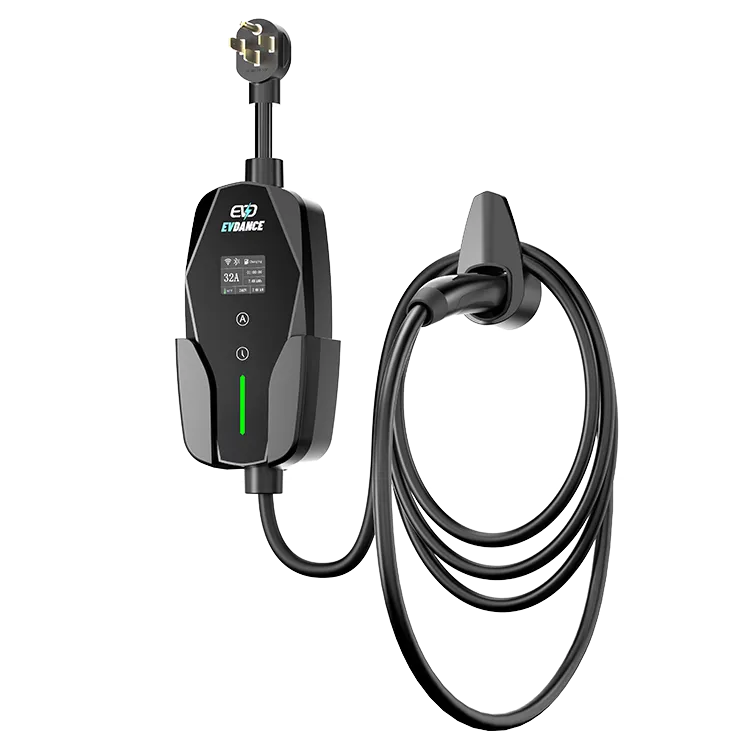
A portable Level 2 charger, like most of EVDANCE’s ACS-series units, sits in the middle: far faster than a Level 1 trickle cord, and unlike a wallbox, it unplugs and goes with you.
Why More Buyers Are Shopping for One Separately Now
This is a newer problem than it sounds. Tesla stopped including its Mobile Connector standard in 2022, and Rivian followed in 2026, dropping the bundled unit from its entire R1T and R1S lineup and pricing it as a $400 accessory instead — details we covered in our roundup of the automaker unbundling trend. The upshot is that the “which portable charger should I buy” question used to be answered by the automaker’s parts bin; increasingly, it isn’t.
When a Portable Charger Beats a Wallbox
A hardwired wallbox is usually the right long-term answer for a single-family home with a dedicated driveway. But a portable charger is the better fit in several common situations:
- Renters. Consider a household leasing an apartment or single-family rental: hardwiring a wallbox means asking a landlord for electrical work on a property they own, and potentially leaving expensive hardware behind at move-out. A portable charger avoids both problems entirely — it plugs into an existing 240V dryer or range outlet (with the right adapter) and comes along at the end of the lease.
- Multi-property owners. Someone splitting time between two homes, or managing a vacation property, only needs one charger if it’s portable rather than buying and installing a wallbox at each address.
- First EV, before the electrical budget is there. A portable charger plugged into an existing outlet can bridge the gap between buying an EV and budgeting for a full wallbox installation.
- Backup and travel. Even wallbox owners often keep a portable charger in the trunk for road trips, visiting family, or as a fallback if the home unit needs service.
What to Check Before You Buy a Portable Charger
Not all portable EV chargers are built the same way. Before buying one, it’s worth checking four things specifically:
- Plug type matches your outlet. NEMA 14-50, 6-20, and 5-15 outlets deliver very different amperage; buying a charger with the wrong plug means an adapter purchase or a returned order.
- Adjustable output. A charger with selectable current — for example 10A, 16A, 20A, 24A, or 32A — can be dialed down for an older circuit and dialed up later, rather than needing to be replaced.
- Independent safety certification. A UL, ETL, or equivalent listing on the unit itself matters — and it’s separate from the GFCI protection code requires on the circuit it plugs into (NEC 625.54 requires this on any EV charging receptacle, which is worth knowing if you experience nuisance breaker trips).
- IP rating for outdoor storage. A charger that will hang on an exterior wall hook needs real weatherproofing, not just a a splash-resistant housing.
Here’s how EVDANCE’s own portable lineup breaks down against those criteria:
| Model | Output | Best fit |
|---|---|---|
| ACS1605PE | 230V/400V three-phase, up to 11 kW | Higher-power three-phase circuits common outside North America |
| ACS3210E | Six selectable levels, 10–32A | Matching output to an existing home circuit without guesswork |
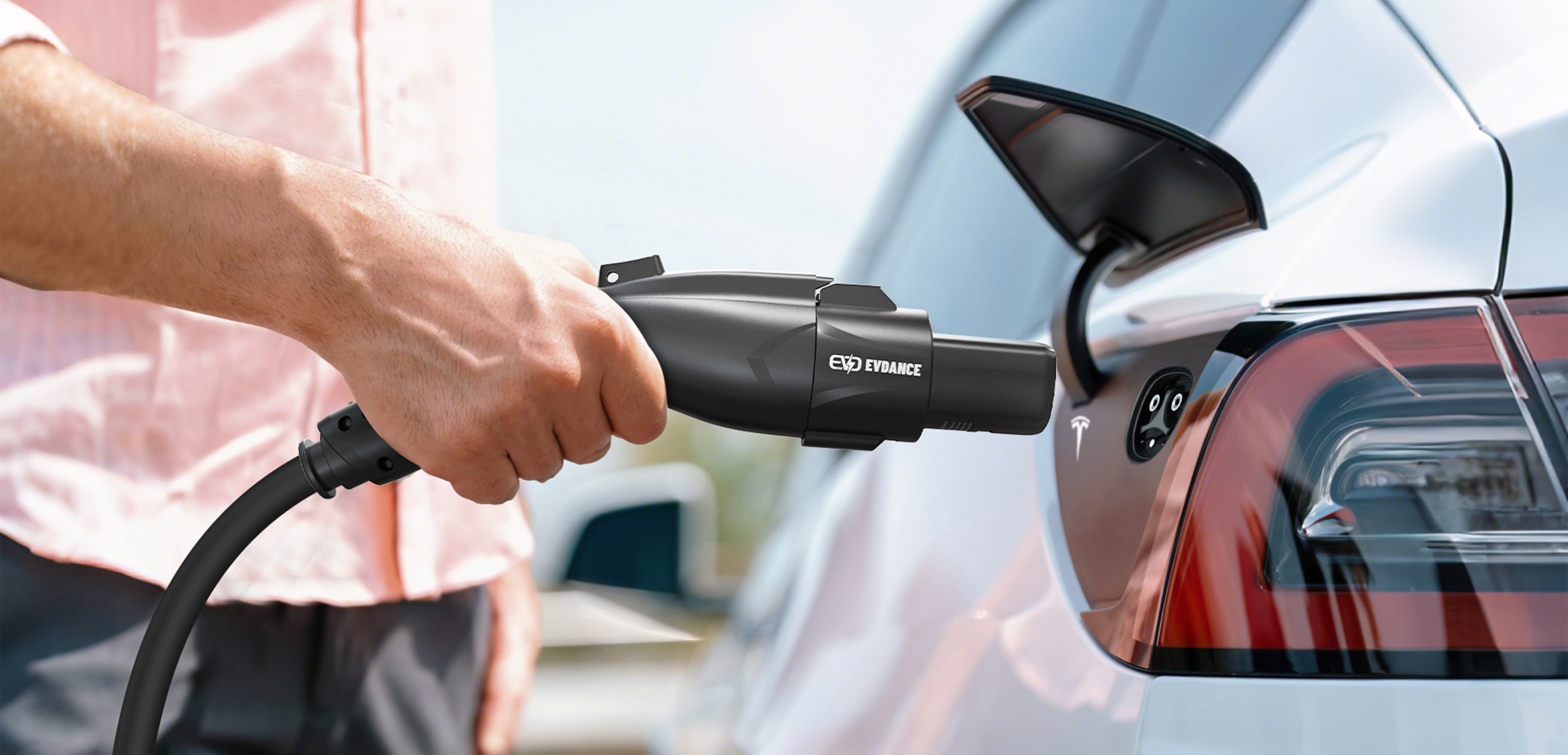
| ACS3210T | 32A, Tesla NACS connector, NEMA 14-50 plug | NACS-equipped vehicles charging straight from a 14-50 outlet |
| ACS4005T | Up to 9.6 kW from a 240V supply | Fastest available AC speed from a plug-in, portable unit |
Key Takeaways
- “Portable” and “Level 2” are two different things — a portable charger can deliver Level 2 speeds (~25 miles of range per hour) without being bolted to a wall.
- Automakers increasingly don’t include one — Tesla since 2022, Rivian since the 2026 model year — shifting the purchase decision to the buyer.
- Renters, multi-property owners, new EV buyers without an installation budget yet, and anyone wanting a travel backup are typically better served by a portable charger than a wallbox.
- Check plug type, adjustable amperage, independent certification, and outdoor IP rating before buying.
Sources & Standards
- U.S. Department of Energy, Alternative Fuels Data Center — Electric Vehicle Charging Stations
- RivianTrackr — Rivian No Longer Includes Portable Charger With 2026 R1T and R1S
- Not a Tesla App — Tesla is no longer including the mobile charging connector with new vehicles
- Qmerit — NEMA 14-50 vs. Hardwired EV Chargers: GFCI Code Requirements & Nuisance Tripping