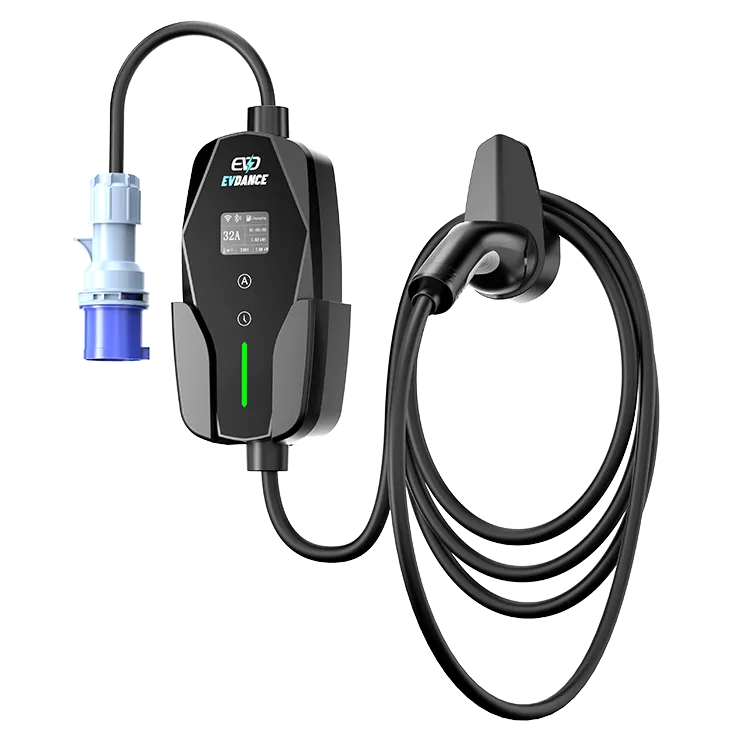
Search for a home EV charger and you’ll see a lot of numbers thrown around — 7kW, 11kW, 22kW — without much explanation of what they actually mean for your daily charging. Of those, 7kW is worth understanding first, because it’s become the practical baseline that most home charging, portable or wallbox, is built around.
What 7kW Actually Means
A 7kW-class charger delivers roughly 30–32A of current on a 240V circuit (in North America) or a 230V single-phase supply (in the UK and much of Europe). According to the U.S. Department of Energy’s Alternative Fuels Data Center, Level 2 charging in this power range adds roughly 25 miles of range per hour — meaning a typical overnight charging window of 8 hours can add 150–200+ miles, more than enough for a full recharge for the vast majority of daily driving and commuting patterns.
| Charging type | Voltage | Power | Approx. range added |
|---|---|---|---|
| Level 1 | 120V AC | 1.9 kW | ~5 miles per hour |
| Level 2 (7kW class) | 240V AC, ~30–32A | ~7–7.7 kW | ~25 miles per hour |
| Level 2 (higher-amperage) | 240V AC, up to 48A+ | up to 19.2 kW | faster, but often limited by home panel capacity |
Why 7kW Is the Practical Sweet Spot, Not Just a Compromise
7kW isn’t simply “the slower option” — it’s frequently the fastest speed a typical home’s electrical panel can support without a costly upgrade, and regulators have built rules around that reality. In the UK, a standard 7kW charger on a single-phase supply generally only requires the installer to notify the Distribution Network Operator after installation, rather than needing prior approval, according to Selectra’s grid connection guide — prior approval is reserved for larger 22kW three-phase systems or multiple chargers at one address. The same guide notes that the practical ceiling for most homes is the main household fuse, typically rated 60–100A, well before the charger’s own rating becomes the limiting factor.
Compatibility: What to Check
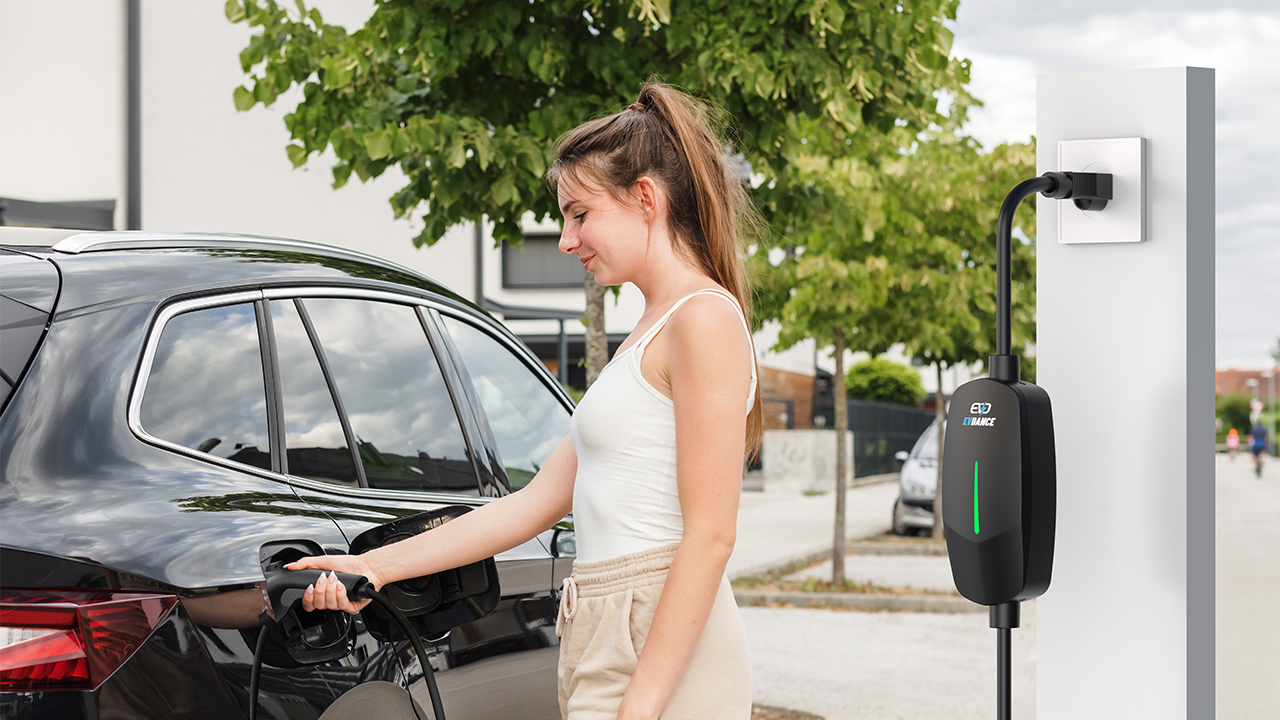
Not every EV can actually use the full 7kW available from the charger — the vehicle’s onboard charger caps how much AC power it can accept, regardless of what the charging equipment can deliver. Before buying, it’s worth checking your vehicle’s maximum onboard AC charging rate; if it’s rated below 7kW, a faster charger won’t add any extra speed. It’s also worth checking connector type (J1772 or NACS) and, for a portable unit, whether the output current is adjustable so the same charger can be dialed down for an older circuit or dialed up later.
Key Takeaways
- A 7kW-class charger runs at roughly 30–32A on a 240V circuit and adds about 25 miles of range per hour.
- 7kW is fast enough to fully recharge most daily commutes during a typical overnight window.
- UK grid rules treat 7kW as requiring only DNO notification, not prior approval — a sign of how “standard” this power level has become.
- Always check your vehicle’s onboard AC charging limit — a faster charger doesn’t help if the car itself caps below 7kW.
Sources & Standards
- U.S. Department of Energy, Alternative Fuels Data Center — Electric Vehicle Charging Stations
- Selectra — EV Charger Grid Connection: DNO Approval, 7kW and Load Management