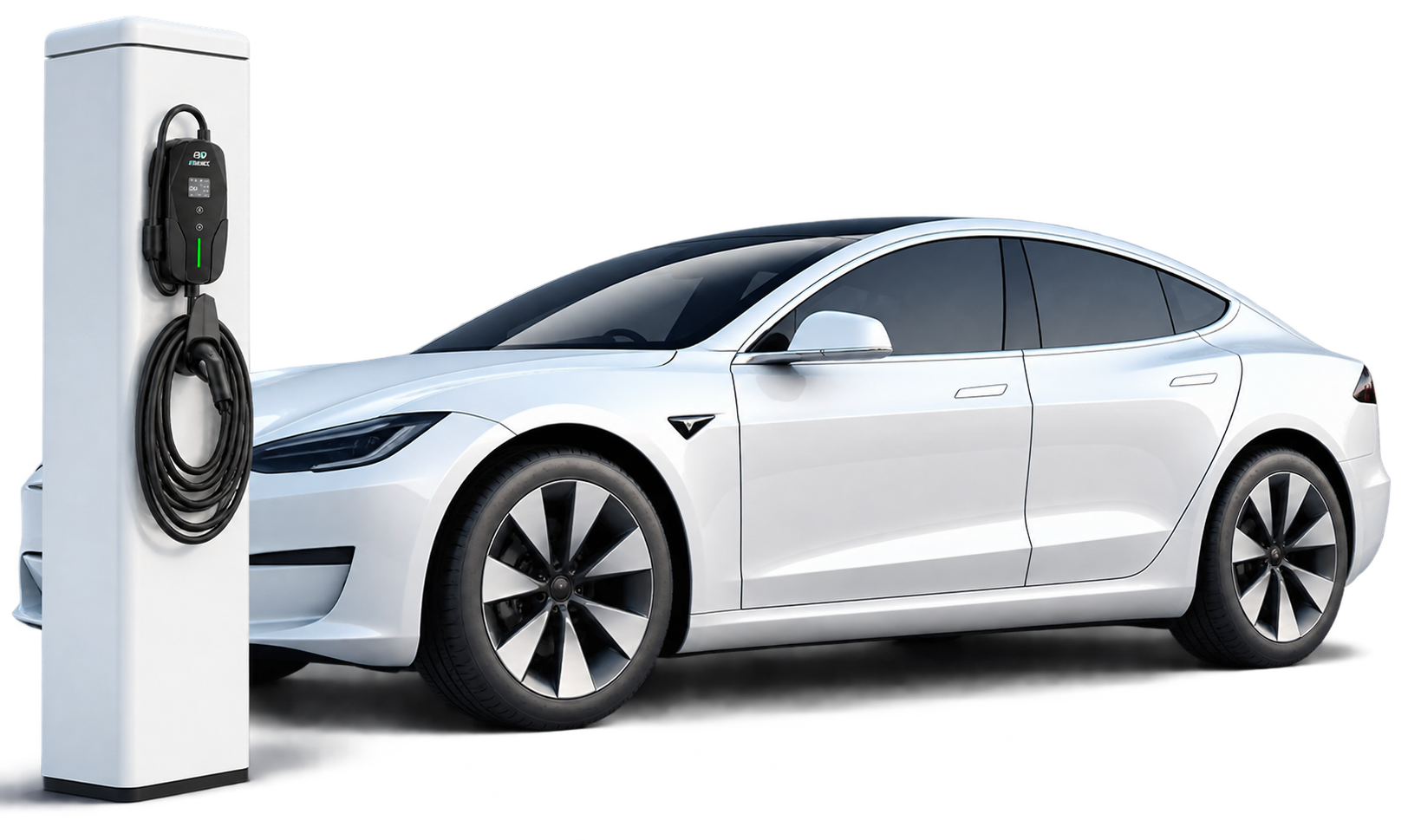
Smart features such as scheduling, current limits and energy reports are now a common request from buyers of home and workplace chargers. For a private-label brand, that raises a simple question: whose app will your customers download? A white-label app lets them control the charger through an app with your name and colours, without you building software from scratch.
This article explains what a white-label charger app usually includes, how it relates to OCPP, and the responsibilities that come with it, from data protection to radio compliance. For the full picture of private-label projects, see our OEM and private-label EV charger guide.
What a white-label app includes
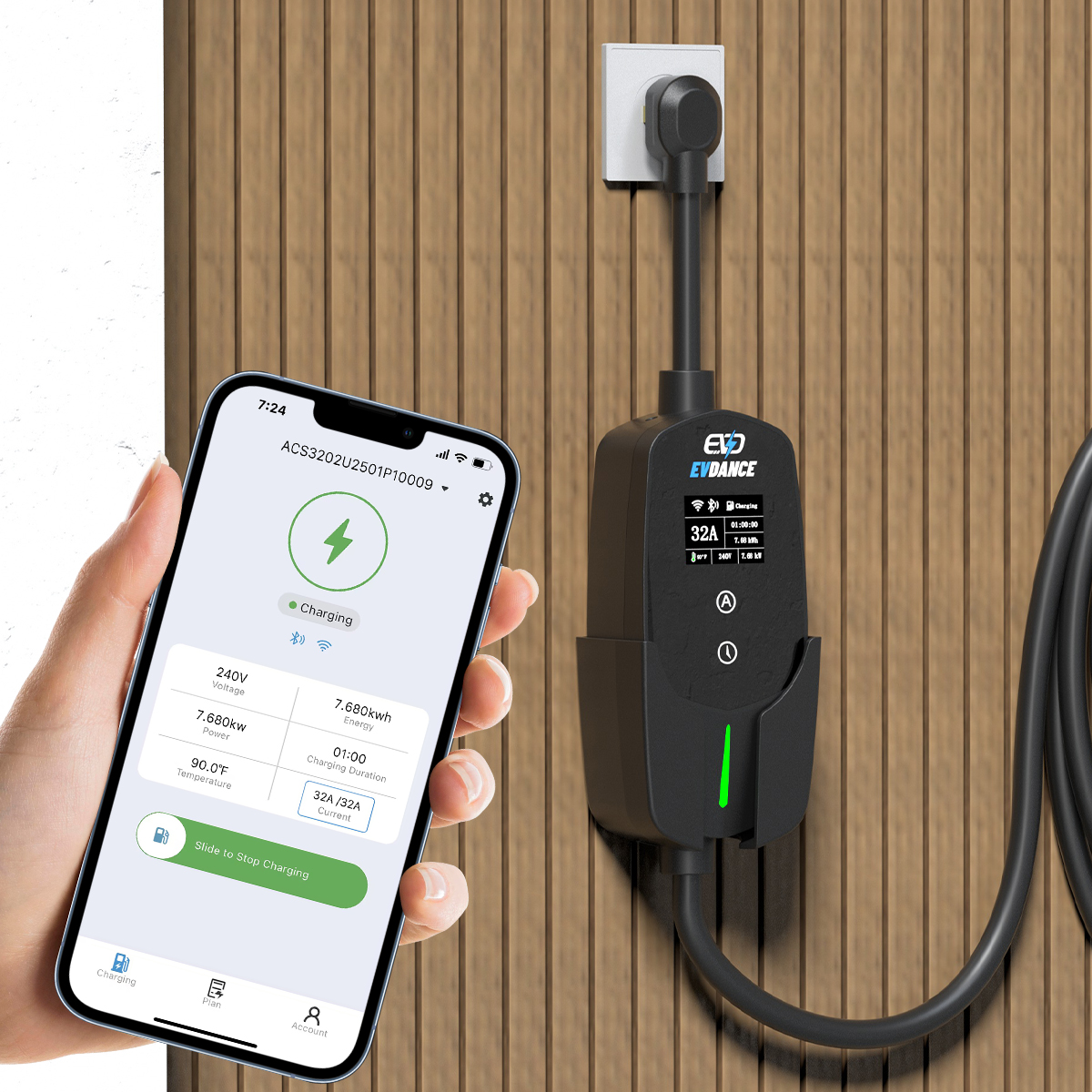
EVDANCE offers a white-label mobile app for its smart-charging models. Feature sets differ by model, so confirm the exact list for the charger you choose, but a white-label package typically covers:
- App name, icon, start screen and colour scheme in your brand
- Charger pairing over Wi-Fi or Bluetooth
- Start and stop, current adjustment and scheduled charging
- Charging history and energy use
- Firmware updates delivered to chargers in the field
- Your privacy notice, terms of use and support contact inside the app
Agree early who publishes the app in the app stores. Publishing under your own developer account gives you control of the listing and its reviews, but it also makes you responsible for updates and store compliance.
Consumer app or OCPP back end?
Home chargers are normally controlled through a consumer app linked to a cloud platform. Commercial and workplace chargers are usually managed by a charge point operator through a charging management system, and the common language between charger and system is OCPP.
The Open Charge Alliance describes OCPP as an open protocol between charging stations and charging management systems, with versions 1.6, 2.0.1 and 2.1. OCPP 2.0.1 is not compatible with 1.6, so check which version your buyers’ platforms use. OCPP 2.0.1 also forms the basis of the international standard IEC 63584:2024.
| Question | Consumer app | OCPP back end |
|---|---|---|
| Typical user | Homeowner or driver | Charge point operator, fleet or workplace |
| Who controls the charger | The driver, through your branded app | The operator’s management system |
| Where your brand appears | App name, icon and design, plus the hardware | Mainly on the hardware |
| Key checks | App stability, data privacy, support | OCPP version, interoperability testing |
Some brands offer both: a consumer app for home buyers and OCPP for business customers. Our article on OCPP for charge point operators explains the protocol in more detail.
Data privacy and GDPR
A charger app collects personal data: account details, the charger’s location, charging times and energy use. If you sell in the EU, the GDPR principles require personal data to be processed lawfully and transparently, collected for a specific purpose, limited to what is needed, kept no longer than necessary and kept secure, and you must be able to show that you comply.
Because the app carries your brand and you own the customer relationship, you will often be the party deciding why and how data is processed, while the platform provider processes it on your behalf. Set out these roles in a written agreement, check where servers are located and how data moves between countries, and publish a clear privacy notice. This is general information, not legal advice; confirm your position with a data protection lawyer.
Radio rules: RED in the EU, FCC in the US
A charger with Wi-Fi, Bluetooth or a cellular module is radio equipment. In the EU it falls under the Radio Equipment Directive, which sets essential requirements for safety, electromagnetic compatibility and efficient use of the radio spectrum; CE marking can only be applied after testing and conformity assessment. For internet-connected radio equipment, cybersecurity requirements under the RED have applied since 1 August 2025, so ask how the firmware and app address them.
In the US, the FCC requires radio-frequency devices to be authorized before they are marketed or imported. Our articles on CE marking for private-label chargers and FCC rules for EV chargers explain each route.
Certification marks vary by model, so request the certificate and test report for the exact model and radio configuration. Changing the radio module after testing can mean new tests.
Support, updates and long-term planning
An app is an ongoing service, not a one-off deliverable. Before launch, agree on:
- Who answers customer questions about pairing, Wi-Fi and accounts
- How bugs are reported, prioritised and fixed
- How firmware updates are tested before they reach chargers in the field
- How long the platform will be supported, and what the charger can still do without the app
- How new phone operating system versions are tested
Plan for languages and regions as well. If you sell in several EU countries, the app, manual and in-app support text should be available in the languages your customers use, and time zones and tariff periods must be handled correctly for scheduled charging. Check that the app’s store listing, privacy notice and support pages all name your company, since your customers will contact you rather than the factory when something does not work.
Customers judge the charger by the app. A charger that charges well but pairs badly will collect poor reviews, so test pairing on a range of phones and routers before launch.
Getting started
Start with a smart-charging base model and a sample with the white-label app installed. Test the whole journey: unboxing, app download, account creation, pairing, a scheduled charge and a firmware update. If you plan to sell to businesses, also test the OCPP connection to the platforms your customers use. To discuss app branding for your range, visit our OEM and ODM program or contact us.
Key Takeaways
- A white-label app puts your brand on the customer’s phone, but you also take on support, updates and app store duties.
- Home chargers usually use a consumer app, while commercial chargers rely on OCPP; check the OCPP version buyers need.
- Charger apps process personal data, so clarify GDPR roles, server locations and your privacy notice before launch.
- Wi-Fi and Bluetooth models are radio equipment, so request RED and FCC documents for the exact radio configuration.
Sources & Standards
- Open Charge Alliance — Open Charge Point Protocol
- International Electrotechnical Commission (IEC) — IEC 63584:2024 Open Charge Point Protocol (OCPP)
- European Commission — Principles of the GDPR
- European Commission (DG GROW) — Radio Equipment Directive (RED)
- Federal Communications Commission — Equipment Authorization