Every EV charger contains electronics that can emit radio frequency energy, even if it has no Wi-Fi or Bluetooth. In the United States that puts it under the Federal Communications Commission’s rules, separately from electrical safety listing. A charger can be safety certified and still not be legal to market if it lacks FCC authorization.
This article explains how FCC rules apply to portable and wall-mounted chargers, the difference between a Supplier’s Declaration of Conformity and certification, and what a private-label brand needs to arrange. It is part of our complete guide to OEM and private-label EV chargers.
Why FCC rules apply to chargers
The FCC requires radio frequency devices to be properly authorized under Part 2 of its rules before they are marketed or imported. A charger’s microcontroller, display and switching power supply generate RF energy as a side effect of normal operation. That makes the charger an unintentional radiator under Part 15, Subpart B.
Smart chargers add a second category. A Wi-Fi, Bluetooth or cellular module deliberately transmits, so it is an intentional radiator with its own rules.
SDoC or certification
Under 47 CFR 15.101, unintentional radiators must be authorized before marketing begins, and most device types may use either a Supplier’s Declaration of Conformity (SDoC) or certification.
| Route | How it works | Typical use for chargers |
|---|---|---|
| Supplier’s Declaration of Conformity (SDoC) | The product is tested to Part 15 limits and a US responsible party declares compliance; nothing is filed with the FCC | The unintentional radiator part of any charger |
| Certification | A Telecommunication Certification Body reviews test data and grants an FCC ID listed in the FCC database | Radio transmitters such as Wi-Fi, Bluetooth or cellular modules |
Digital devices are also divided into Class A, for commercial and industrial settings, and Class B, for residential use. Chargers sold for home use need to meet Class B limits. A commercial pedestal sold only to businesses may qualify as Class A, but confirm the classification with your test lab.
The US responsible party
SDoC places the obligation on a responsible party. Under 47 CFR 2.1077, that party must be located in the United States, and a compliance information statement must be supplied with the product. The statement identifies the product, states that it complies with FCC rules, and gives the responsible party’s name, US address and telephone number or internet contact. Under 2.1074, the product must be uniquely identified, for example by model number, with an identifier that does not resemble an FCC ID.
For a private-label brand the consequence is simple. A US company selling under its own brand is usually the natural responsible party and should hold, or have access to, the test report. A brand based outside the US needs a US party, such as its importer, to take on the role. A factory in China cannot act as the responsible party.
Keep the test report on file, because the responsible party must be able to provide it if the FCC asks.
Smart chargers with radio modules
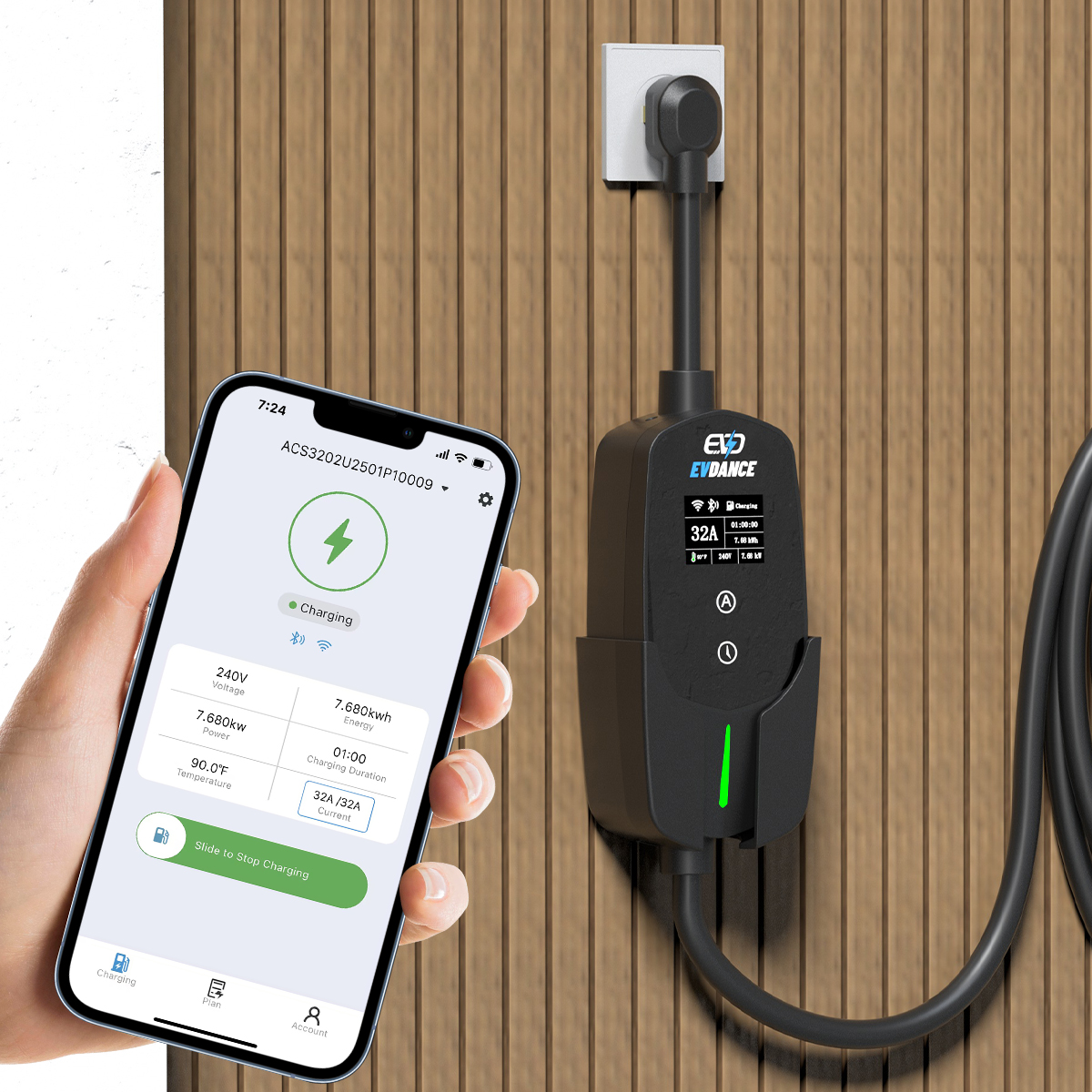
Chargers with app control, OCPP over Wi-Fi or cellular connectivity contain a transmitter. Many OEM designs use a pre-certified radio module that already has its own FCC ID. In that case the host charger is usually labeled with a statement such as ‘Contains FCC ID:’ followed by the module’s ID, and the module’s grant conditions, including antenna type and placement, must be followed.
The charger still needs Part 15 Subpart B compliance for its unintentional emissions. If the radio design changes, or the module is installed outside its grant conditions, new or modified certification may be needed. If you plan a white-label app for a smart charger, settle the module choice early, because it affects both FCC and EU radio approvals.
Labels and manual statements
Devices subject to SDoC or certification must carry the compliance statement required by 47 CFR 15.19 in a conspicuous location on the device. Where a device is too small for this, the rules allow the statement in the manual or on the container, but a charger’s control box usually has room on its rating label. Class B digital devices also need a user information statement in the manual describing possible interference and how to correct it.
Our article on rating labels and required markings shows how the FCC text fits alongside safety marks on a private-label charger.
Checklist for a private-label order
- Confirm whether your model has a radio module, and obtain the module’s FCC ID and grant.
- Request the Part 15 Subpart B test report for the exact model and configuration, including the cable and plug you are ordering.
- Name the US responsible party and prepare the compliance information statement.
- Agree the label text, including the 15.19 statement and any ‘Contains FCC ID’ line.
- Add the Class B user information statement to the manual.
- Require notice before any change to the PCB, power supply or radio module.
FCC authorization covers RF emissions only. Electrical safety is a separate question handled by NRTL certification; see UL and ETL listing for EV chargers. Certification marks at EVDANCE vary by model, so ask for the certificates and test reports for the exact configuration through our OEM and ODM program. This article is general information; confirm details with an FCC-recognized test lab or a Telecommunication Certification Body.
Key Takeaways
- Every EV charger is an unintentional radiator under FCC Part 15 Subpart B and must be authorized before it is marketed in the US.
- Most chargers use a Supplier’s Declaration of Conformity, which needs a responsible party located in the United States.
- Smart chargers with Wi-Fi, Bluetooth or cellular radios also rely on certification with an FCC ID, usually through a pre-certified module.
- The 15.19 compliance statement, the compliance information statement and the Class B manual text should be agreed with the factory before printing.
Sources & Standards
- eCFR — 47 CFR Part 15 Subpart B, Unintentional Radiators
- eCFR — 47 CFR Part 2 Subpart J, Supplier’s Declaration of Conformity
- Federal Communications Commission — Equipment Authorization
- eCFR — 47 CFR 15.19, Labeling requirements