
Yes — a visiting friend or family member can usually charge at your home charger, as long as their car’s connector matches your charger’s. A typical guest top-up costs you only a few dollars in electricity: at the U.S. average residential price of 18.31 cents per kWh, 30 kWh costs about $5.49. The things worth setting up first are connector fit, how the session is started, and a simple agreement about cost and timing.
Key Takeaways
- Connector match decides whether a guest can charge — brand does not.
- A guest top-up typically costs $4–$11 at average U.S. residential prices.
- Use the charger’s app record in kWh if you want to split the cost fairly.
- Keep the charger locked or app-controlled between guest sessions.
First, Check the Connector Matches
Home AC charging is standardised by connector, not by car brand — J1772 and NACS in North America, Type 2 in Europe. If your guest’s car uses the same connector as your charger, they can plug straight in. If not, an adapter may bridge the gap, as explained in our article on whether EV chargers are universal. Adapters are for AC charging within their rating only; never improvise one, and let the guest use their own adapter if they carry one.

What a Guest Session Actually Costs
There is no meter dispute to have: a guest session is just energy multiplied by your electricity price. Using the EIA’s average residential price of 18.31 cents per kWh:
| Guest top-up | Energy | Cost at 18.31¢/kWh |
|---|---|---|
| Evening visit, partial top-up | 20 kWh | About $3.66 |
| Overnight stay | 40 kWh | About $7.32 |
| Weekend guest, near-full charge | 60 kWh | About $10.99 |
Your own price may differ — check your bill and use your real rate. Most charger apps show the kWh delivered per session, which makes settling up exact rather than estimated. Hotels handle the same question commercially, as our hotel guest charging guide describes; at home, a coffee usually covers it.
Keep Control of Who Can Start a Session
If your charger normally sits unlocked, a guest session needs no setup at all. If it is locked or app-controlled, you start the session for them — or temporarily enable guest use if the model supports it. Chargers with RFID or per-user settings can separate a guest’s energy from yours, the same tools described in our guide to RFID and user management for shared chargers. And keep the basics from our article on charging cable theft and locking: an unlocked cable on a driveway overnight is an invitation, whoever it belongs to.
Products That Make Guest Charging Easy
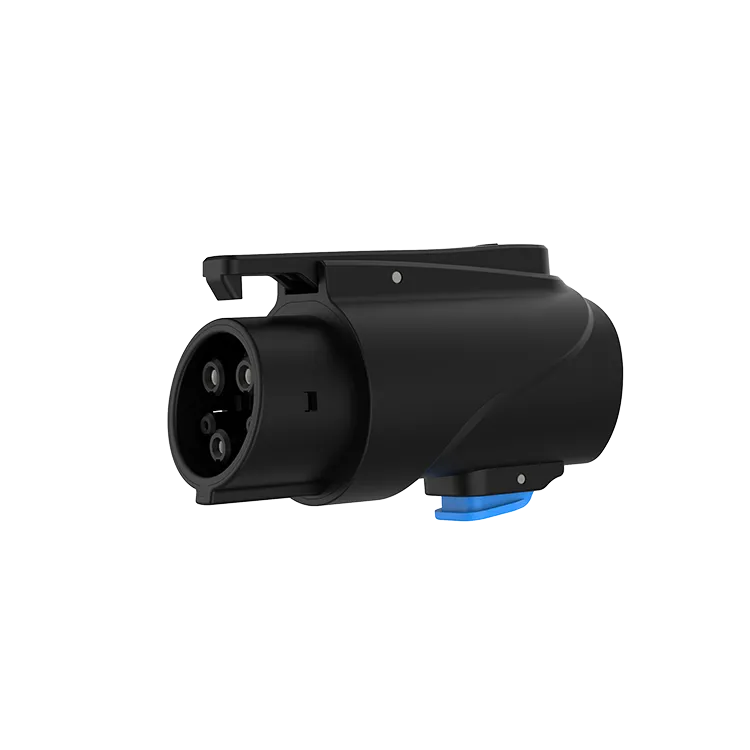
The JT02 NACS-to-J1772 adapter (AC, up to 80 A, IP65) lets a J1772 guest car use a NACS home charger, which is the most common mismatch in North America. For the charger itself, the EV-ACS4005T 40A NACS portable charger has adjustable current in 16/24/32/40 A steps, so you can run a guest session at a lower setting if your panel is busy that evening.
Frequently Asked Questions
Will a guest’s car damage my charger?
No. A car that matches the connector (or uses a correctly rated adapter) charges the same way yours does. The charger and car negotiate the current between them.
Should I charge my guest for the electricity?
That is a household decision, not a technical one. A typical visit costs a few dollars at average prices, so many hosts treat it as hospitality; for a long stay, the app’s kWh record makes a fair split easy.
Can a guest charge while my car also needs the charger?
One connector serves one car at a time. Agree the order in advance — guest first for a top-up, then swap to your car overnight is the arrangement most households land on.
Related Reading
- Are EV Chargers Universal?
- RFID and User Management for Shared EV Chargers
- Hotel EV Charging: How to Plan Guest Charging That Pays Off
- EV Charging Cable Theft and Locking

