
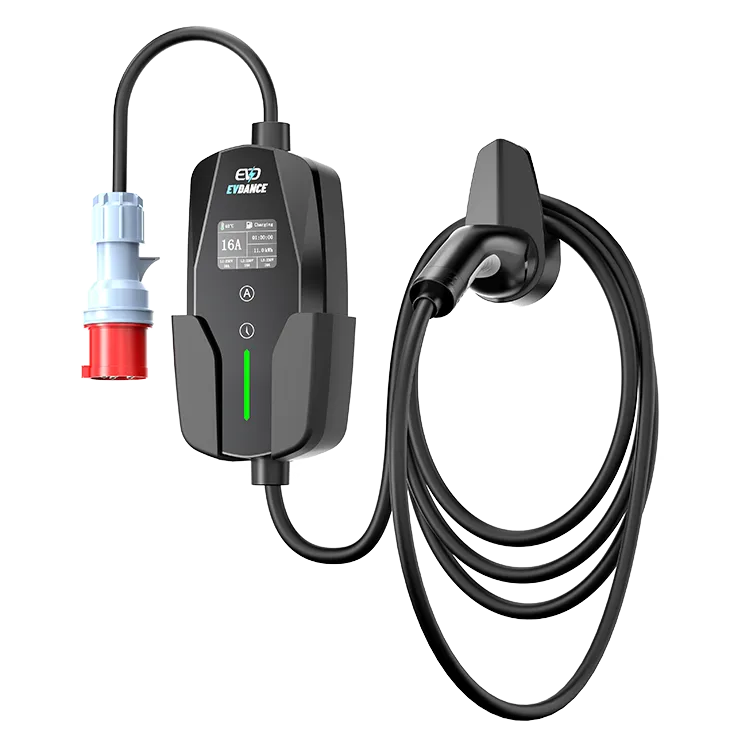
What changes is that the 11 kW disappears — and whether this unit runs on a single-phase supply at all is not stated in its listing. The ACS1605PE is specified as a three-phase charger: 16 A at 230/400 V, with a five-pin CEE plug that expects a three-phase socket. No single-phase rating or single-phase mode is published for it. So treat single-phase use as unconfirmed until EVDANCE and your installer answer in writing, and understand what one phase could ever carry.
Key Takeaways
- 11 kW is a three-phase rating; one phase at 16 A carries about 3.7 kW at most, for any charger.
- The ACS1605PE’s listing publishes no single-phase output or mode — do not let anyone quote you one.
- The 230/400 V marking is three-phase voltage notation, not a single-phase rating.
- On a single-phase supply, a published single-phase charger usually serves you better than an assumed one.
Why 11 kW Is a Three-Phase Number
The rating is arithmetic. Three phases at 16 A and about 230 V per phase give roughly 11 kW. One phase at 16 A gives roughly 3.7 kW — the ceiling of what a single phase can carry, for any charger, as our explainer on single-phase vs three-phase EV charging sets out. So even in the best case, a single-phase supply turns an “11 kW” purchase into a roughly 3.7 kW outcome — if the unit supports being connected that way at all. That clause is model-specific, and it is the one that matters: some three-phase equipment is designed to run on one phase at reduced output; some is not. Which kind the ACS1605PE is cannot be settled from its specification, which describes the three-phase rating only.
The Plug Is Part of the Answer
This charger plugs in, and its plug is the five-pin CEE form used for three-phase sockets. A single-phase property has no matching socket: the single-phase commando class is a different plug that does not mate with it. Adapter leads that appear to bridge the two do not create phases and are not an answer for a load that runs continuously for hours. If there is no three-phase socket where you park, the conversation is about the supply, not about adapters.
What Is Known, and What Is Not
| Situation | What is established | What to do |
|---|---|---|
| Three-phase supply, car accepts 11 kW | The full 11 kW rating applies | This is the setup the unit is specified for |
| Three-phase supply, car accepts less | The car sets the pace below 11 kW | Normal — no fault, nothing to change |
| Single-phase supply | 11 kW is not available; the unit’s single-phase behaviour is not published | Get a written answer from EVDANCE and your installer before ordering |
| The plug is marked 230/400 V | That is the three-phase voltage notation — about 230 V per phase, about 400 V between phases | It is not a single-phase rating; do not read it as one |
| Supply type unknown | Nothing about output can be promised yet | Ask an electrician to identify the supply first |
Ask for the answer in writing, and ask it in full: can this unit be used on a single-phase supply, at what output, and connected how. A one-line “yes” without the output figure is not the answer you need.

Your Options on a Single-Phase Supply
- Buy for the supply you have. A single-phase charger gives its full published rating from day one. In the EVDANCE range, the EV-ACS3210E is a single-phase Type 2 portable at about 7 kW — more than one phase at 16 A could ever offer this unit, and published rather than assumed.
- Ask about a three-phase supply. Bringing three phases to a property is a network-operator decision with its own application, cost and timetable — an installer conversation, not part of a charger purchase.
- Confirm this unit in writing. If you want the ACS1605PE specifically, get the single-phase answer from EVDANCE via our contact page before you order.
Frequently Asked Questions
Will a single-phase supply damage the ACS1605PE?
That is what the written confirmation exists to answer for this model. Until you have it, treat single-phase connection as unapproved rather than as safe or unsafe.
Is about 3.7 kW enough for overnight charging?
For many drivers, yes. Eight hours at about 3.7 kW delivers roughly 26 kWh after losses — labelled arithmetic, not a promise — covering a typical day’s driving for many households. The U.S. DOT’s charger speed guide gives the wider picture.
Can I just wire one phase to the socket and accept less power?
Do not assume so. Socket wiring is an electrician’s work under your local rules, and whether this unit may be fed that way is a manufacturer question. Get both answers first.
Related Reading
- Single-Phase vs Three-Phase EV Charging: 7kW, 11kW and 22kW Explained
- How Long Does It Take to Charge an EV at 7 kW, 11 kW and 22 kW?
- CEE Plugs Explained: Choosing 16A or 32A for a Three-Phase Portable EV Charger
- Portable EV Charger Types Explained: 10A, 16A, 32A and Three-Phase Models

